


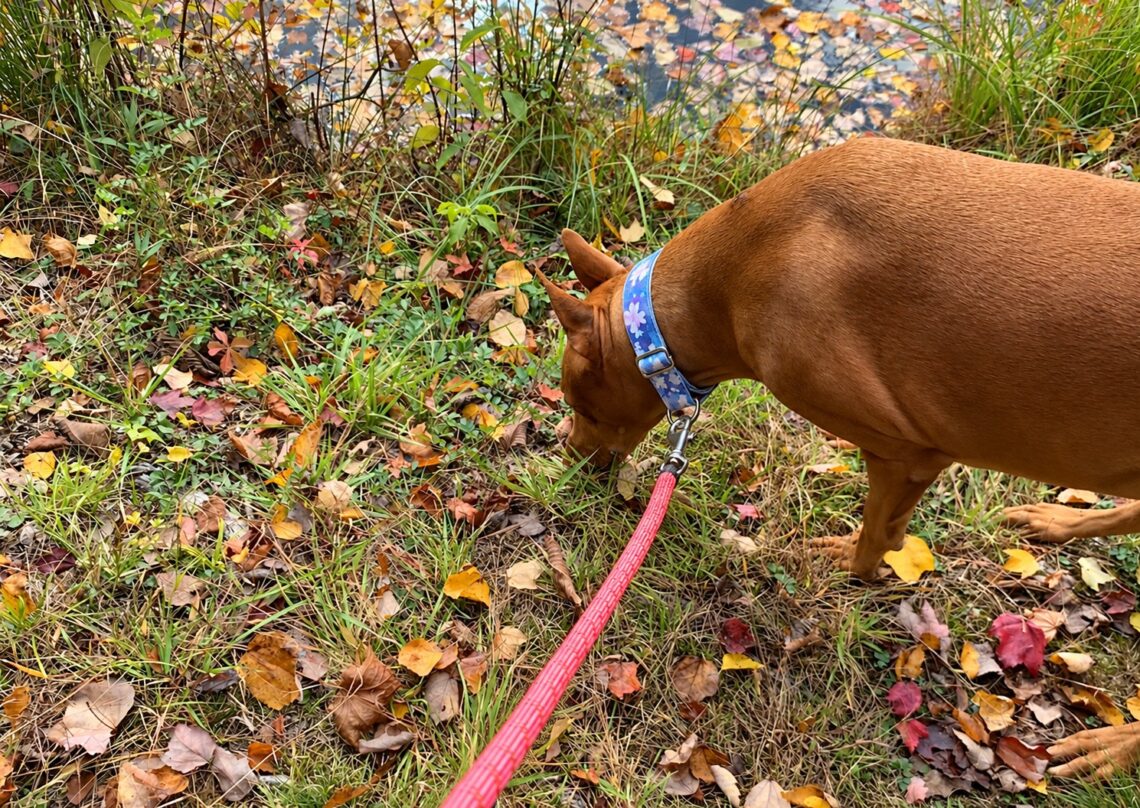

Some days, you have all the time in the world to take your dog on a long walk, play fetch in the backyard or spend an hour working on new tricks. Other days, you’re lucky if you have ten minutes to spare between everything else you need to do.
Fortunately, keeping your dog mentally and physically stimulated doesn’t always require a huge time commitment. In fact, you’d be surprised how much you can accomplish in just ten minutes with the right activities.
The key is choosing activities that actually engage your dog’s brain, body or natural instincts (preferably some combination of the three). And while a good enrichment routine can certainly help burn off excess energy, it’s about a lot more than just tiring your dog out.
Enrichment gives dogs opportunities to do things that come naturally to them, whether that’s sniffing, chasing, digging, chewing or figuring out how to solve a problem. It can also help with training, build confidence and make everyday life a little more interesting.
Best of all, you can adapt enrichment activities for just about any dog, from an energetic puppy who seems to have an unlimited supply of batteries to a senior dog who needs to take things a little slower.
Our Favorite Dog Enrichment Gear:
|
Get them moving
|
Make them think
|
Settle them down

|
|
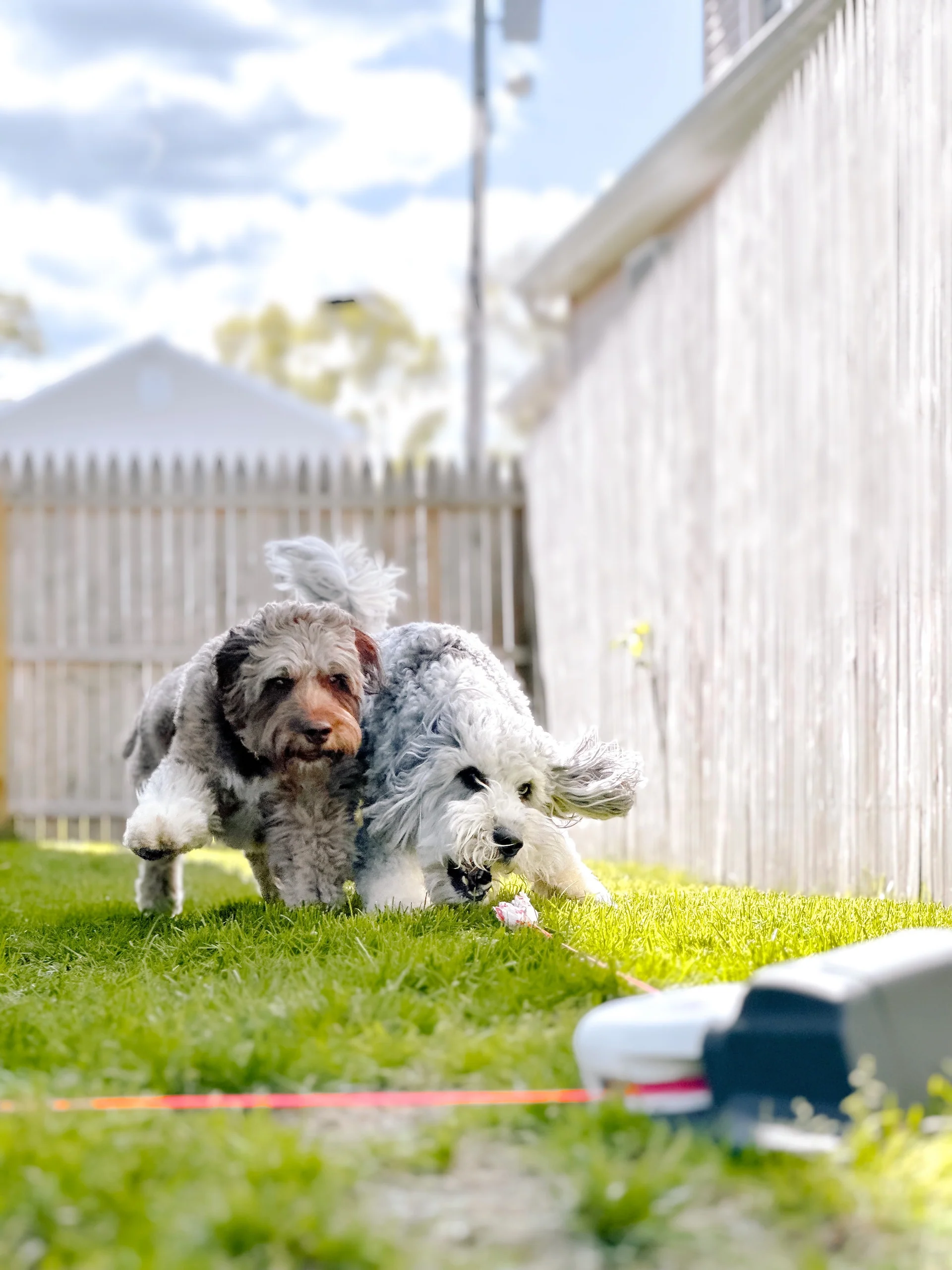
For those with a medium-sized yard and energetic pets. Home Original is the ideal choice for larger outdoor spaces and high-energy dogs. With speeds of up to 30 mph and courses up to 300 feet long, this kit provides thrilling play and exercise. |
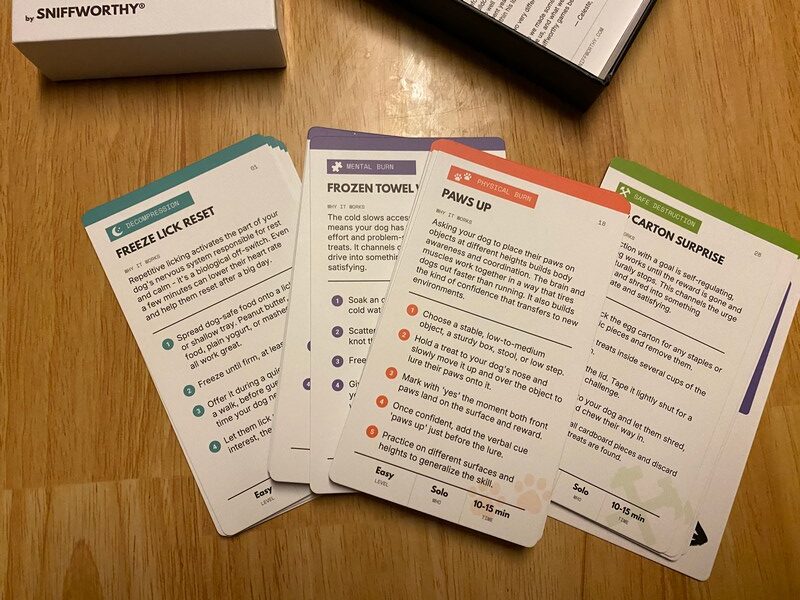
Your Dog Is Bored is a deck of 32 easy enrichment activities designed to keep dogs mentally and physically engaged. Most activities take just 5–20 minutes and use things you already have around the house, making it easy to add more variety and stimulation to your dog’s day. |
Keep your pup entertained, calm, and mentally engaged with the LUFTPETS Snuffle Mat! This colorful veggie garden-style mat turns mealtime into a fun foraging game that helps reduce stress, slow down fast eaters, and encourage positive behavior. |
For those with a medium-sized yard and energetic pets. Home Original is the ideal choice for larger outdoor spaces and high-energy dogs. With speeds of up to 30 mph and courses up to 300 feet long, this kit provides thrilling play and exercise.
Your Dog Is Bored is a deck of 32 easy enrichment activities designed to keep dogs mentally and physically engaged. Most activities take just 5–20 minutes and use things you already have around the house, making it easy to add more variety and stimulation to your dog’s day.
Keep your pup entertained, calm, and mentally engaged with the LUFTPETS Snuffle Mat! This colorful veggie garden-style mat turns mealtime into a fun foraging game that helps reduce stress, slow down fast eaters, and encourage positive behavior.
Why Even 10 Minutes of Enrichment Matters
Dogs weren’t exactly designed to spend their days lying around waiting for us to finish working. Granted, some dogs seem perfectly happy doing just that (especially if there’s a comfortable couch involved), but they still need opportunities to use their brains. And different dogs have different ideas about what makes an activity worthwhile.
Take my Pharaoh Hound, Freya, for example. She’s incredibly intelligent, but training her was an entirely different experience from training my German Shepherd, Tasha.
Tasha was a people pleaser. She was smart, eager to learn and genuinely seemed to enjoy doing things simply because I asked her to. Tell her she was a good girl and she was ready to do it all over again.
Freya? Not so much. She’d learn something quickly, demonstrate that she understood it and then get bored when I asked her to repeat it. It wasn’t that she couldn’t do what I wanted. She just didn’t see the point of doing the same thing over and over to prove it.
I initially struggled with training her because I was relying on methods that had worked beautifully with Tasha. Once I started incorporating more enrichment, problem-solving and activities that appealed to Freya’s natural instincts, things started clicking.
That experience taught me something important: mental stimulation isn’t just something you add to your dog’s day after you’ve finished exercising and training them. It’s an essential part of both.
Enrichment gives dogs a chance to think independently, make choices and engage with their environment. Those experiences can also make training more interesting, particularly for dogs who aren’t especially motivated by repetition or praise alone.
And you don’t need an elaborate setup or a pile of expensive toys to make it happen.
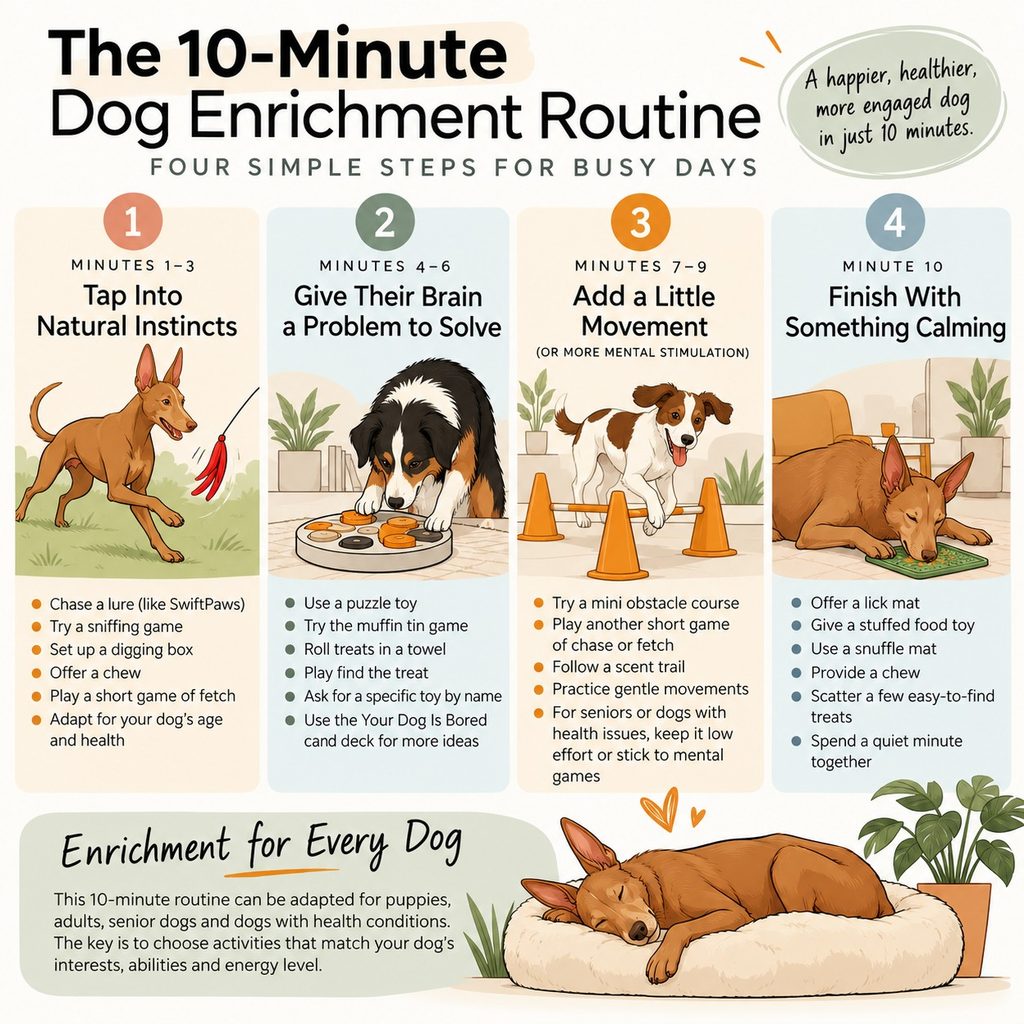
The 10-Minute Dog Enrichment Routine
You can use this simple routine as a starting point, then adjust the activities depending on your dog’s age, health, energy level and interests.
The idea isn’t to squeeze as much activity as possible into ten minutes. It’s to make those minutes count.
Minutes 1–3: Start With Something That Engages Their Natural Instincts
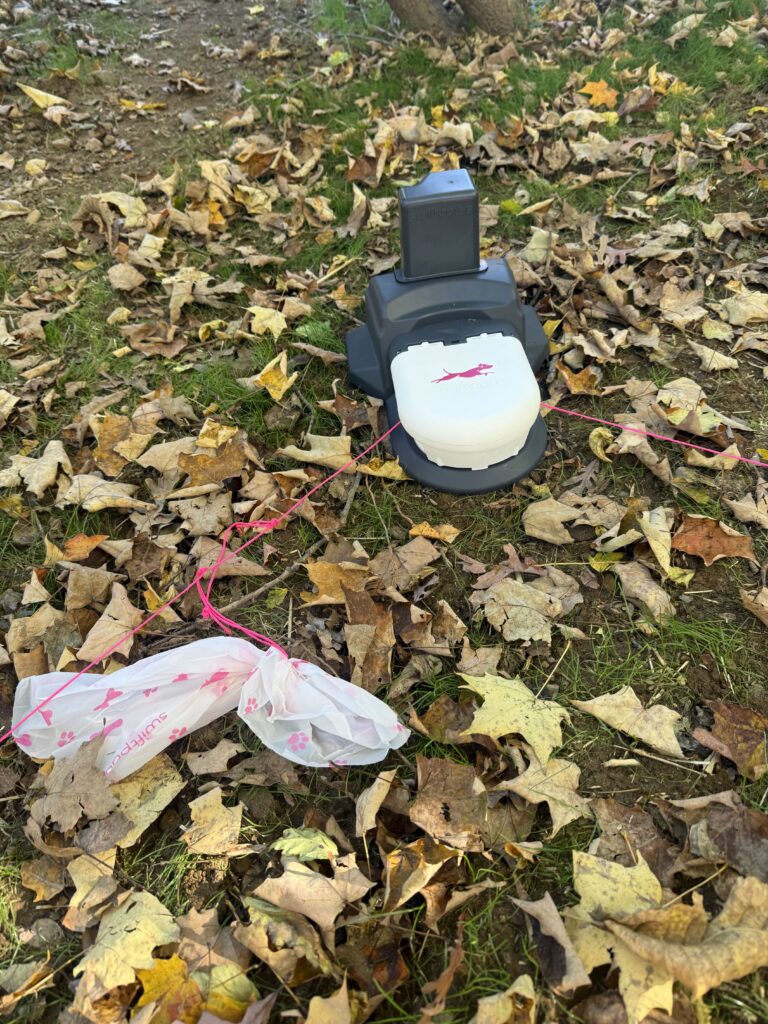
I like starting with an activity that lets dogs do something they already love. It immediately gets them interested, which is especially helpful if you’re working with a dog who isn’t particularly impressed by your carefully planned agenda.
For healthy, active dogs with a strong prey drive, a short lure-chasing session can be a fantastic option.
The SwiftPaws lure coursing kits are designed to give dogs a controlled way to chase a moving lure, tapping into the same instincts that make them want to pursue squirrels, rabbits or anything else that moves suspiciously fast.
One of the things I particularly appreciate about SwiftPaws is its attention to safety, including features designed to help prevent problems during play. Of course, you still need to supervise your dog, choose an appropriate setup and keep sessions within their physical limits.
For those with a medium-sized yard and energetic pets. Home Original is the ideal choice for larger outdoor spaces and high-energy dogs. With speeds of up to 30 mph and courses up to 300 feet long, this kit provides thrilling play and exercise.
And while lure coursing is especially appealing to high-energy dogs, it’s certainly not the only way to engage natural instincts.
Other options include:
- For sniffers: Scatter a few treats in the grass or hide them around a room.
- For diggers: Fill a designated digging box with dog-safe materials and hide a few toys.
- For chewers: Offer an appropriate chew toy that gives them something satisfying to work on.
- For retrievers: Play a short game of fetch or ask them to find and bring back a favorite toy.
- For seniors: Let them explore a small scent trail at their own pace.
Freya is a perfect example of why it’s important to adapt activities as dogs get older. She has a very strong prey drive, and when she was younger, chasing was one of her favorite things in the world. It still is, actually. Unfortunately, she now has a heart condition that means we have to limit intense physical activity.
Her enthusiasm hasn’t gotten the memo. So, while I still want her to enjoy activities that appeal to her hunting instincts, I have to find ways to engage those instincts without encouraging the full-speed sprints that could put her at risk.
For her, that might mean searching for treats or following an interesting scent rather than chasing something across the yard.
The goal is to satisfy the instinct, not necessarily recreate the physical intensity of the activity.
Minutes 4–6: Give Their Brain a Problem to Solve
Now that your dog is engaged, switch to something that requires a little thinking. Puzzle toys are an obvious choice here, but they’re far from the only option.
You can also try:
- The muffin tin game: Place treats in a few compartments of a muffin tin and cover them with appropriately sized balls or toys your dog can safely move.
- The towel roll: Roll a few treats inside a towel and let your dog figure out how to unroll it.
- Find the treat: Hide a treat under one of three cups and let your dog figure out which one contains the prize.
- Toy identification: Ask your dog to find a specific toy by name.
- A simple food puzzle: Use a puzzle feeder or treat-dispensing toy that requires your dog to manipulate something to get a reward.
Another fun option is the Your Dog Is Bored activity card deck. Instead of trying to come up with something new every time, you can pull out a card and try the suggested activity with your dog. I particularly like the idea of having a bunch of different enrichment ideas ready to go, especially on those days when my own brain is running on fumes. You can also adapt the activities to your dog’s abilities, so you’re not limited to games that require a lot of running around.
Your Dog Is Bored is a deck of 32 easy enrichment activities designed to keep dogs mentally and physically engaged. Most activities take just 5–20 minutes and use things you already have around the house, making it easy to add more variety and stimulation to your dog’s day.
Keep the difficulty appropriate for your dog. You want them to think, but you don’t want them getting so frustrated that they give up. This is also a good opportunity to introduce a little training without turning the whole session into an obedience lesson.
For example, you might ask your dog to wait while you hide a treat, then release them to find it. Or teach them to touch a target with their nose before getting access to a puzzle.
With Freya, I’ve found that activities work better when there’s an actual purpose behind what I’m asking her to do. She doesn’t particularly care about demonstrating the same command fifteen times in a row, but give her a problem to solve and suddenly she’s interested.
Not every dog is motivated by the same things, which is another reason I like incorporating different types of enrichment rather than relying on one activity.
Minutes 7–9: Add a Little Movement (Or More Mental Stimulation)
For the next few minutes, choose an activity that gets your dog moving in a way that’s right for them. For a young, healthy dog, that might mean another short game of chase, a quick round of fetch or a mini obstacle course.
You don’t need actual agility equipment, either. A few household objects can work just fine.
Try setting up a little course where your dog walks around chairs, steps over low obstacles or follows you through a simple path.
For older dogs, dogs with mobility problems or those with health conditions, keep things more lowkey.
Some ideas include:
- Walking slowly through a few widely spaced cones or household objects.
- Practicing comfortable, familiar movements for a treat.
- Following a short scent trail across the room.
- Exploring different safe textures with their paws, if they’re comfortable doing so.
- Playing a gentle game of hide-and-seek with a favorite person.
- Even just taking a little stroll around the yard together so your dog can monitor the wildlife situation (Freya’s favorite option).
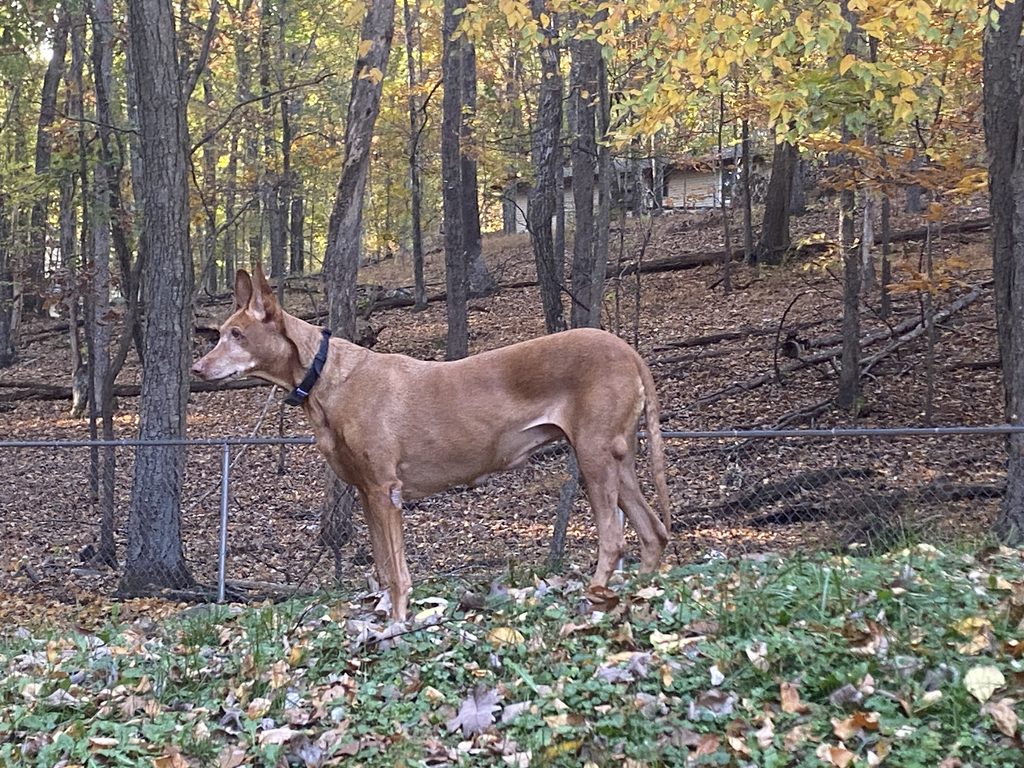
And if your dog has significant physical limitations, you can skip the movement entirely and use these minutes for another mental activity.
There’s no rule that says enrichment has to raise your dog’s heart rate to be effective.
This is particularly important for dogs like Freya. Before her heart condition, I could give her plenty of opportunities to run and chase. Now I have to be much more careful about how much physical exertion she gets.
But her need for mental stimulation hasn’t disappeared just because her body has new limitations.
If anything, finding ways to keep her mentally engaged has become even more important now that some of her favorite physical activities are restricted.
For dogs with heart disease, arthritis or other medical conditions, always follow your veterinarian’s recommendations about appropriate activity levels. Even seemingly gentle exercises may need to be modified depending on the dog.
Minute 10: Finish With Something Calming
I like ending enrichment sessions with something that encourages Freya to settle rather than leaving her completely wound up. This is especially helpful if you’re squeezing the activity into a workday and need to get back to your desk.
Some good options include:
- A lick mat with a thin layer of dog-safe food.
- A stuffed food toy.
- A few treats scattered across a snuffle mat.
- A safe, appropriately sized chew.
- A quiet sniffing game with a few easy-to-find treats.
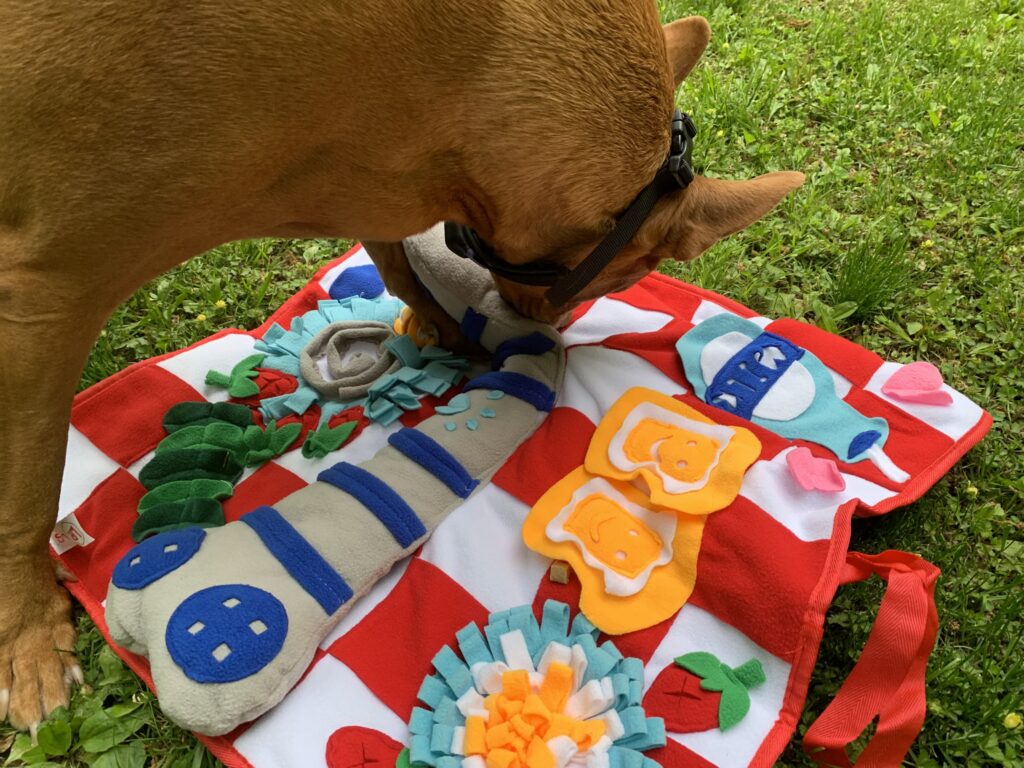
Licking, sniffing and chewing can be calming activities for many dogs, although the effect varies depending on the individual dog and how excited they are.
You can also simply spend the last minute sitting with your dog, giving them some attention and letting them wind down.
The goal is to create a natural transition between enrichment time and whatever comes next.
If your dog is still bouncing off the walls after ten minutes, don’t assume you need to make the next session more intense. Sometimes a dog needs help learning how to settle, not another round of excitement.
How to Adapt the Routine for Different Dogs
First, the ten-minute routine is a guideline, not a rigid schedule. Some dogs will love all four parts, while others will be totally happy spending the entire ten minutes on one activity. Here are a few ways I’d adjust it depending on the dog.
For Puppies and Young, High-Energy Dogs
Young dogs often do well when you combine physical activity, problem-solving and short training exercises. You could spend a few minutes playing an age-appropriate chase game (Freya used to love to play “ball in the hall” as a puppy!), then follow it up with a simple puzzle and a quick training session.
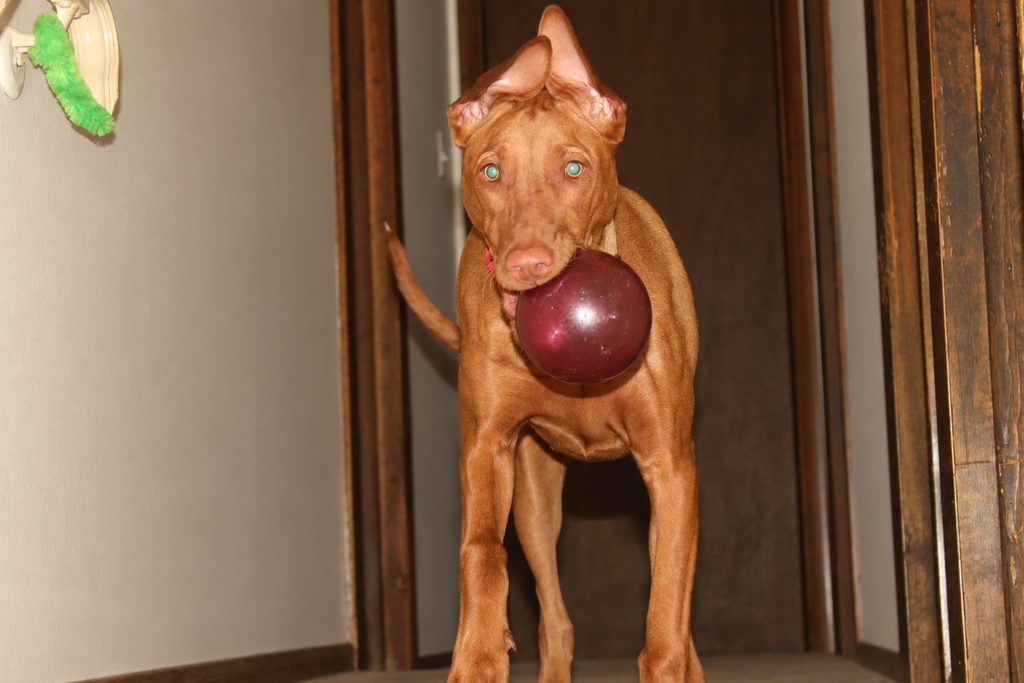
For puppies, avoid high-impact exercise, sharp turns and repetitive jumping while their bodies are still developing. Lure coursing and other intense chase activities are best suited for dogs who are physically mature and healthy enough for that type of exercise.
And don’t underestimate the value of teaching puppies to settle. Learning that not every waking moment needs to involve chaos is a useful skill (for the dog and everyone else in the house).
For Healthy Adult Dogs Who Need More of a Challenge
This is where you can get a little more creative.For dogs who love chasing, a SwiftPaws lure coursing session can provide a fun physical outlet that also engages their natural instincts. Just keep the activity appropriate for their conditioning and give them time to recover.
For dogs who prefer problem-solving, try increasing the difficulty of their scent games or introducing more complicated food puzzles. You can also combine activities. For example, ask your dog to find a toy, bring it back and then complete a simple task before getting another turn.
Just remember that more challenging doesn’t always mean more physically demanding.
For Senior Dogs
Senior dogs still need enrichment, even if they’ve slowed down considerably. In fact, mental stimulation can be especially valuable when age-related changes make some physical activities less practical.
For older dogs, I would focus on:
- Easy scent games that don’t require much movement.
- Food puzzles that are simple to manipulate.
- Short sessions practicing familiar cues.
- Gentle exploration of new objects or environments.
- Activities that let them make choices without becoming frustrated.
You may also need to adjust your routine for vision, hearing, dental or mobility issues if your dog has any. For example, a senior dog with arthritis might do better with a snuffle mat placed at a comfortable height rather than having to bend down to search for treats on the floor.
For Dogs With Health Conditions or Limited Mobility
When a dog has a chronic health condition, enrichment becomes a balancing act between keeping them engaged and respecting their physical limitations. I know this one particularly well because of Freya.
She still wants to do everything she did before developing heart disease. She doesn’t understand why I sometimes have to interrupt her when she’s getting too excited about a chipmunk in the yard, and she certainly doesn’t appreciate my interference.
I also don’t want her world to shrink to nothing more than eating, sleeping and occasionally walking outside. So we focus more on activities that give her brain something to do without putting unnecessary stress on her body.
Scent games, simple puzzles and low-effort problem-solving activities are all good options, depending on how she’s feeling.
For dogs with health conditions, it’s worth discussing enrichment with your veterinarian, particularly if an activity could increase excitement, breathing effort or physical exertion.
You can also break the ten minutes into smaller sessions. Two five-minute activities, or even several two-minute games throughout the day, may work better for dogs who tire easily.
What If Your Dog Doesn’t Like Puzzle Toys?
Not every dog enjoys food puzzles, and that’s perfectly fine.Some dogs love figuring out how to get treats out of complicated contraptions. Others would prefer you stop making dinner unnecessarily difficult.
That’s why I think it’s important to look at enrichment as a much broader concept than simply buying interactive toys.
A dog who doesn’t care about puzzle feeders might absolutely love tracking a scent through the backyard. Another might enjoy learning the names of different toys or figuring out how to retrieve something from an unusual location.
And some dogs are happiest when they’re allowed to investigate their surroundings at their own pace.
Pay attention to what your dog naturally chooses to do when given the opportunity. Those preferences can tell you quite a bit about the types of enrichment they’ll enjoy.
Also, don’t be afraid to change things up. Dogs can get bored with enrichment activities just like they can get bored with regular toys. You don’t necessarily need to buy something new, either. Sometimes changing where you hide treats or introducing a slightly different challenge is enough to make an old game interesting again.
Can 10 Minutes of Enrichment Really Make a Difference?
Yes, although it’s important to keep expectations realistic. Ten minutes of enrichment isn’t a replacement for regular exercise, social interaction, training or the other things dogs need to stay healthy and happy. And a healthy, energetic dog isn’t necessarily going to be satisfied with ten minutes of activity for the entire day.
But on days when your schedule is packed, a short, focused enrichment session is certainly better than doing nothing. It also gives you an opportunity to connect with your dog, learn more about what motivates them and work on useful skills without turning every interaction into a formal training session.
For me, one of the biggest lessons from raising Freya has been that a mentally engaged dog isn’t necessarily the same thing as a physically exhausted dog.
With Tasha, training often felt like something we were doing together because she enjoyed making me happy. With Freya, I had to learn how to make the activity itself worth her time.
Neither dog was smarter than the other. They just approached learning differently.
And now that Freya is older and dealing with heart disease, I’m especially grateful that I learned to appreciate the value of mental enrichment early on.
She may not be able to chase everything that catches her attention anymore, but she can still investigate, solve problems and enjoy being the clever, stubborn dog she’s always been.
Ultimately, that’s what enrichment is really about. It’s not just finding ways to keep dogs busy until we’re available to entertain them again. It’s giving them opportunities to enjoy the things that make them dogs.
And even on your busiest days, ten minutes is a pretty reasonable place to start.s







Leave a Comment