


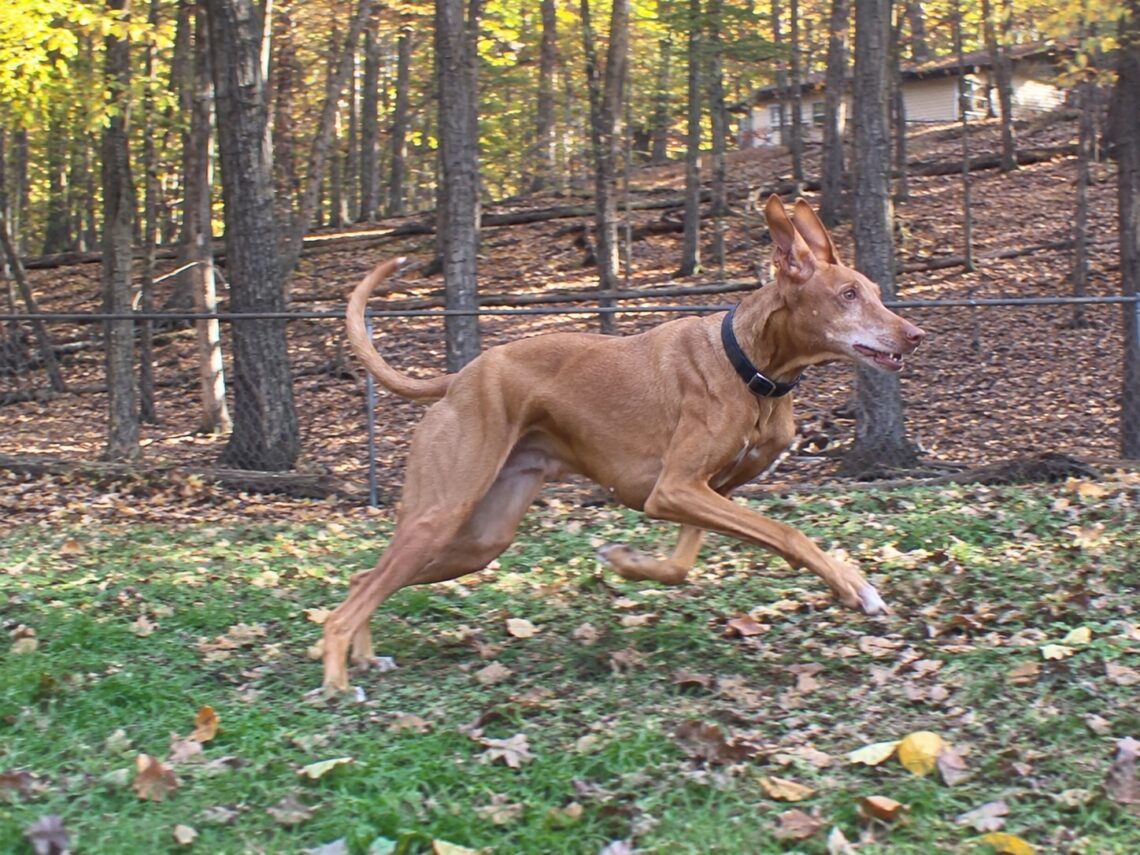

Some dogs can watch a squirrel run across the yard without so much as lifting their heads. Others act like that squirrel just issued a personal challenge that absolutely cannot go unanswered.
My Pharaoh Hound, Freya, falls firmly into the second category. She’s always had a strong prey drive. If something small moves quickly, she’s interested. If it runs, she’s REALLY interested. And if it happens to be a chipmunk foolish enough to wander onto our deck, well, apparently all bets are off.
Of course, now that Freya is 10 and has a heart condition, we have to be much more careful about how much chasing she actually gets to do. Her enthusiasm hasn’t diminished one bit, but her physical abilities have changed.
And that’s something I think is worth talking about because the instinct to chase doesn’t necessarily go away just because a dog gets older or needs to slow down.
So, why do some dogs love chasing things so much? And how can we give them a safe way to satisfy that instinct, whether they’re energetic young athletes or seniors who need a gentler approach?
|
Best for Lure Coursing
|
Best Flirt Pole
|
Best for Fetch
|
|
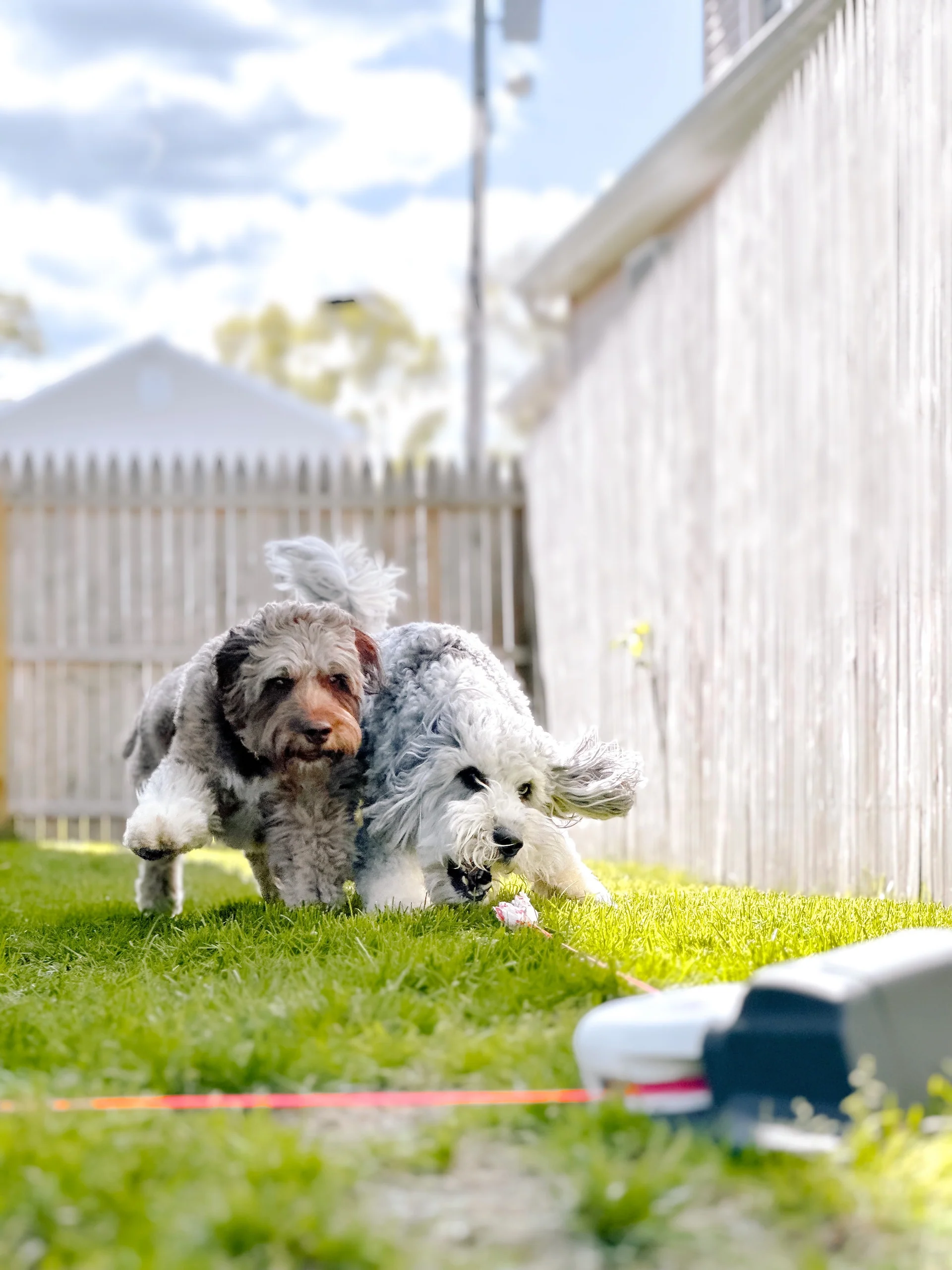
Description: For those with a medium-sized yard and energetic pets. Home Original is the ideal choice for larger outdoor spaces and high-energy dogs. With speeds of up to 30 mph and courses up to 300 feet long, this kit provides thrilling play and exercise. |
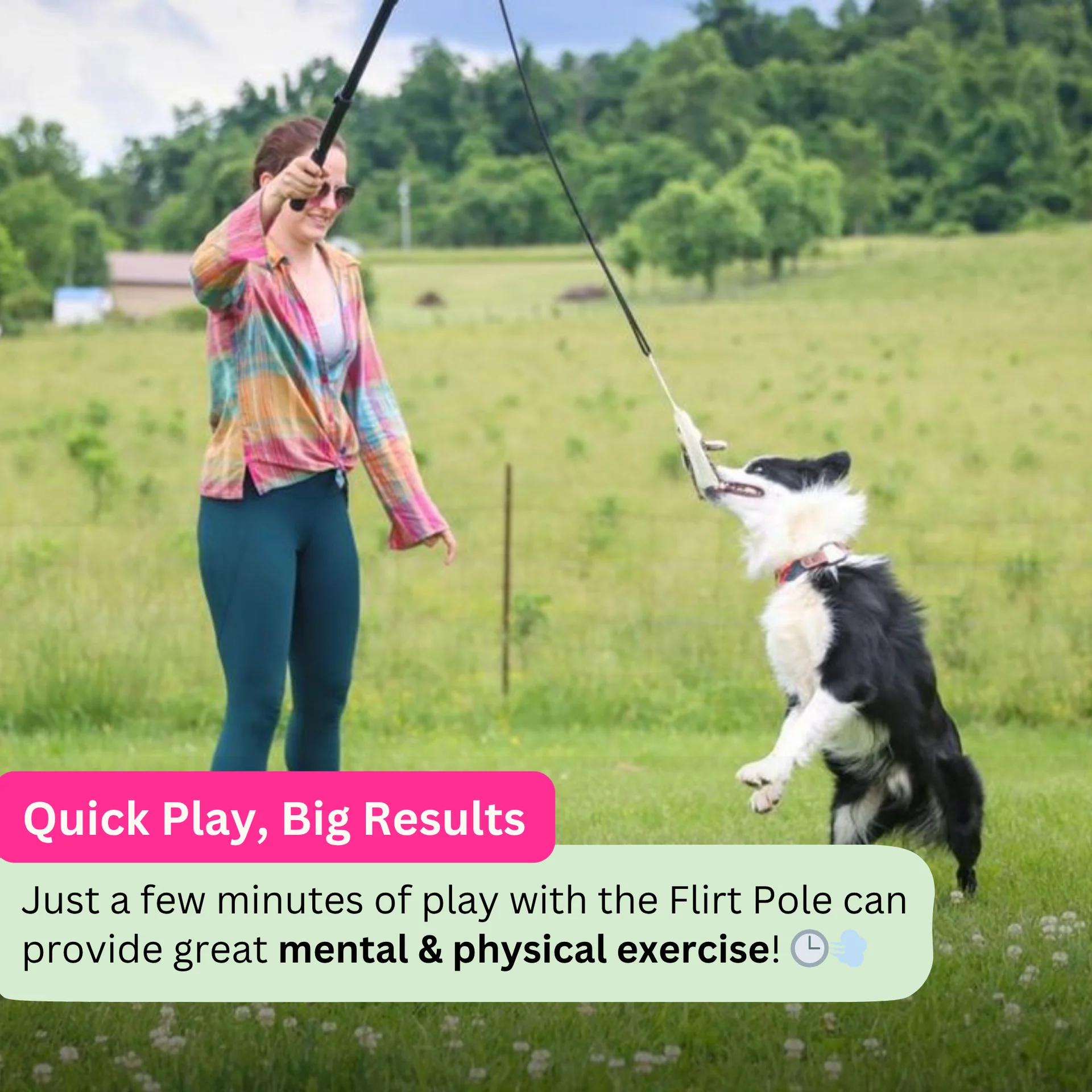
Description: The SwiftPaws Flirt Pole is a simple but incredibly fun way to give your pet some exercise and mental stimulation. Can be used indoors or outdoors, so it works in apartments, backyards, or parks. |
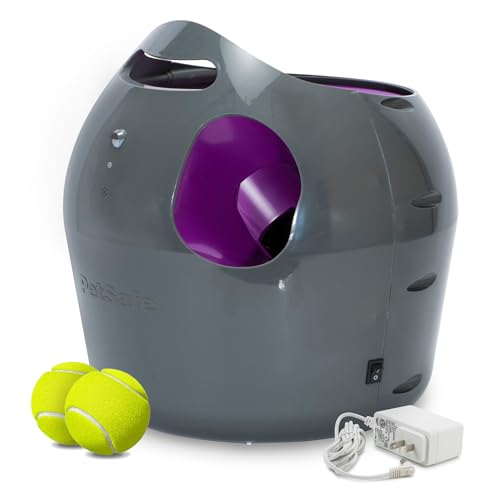
Description: For the dog who loves fetch, gift him the toy that he’s sure to have a ball playing with — literally. The Automatic Ball Launcher is an automatic, interactive game of fetch that will keep your best friend engaged and give your arm a little break. |
For those with a medium-sized yard and energetic pets. Home Original is the ideal choice for larger outdoor spaces and high-energy dogs. With speeds of up to 30 mph and courses up to 300 feet long, this kit provides thrilling play and exercise.
The SwiftPaws Flirt Pole is a simple but incredibly fun way to give your pet some exercise and mental stimulation. Can be used indoors or outdoors, so it works in apartments, backyards, or parks.
For the dog who loves fetch, gift him the toy that he’s sure to have a ball playing with — literally. The Automatic Ball Launcher is an automatic, interactive game of fetch that will keep your best friend engaged and give your arm a little break.
Why Do Dogs Love to Chase Things?
Chasing is a natural part of canine behavior. Dogs descended from predators, and while thousands of years of domestication have changed quite a few things about them, the instinct to pursue moving objects is still very much alive.
In fact, chasing is part of what’s called the predatory motor sequence, a series of behaviors that includes noticing potential prey, orienting toward it, stalking, chasing, grabbing and…well, let’s just say the rest doesn’t end well for the prey.
Not every dog follows that entire sequence, though. Selective breeding has emphasized certain parts of it in different breeds.
For example:
- Sighthounds, like Greyhounds, Whippets and Pharaoh Hounds, are particularly sensitive to movement and were bred to pursue prey using their vision and speed.
- Herding breeds, like Border Collies and Australian Shepherds, have been selectively bred to use parts of the predatory sequence to control livestock without injuring them.
- Terriers were developed to find and pursue small animals, so a scurrying rodent can be especially interesting.
- Retrievers often enjoy pursuing moving objects and bringing them back, which helps explain why so many love a good game of fetch.
Of course, breed isn’t everything. Some dogs from breeds known for their prey drive couldn’t care less about chasing anything. Meanwhile, you might have a little mixed-breed dog who considers every blowing leaf a legitimate target.
Personality, genetics, early experiences and individual preferences all play a role.
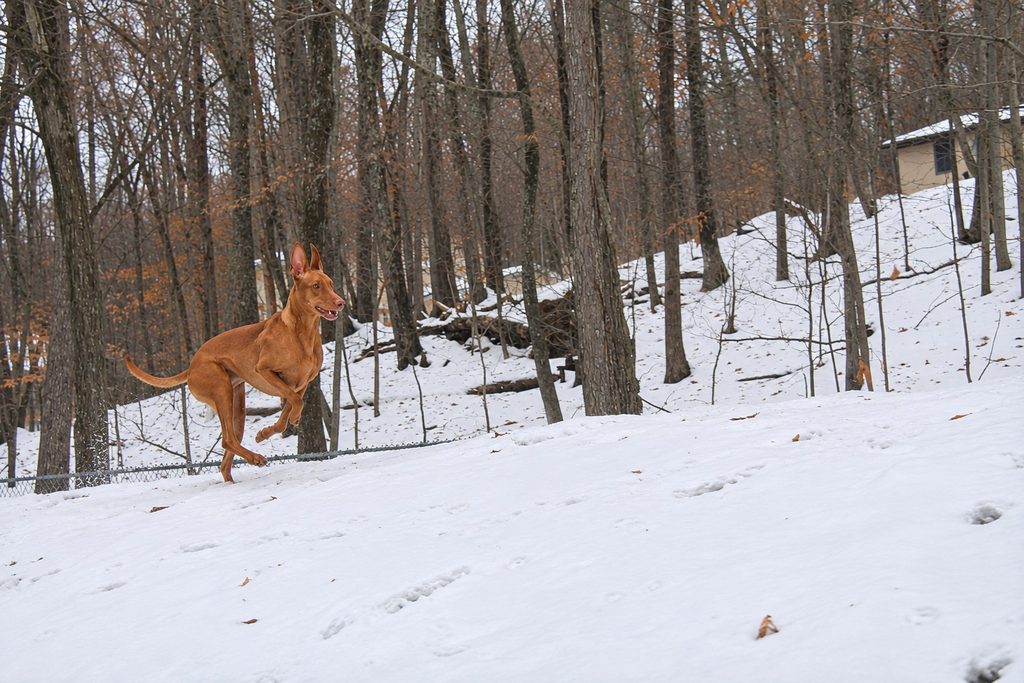
That said, Freya falls pretty deep in line with her breed’s prey drive. Calling it a “high drive” is an understatement. If it moves, she chases. Oddly, if it stands perfectly still she has no interest in it. The neighborhood feral cats have figured this out. Chipmunks, not so much.
It’s All About Catching Something – Until it Isn’t
Here’s where things can get a bit tricky. While some dogs are actually content to just chase something and don’t care about the “catch” (I had a Lab/Collie that would chase a ball until it landed, then walk away bored), for the vast majority of prey-driven dogs it really is all about the catch.
Many high-drive dogs become frustrated when they can never catch their target and get so worked up that they have trouble settling down afterward (Freya).
That’s why it’s so important to give your dog a healthy outlet for this drive. A frisbee, for example, can be a great outlet because it gives them something to chase AND catch. You can even watch your dog’s prey drive turn into play drive when you start introducing chasing games to them. This is the moment that it stops being all about the catching and the game itself becomes rewarding.
Chasing actual wildlife comes with its own problems. Aside from the risk of your dog getting hurt, there’s the potential for injuring or stressing wild animals. The goal with chasing games isn’t to encourage dogs to chase anything that moves. It’s to give them appropriate opportunities to enjoy the behaviors that come naturally to them which can actually reduce unwanted chasing behavior.
5 Ways to Give Your Dog a Safe Outlet for Their Chasing Instincts
The best activity depends on your dog’s age, health, physical abilities and how intensely they respond to moving objects.
A healthy two-year-old Whippet and a 12-year-old dog with arthritis might both love chasing, but they’re not going to benefit from the same type of exercise.
Fortunately, there are quite a few ways to satisfy that instinct without turning your backyard into a wildlife pursuit course.
1. Try Lure Coursing for Healthy, Active Dogs (But With a Heavy Focus on Safety)
If you’ve ever watched a sighthound run at full speed, you know there’s something pretty impressive about seeing a dog do exactly what they were built to do.Lure coursing gives dogs an opportunity to chase a moving object in a controlled setting, without involving live prey.
Traditionally, the sport involves dogs pursuing a mechanically operated lure around a designated course. It’s especially popular with sighthounds, but plenty of other breeds enjoy it, too.
And you don’t necessarily have to join a club or travel to an event to give your dog a similar experience.
SwiftPaws makes at-home lure coursing systems that allow you to set up a course in your own yard. A motorized system pulls a lure along a line, creating movement that mimics fleeing prey. Check it out in action in the video below.
What I particularly like about this concept is that you’re giving dogs an appropriate target for an instinct they’re already inclined to follow. Instead of trying to convince them that chasing is bad, you’re showing them what they’re allowed to chase.
You can also adjust the course layout and control the lure’s movement to suit your dog’s abilities.
One thing worth pointing out is that SwiftPaws puts a lot of thought into safety. In fact, safety was their FIRST concern when designing a system. By that, I mean the founder, Meghan Wolfgram, started with “how do I make this safe,” and then built the system around that instead of “how do I make this do what I want” and then throwing in some safety features later.
Their systems include features designed to help you maintain control over the activity, and the emphasis is on supervised, structured play rather than just letting dogs run themselves into exhaustion.
Of course, even with a thoughtfully designed system, lure coursing is still vigorous exercise. It involves acceleration, quick turns and sometimes sudden stops.
For healthy, physically mature dogs who enjoy running, it can be a fantastic outlet. Just introduce it gradually, follow the equipment’s safety instructions and make sure your dog is physically ready for that level of activity.
And if your dog has a medical condition, mobility problems or exercise restrictions, check with your veterinarian before trying it.
For those with a medium-sized yard and energetic pets. Home Original is the ideal choice for larger outdoor spaces and high-energy dogs. With speeds of up to 30 mph and courses up to 300 feet long, this kit provides thrilling play and exercise.
2. Play Fetch (With a Few Adjustments)
Fetch is probably the easiest way to give a chase-loving dog an appropriate target. You throw a ball or toy, your dog chases it and, if you’re lucky, brings it back. Some dogs apparently believe the retrieving part is optional (Freya), but that’s another discussion.
While fetch seems pretty straightforward, it’s worth thinking about how you play.
Repeatedly throwing a ball as far as possible can encourage dogs to sprint, leap and stop abruptly. That’s a lot of stress on joints, especially when dogs are playing on hard or slippery surfaces.
For a safer game:
- Choose a flat, grassy area with good traction.
- Use toys that are appropriately sized for your dog.
- Keep throws lower to the ground to discourage high jumps.
- Take breaks before your dog becomes exhausted.
- Avoid using sticks, which can cause serious mouth and throat injuries.
You can also roll a ball along the ground instead of throwing it through the air. This encourages pursuit without as much jumping.
For dogs who love chasing but shouldn’t be sprinting, shorter, slower rolls can make the game more manageable.
You can also try a ball launcher but choose one that allows you to customize the settings to fit how YOUR dog plays.
For the dog who loves fetch, gift him the toy that he’s sure to have a ball playing with — literally. The Automatic Ball Launcher is an automatic, interactive game of fetch that will keep your best friend engaged and give your arm a little break.
3. Use a Flirt Pole for Interactive Chasing
A flirt pole is essentially a large wand toy for dogs. There’s a pole, a cord and a lure attached to the end. You move the lure along the ground while your dog follows and tries to catch it.
It’s a relatively simple way to encourage chasing without needing a huge amount of space. You can also control the movement and occasionally let your dog catch the toy, which helps keep the game rewarding.
That said, flirt poles can be surprisingly intense.Dogs may twist, jump and change direction quickly, especially when they’re excited. So, keep the lure low, avoid sharp turns and choose a pace that matches your dog’s abilities. Puppies, seniors and dogs with orthopedic concerns may need a much more controlled version of the game.
And, as with any toy involving cords or strings, supervise play and put the equipment away afterward.
The SwiftPaws Flirt Pole is a simple but incredibly fun way to give your pet some exercise and mental stimulation. Can be used indoors or outdoors, so it works in apartments, backyards, or parks.
4. Try Hide-and-Seek With Moving Toys
Not every chase game has to involve running across the yard. For dogs who enjoy searching as much as pursuing, you can create little games that combine movement with problem-solving.
For example, drag a favorite toy slowly around a corner and let your dog follow it. Or move a toy behind a piece of furniture and encourage your dog to figure out where it went.
You can even attach a toy to a short rope and gently pull it along the floor, provided you supervise closely and prevent your dog from chewing or swallowing the rope.
The idea is to give your dog something interesting to follow without requiring an all-out sprint. This can be especially useful indoors during bad weather or for dogs who need less strenuous activities.
Just remember that some dogs get frustrated by toys that constantly disappear or remain out of reach. Let them catch their target regularly and finish with a successful interaction.
5. Make Chasing Part of a Training Game
Sometimes, the best way to channel a dog’s chasing instinct is to combine it with training. Instead of simply letting your dog pursue a toy whenever they feel like it, teach them to wait for a release cue.
You might ask your dog to sit, wait briefly and then release them to chase a rolling toy. You can also practice calling your dog away from a moving object and rewarding them for responding.
This teaches an important skill: just because something moves doesn’t mean your dog automatically gets to chase it.
Obviously, you shouldn’t expect a dog with a strong prey drive to develop perfect impulse control overnight. Freya is 10, and I can assure you that a chipmunk still outranks me in her personal hierarchy of interesting things, especially when she’s off-leash in the backyard. On leash, she’s gotten pretty good at being less reactive towards wildlife, which I am super grateful for because when she was two she almost dislocated my shoulder. She is STRONG and STUBBORN when she’s on the hunt!
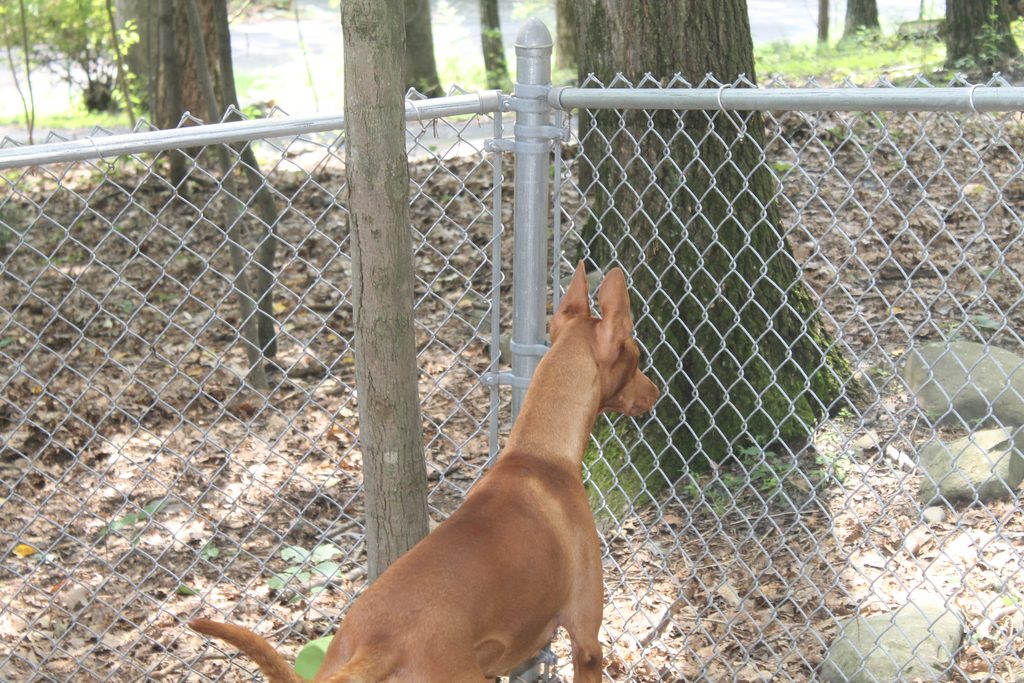
Anyway, practicing these skills in controlled situations can make it easier to manage your dog when something genuinely exciting appears. Just keep sessions short, start with easy distractions and reward the behaviors you want to see more often.
What About Senior Dogs or Dogs Who Can’t Safely Run?
This is where things get a little more personal for me.Freya was diagnosed with heart disease earlier this year after experiencing episodes of pre-syncope (essentially, almost fainting) following physical exertion.
She’s now on medication, and while she’s doing well overall, we have to be careful about how much excitement and physical activity she gets. She can handle moderate exertion but nothing too intense.
The tricky part is that Freya doesn’t think she’s a senior dog with a heart condition. She thinks she’s a perfectly capable Pharaoh Hound who should absolutely be allowed to chase that chipmunk across the yard. Her instincts haven’t changed just because her health has.
I imagine plenty of people with senior dogs, dogs recovering from injuries or dogs managing chronic health conditions can relate to that. The challenge is finding ways to let them enjoy themselves without pushing their bodies beyond what they can safely handle.
Focus on the Instinct, Not the Intensity
One of the most helpful things I’ve learned is that satisfying her natural instincts doesn’t always require recreating the most physically demanding version of a behavior.
For Freya, chasing is about much more than running. She’s interested in movement, tracking where something goes and anticipating what it might do next.
So, while we can’t let her race around the yard like she used to, we can still offer activities that tap into some of those same interests.
For example, a slow-moving toy that she can follow with her eyes and investigate doesn’t require the same physical effort as chasing a squirrel.Likewise, hiding a favorite toy nearby gives her something to search for without requiring her to run.
Neither activity is exactly the same as a full-speed chase, obviously. But they provide opportunities to engage her brain and natural instincts in a more manageable way.
Let Your Dog Watch the Action
This might sound a little strange, but sometimes watching something interesting can be an enjoyable activity all by itself.
Freya loves sitting on our deck and monitoring the wildlife in the yard. Of course, we have to intervene when watching turns into an overwhelming desire to launch herself after something. We’ve learned to recognize when she’s getting too worked up and redirect her before she reaches that point.
When she’s in “mellow mode,” though, she’s pretty content to just observe. Mind you, she’s “observing” to ensure that nothing moves too quickly within her domain, so we really do have to be ready to intervene at the drop of a hat. Cats are the safest for her to watch because she lives with them. So even though the ferals aren’t HER cats, she’s pretty chill about them walking through the yard. As long as they’re just walking. Running triggers her every time.
The key is knowing your dog. If watching squirrels through the window turns your dog into a frantic, barking mess, it’s probably not the most relaxing activity for them.
Don’t Overlook Scent Games
Scent work isn’t technically chasing, but it can satisfy some of the same underlying interests, particularly the desire to locate something.
Dogs naturally use their noses to investigate their environment, and scent games can provide mental stimulation without requiring intense physical activity.
Try hiding treats around a room, scattering a few pieces of food in the grass or using a snuffle mat.
You can also introduce simple tracking games by dragging a treat along the ground for a short distance and letting your dog follow the scent trail.
For dogs who can’t safely run, these activities can be a wonderful way to provide enrichment while keeping physical exertion relatively low.
Again, though, the activity should fit your dog’s medical needs and excitement tolerance.
How to Know When Chasing Is Getting Too Intense
One of the biggest mistakes we can make is assuming that because a dog wants to keep playing, they’re physically capable of doing so.
Dogs don’t always make sensible decisions about their own limits, particularly when they’re excited.
Some will continue chasing long after they should have stopped (Freya). That’s why it’s important to pay attention to your dog’s behavior rather than waiting for them to decide they’ve had enough.
Signs that it’s time to stop include:
- Excessive panting or difficulty recovering between bursts of activity.
- Slowing down, stumbling or appearing uncoordinated.
- Limping, stiffness or changes in movement.
- Becoming unusually frantic, frustrated or unable to respond to familiar cues.
- Seeking shade, lying down or repeatedly disengaging from the activity.
- Any coughing, weakness or unusual breathing during or after exercise.
Collapse, fainting, severe weakness or difficulty breathing require immediate veterinary attention.
With Freya, I’ve become particularly attentive to subtle changes in how she moves. Her pre-syncope episodes tend to happen after major exertion, and there’s a specific wobble that I’ve learned to recognize.
Now, when I see her approaching what I consider her limit, I intervene before she gets too worked up. Sometimes that means physically getting between her and whatever she’s watching, redirecting her attention and giving her a chance to settle down. Other times, it means closing the gate to keep her on the deck instead of letting her into the yard.
She’s not always thrilled about these decisions, but keeping her safe matters more than winning her approval. (Fortunately, she gets over it.)
For healthy dogs, it’s also important to consider temperature, humidity, terrain and overall fitness. Even a young, athletic dog can overheat or injure themselves during an intense chasing session.
Choosing the Right Chase Activity for Your Dog
There’s no single activity that’s perfect for every chase-loving dog. A young, healthy dog who thrives on running may absolutely love an at-home lure coursing system like SwiftPaws. It’s a way to give them an appropriate target and an outlet for a natural instinct, with you supervising the experience.
Another dog might be perfectly content chasing a ball across the living room.
And for seniors or dogs with health limitations, slower games that involve following, searching and investigating may be a better fit. The important thing is matching the activity to the dog you have right now, not necessarily the dog they were a few years ago.
That’s been one of the biggest adjustments for me with Freya. I still see the same dog who could run like the wind and seemed to have an endless supply of energy. And in many ways, she still is that dog. Her personality certainly hasn’t changed. But her physical needs have, and it’s my job to respect that, even when she would prefer otherwise.
Ultimately, giving dogs a safe outlet for their chasing instincts isn’t about encouraging them to run faster or play harder. It’s about understanding what they enjoy, recognizing their individual limits and finding ways to let them be dogs.
Even if that occasionally means explaining to a very opinionated Pharaoh Hound that the chipmunk has won this round.





Leave a Comment