


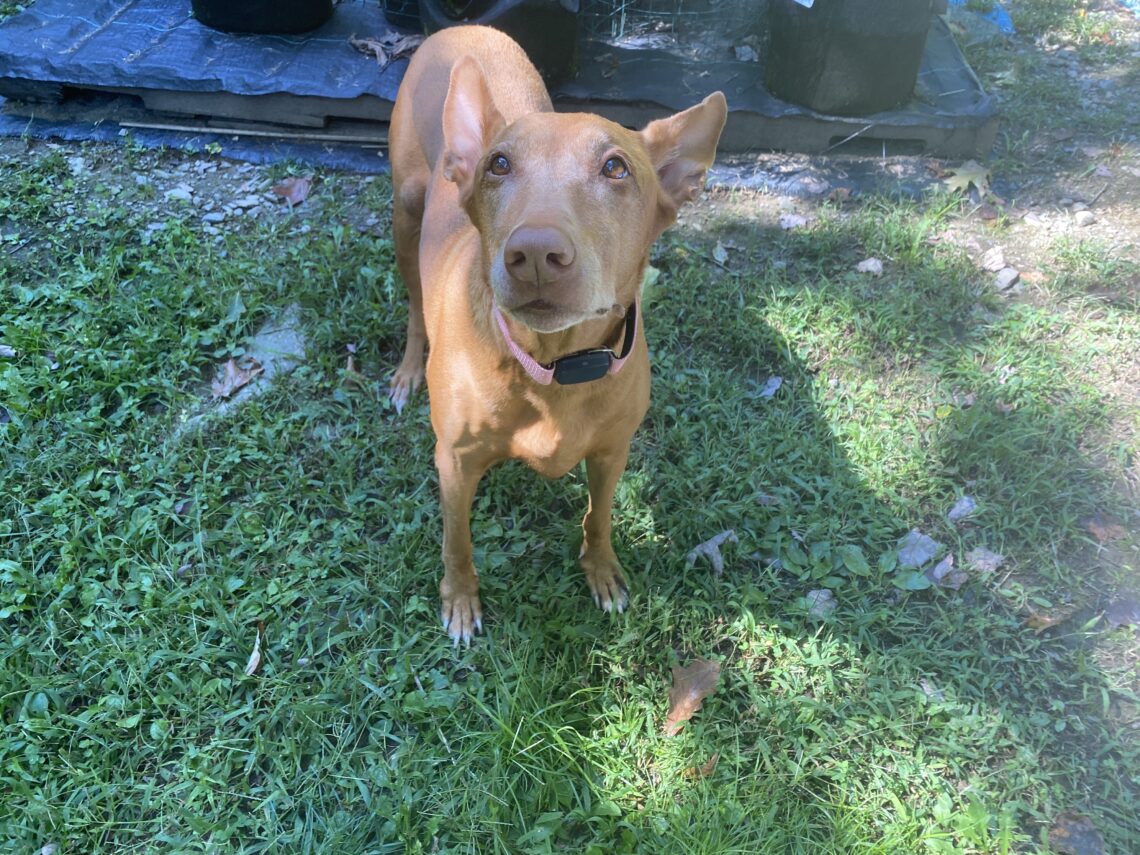

The PetSafe GPS Dog Tracker + Activity Monitoring combines live GPS tracking, escape alerts, and daily activity monitoring in one relatively small device that attaches to your dog’s existing collar. I’ve been testing it with Freya, my Pharaoh Hound, and while the GPS was obviously the main reason I was interested in it, I’ve ended up paying just as much attention to everything else it tracks.
That’s partly because Freya has a heart condition, so knowing what her normal activity looks like matters more to me now than it used to. But even beyond that, I like the idea of a GPS tracker that does something useful during the other 99.9% of your dog’s life when they’re safely where they’re supposed to be.
After all, I hope I never actually need the “find my lost dog” part of this thing. The rest of it I’m already using every day.
The PetSafe GPS Dog Tracker combines real-time GPS tracking with activity monitoring for steps, distance, rest, and barking. It also features unlimited customizable safe zones, escape alerts, up to 30-day battery life, and a lightweight design that attaches to your dog's existing collar or harness. Includes a free 3-month subscription to get you started.
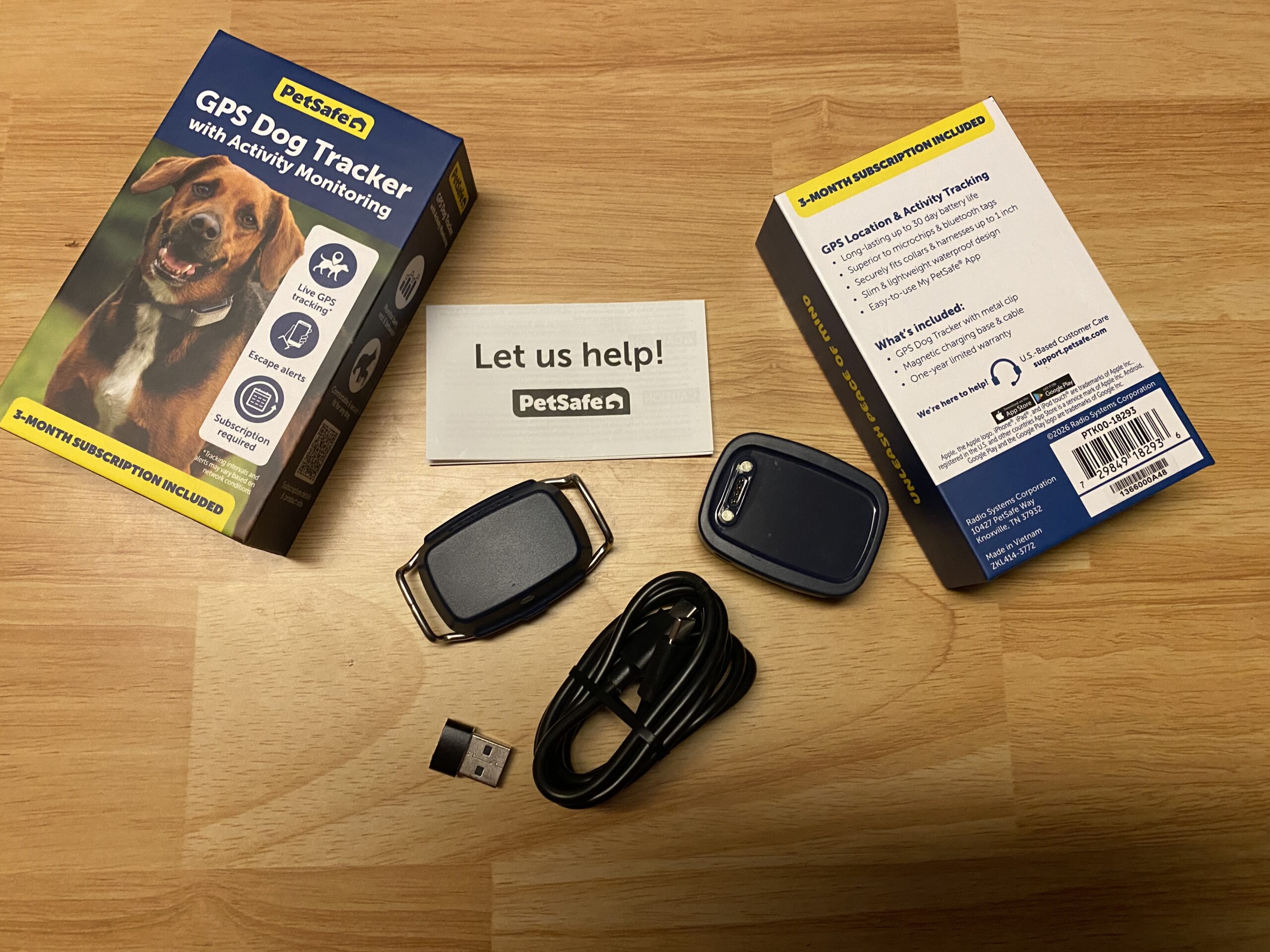
PetSafe GPS Dog Tracker: Top Features
- Live GPS location tracking using GPS and cellular technology
- Find My Pet mode with directions to your dog’s location
- Unlimited customizable safe zones with escape alerts
- Daily step tracking
- Distance traveled
- Rest tracking
- Bark monitoring with time-based activity
- GPS heat maps showing where your dog spends time
- Up to 30 days of activity data
- Up to 30-day battery life
- Smart charging base that pauses GPS tracking when your dog is nearby to conserve battery
- IP67 waterproof and dustproof rating
- Stainless-steel attachment clip
- Fits collars and harnesses up to 1 inch wide
- My PetSafe app
- Three-month subscription trial included
Note: The tracker uses satellite GPS along with cellular service, rather than relying on nearby Bluetooth devices for location tracking. Bluetooth is still used for things like syncing at home and communicating with the charging base.
Pros and Cons
Pros
Cons
My Real-World Experience With the PetSafe GPS Dog Tracker
Setup Was Wonderfully Uneventful
I’m always a little wary when a product review begins with “First, download our app.” Sometimes that’s where I lose 45 minutes of my life to pairing modes, blinking lights, account verification, and wondering which particular deity controls Bluetooth.
That didn’t happen here. I downloaded the My PetSafe app, followed the prompts, entered my network password, hit a few buttons, and that was basically it. The tracker was connected and ready to go without requiring any serious effort on my part.
The app itself is also pretty straightforward. Location tracking lives under the Live section, while the Health dashboard gives you an overview of steps, distance, rest, and barking. You can tap each one for a more detailed view. Nothing important feels particularly buried, which I appreciate.
I Love That It Fits on Freya’s Existing Collar
This is probably one of my favorite things about the design.
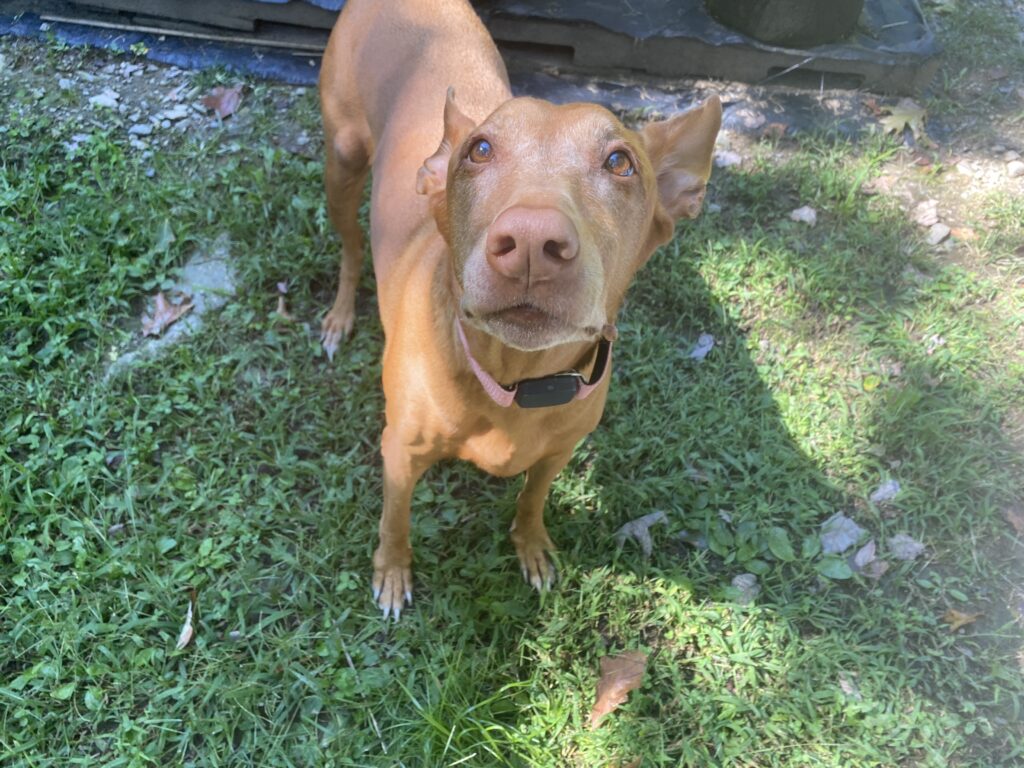
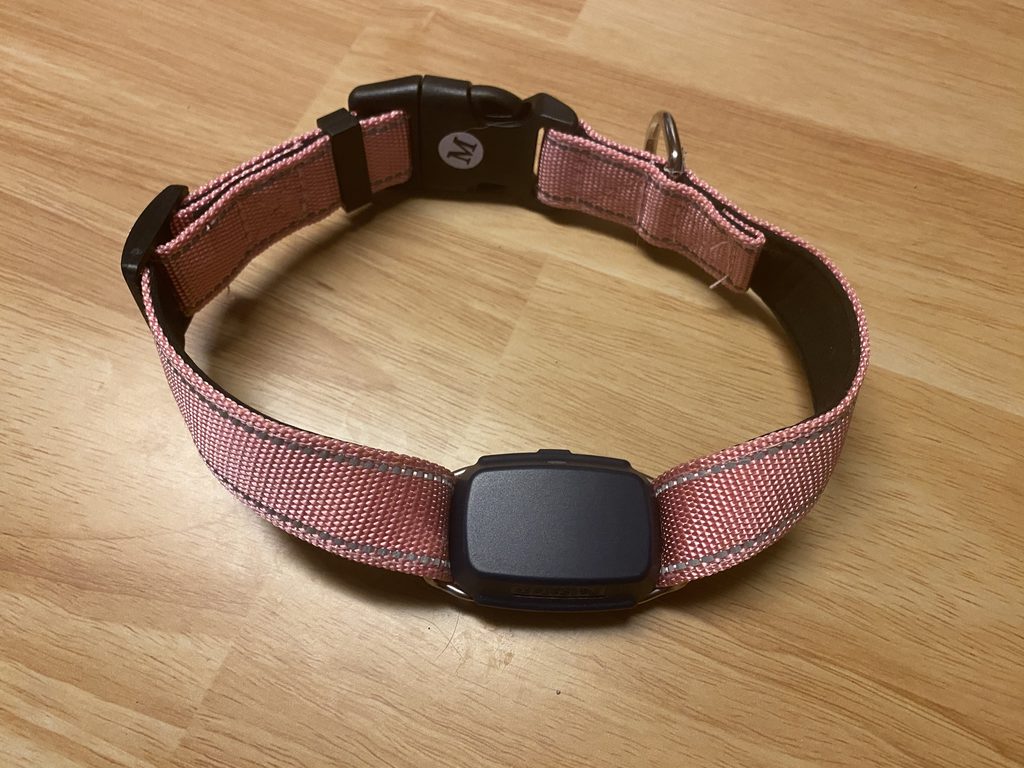
Freya has a long Pharaoh Hound neck, so her regular walking collar is a wider martingale designed for sighthounds. We recently bought her a smaller padded everyday collar specifically because I wanted something comfortable enough for her to wear throughout the day with an activity tracker attached.
The PetSafe tracker fits nicely on it. More importantly, it’s small enough that it doesn’t seem to bother her at all. You can see in the photo that it sits neatly against the front of her neck rather than hanging down like some enormous technological dog tag.
Since this isn’t a medical monitor or an invisible fence, it also doesn’t have to sit in one exact position against her neck to do its job. That leaves me room to add a small dedicated health monitor separately without turning poor Freya into a walking Best Buy.
That’s one of the big advantages I see in trackers designed to attach to gear you already own. I can choose what’s most comfortable for my dog rather than having the technology dictate what she has to wear.
There is one catch here, though: the stainless-steel clip only accommodates collars and harnesses up to one inch wide.
One inch is plenty for many dogs, but it could be an issue for Greyhounds, Pharaoh Hounds, and other long-necked breeds that often wear wider martingales. It isn’t a problem for us because Freya already has her padded everyday collar, but it’s worth measuring before you buy.
The Activity Tracking Has Become One of My Favorite Features
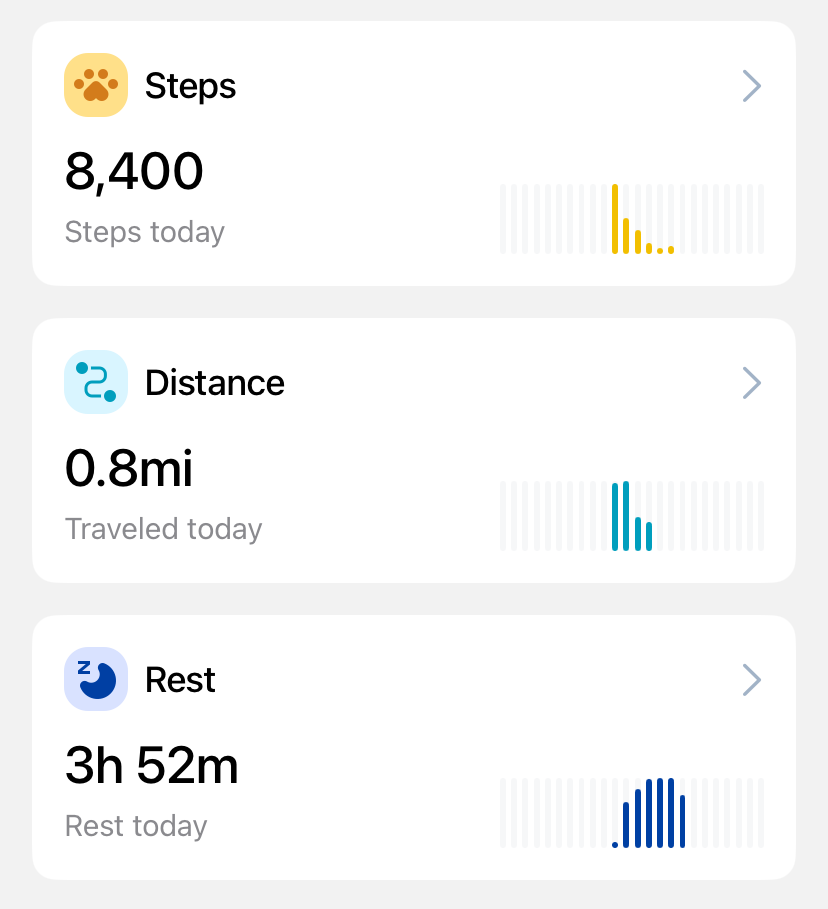
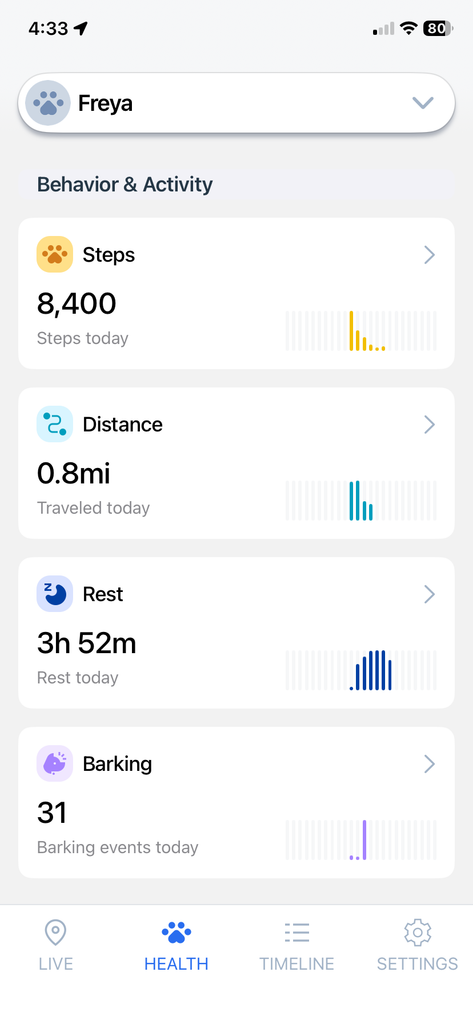
The PetSafe tracker monitors four basic things: steps, distance, rest, and barking. It stores up to 30 days of this data so you can look for patterns rather than judging your dog’s activity based on a single day.
For me, that’s become much more important than it would have been a few years ago.
Freya has a heart condition now, and one of the things I’ve wanted is a better picture of what her normal days actually look like. I don’t need an app declaring that she has met some arbitrary canine fitness goal. I’m much more interested in establishing her baseline.
Her first day with the PetSafe tracker was a pretty good example.
She wore it from around 11 AM until 8 PM and logged 8,917 steps and 0.8 miles, with about 7.5 hours of rest.
The context behind those numbers matter, though. We took a walk to the lake that accounted for about 0.6 miles of the distance. Coming home is uphill, including a pretty good final climb. When we got home, she had a drink and wandered around the yard. Then she came inside and slept for hours.
That’s why I think activity trackers are most useful when you stop looking at individual numbers as grades. Over time, I’ll be able to see what a normal active day looks like for Freya, how much she usually rests afterward, whether her overall activity changes, and whether we’re seeing trends that aren’t obvious from watching her day to day.
The PetSafe tracker isn’t a medical device, and PetSafe specifically says it doesn’t interpret the data or provide an analysis of your dog’s health. But having objective information to look back on can still be useful, especially with senior dogs or dogs whose activity you’re already paying closer attention to.
Bark Tracking Is More Useful Than I Expected
I’ll admit that bark tracking wasn’t high on my personal wish list when I started testing this. I already know my dog is a loudmouth. My neighbors all have loudmouths too, so it’s never been a big deal. One, who doesn’t use a dog, actually appreciates her “bear bark” because it gives him advance warning to get his trash somewhere safe.
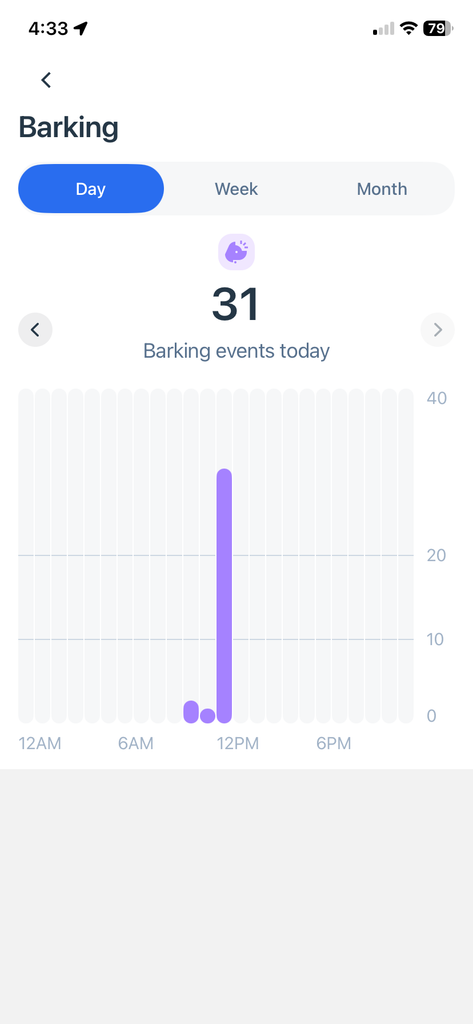
Then Freya logged 31 barking events on her first day. That sounds like quite a bit until you open the detailed Barking screen and see when they occurred. Almost all 31 happened during the same roughly ten-minute stretch. Ah. Yep. That sounds like Freya. She saw something and apparently needed the WHOLE world to know.
For most dogs, bark tracking is mostly just interesting behavioral information. Maybe your dog spends half the afternoon yelling at the UPS truck while you’re at work. Maybe they’re unusually vocal on certain days. Having timestamps gives the number context and also helps you figure out how to deal with excessive barking, especially if your neighbor complains.
For Freya, there’s another reason I’m interested in it. She’s previously had pre-syncope episodes associated with periods of intense barking and running. That doesn’t mean the barking itself caused them because, in her case, “barking” can also involve a high-speed dash after whatever she’s yelling about.
Still, being able to see exactly when concentrated barking episodes happened gives me another piece of her daily activity record.
And again, that’s where having historical data becomes more interesting than any individual day’s number.
The GPS Tracking Is Basically My “What If?” Feature
GPS trackers are funny products because ideally you spend years paying for one and never need its most important feature.
For me, they’re about the what if. What if Freya somehow got out of the yard? What if she slipped away while we were somewhere unfamiliar? How would I find her?
A GPS tracker is a little like an insurance policy in that respect. You pay for protection you hope you’ll never need. Except this one actually gives me useful stuff while everything is going right.
The PetSafe tracker uses GPS satellites to determine location and cellular service to transmit location information and alerts to your phone. It doesn’t require your dog to remain within Bluetooth range of your phone or another nearby device for GPS tracking. PetSafe does note that tracking still depends on GPS and cellular coverage.
That matters to me. If Freya is lost, knowing where she was when she was 30 feet from somebody’s phone isn’t really what I’m looking for.
There’s also a Find My Pet feature that can provide directions to your dog’s location if you do need to go looking for them. Hopefully that remains the least-tested feature in this entire review.
Safe Zones Add Another Layer of Protection
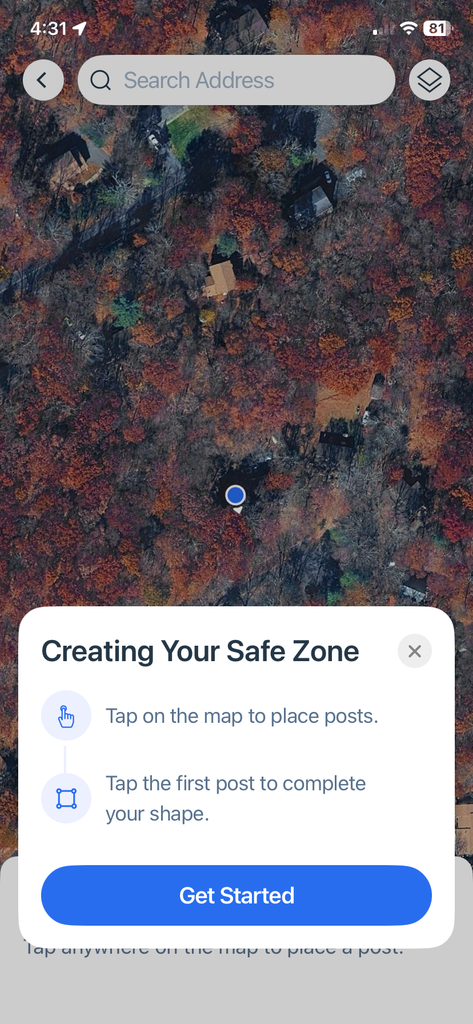
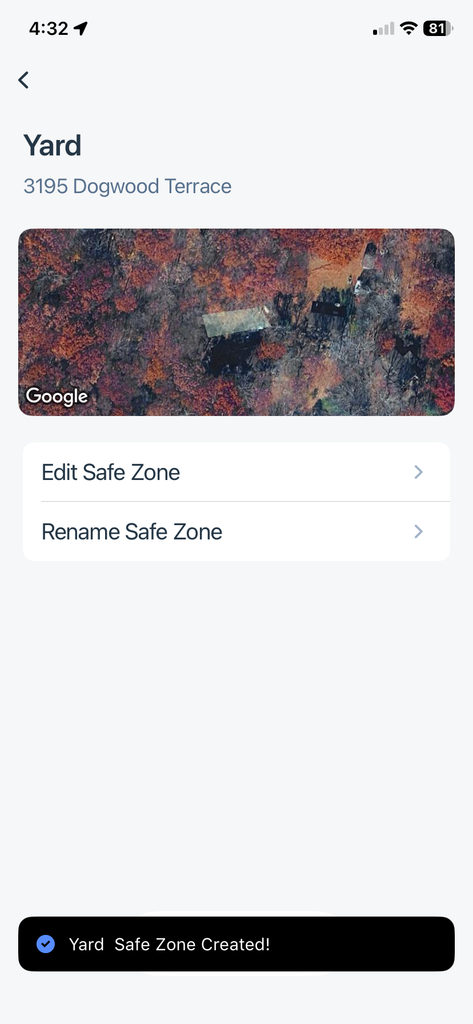
You can create unlimited custom safe zones in the app and receive an alert if your dog leaves one. These are virtual boundaries, not containment fences, so nothing happens to the dog when they cross one. The app simply lets you know they’ve left the designated area.
I actually prefer that approach for a tracker. And because you aren’t limited to your home, safe zones can travel with you. Going camping? Set one around your campsite. Staying at a vacation rental? Make another one there. Visiting family for the weekend? You can create one for their property too.
It doesn’t prevent an escape, obviously. What it does is eliminate some of the delay between your dog got out and you know your dog got out.
The Heat Maps Are Surprisingly Fun
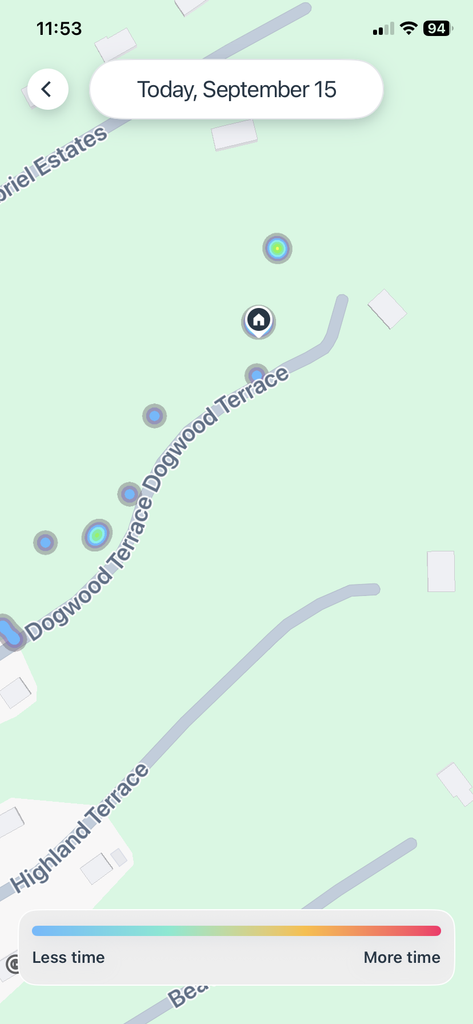
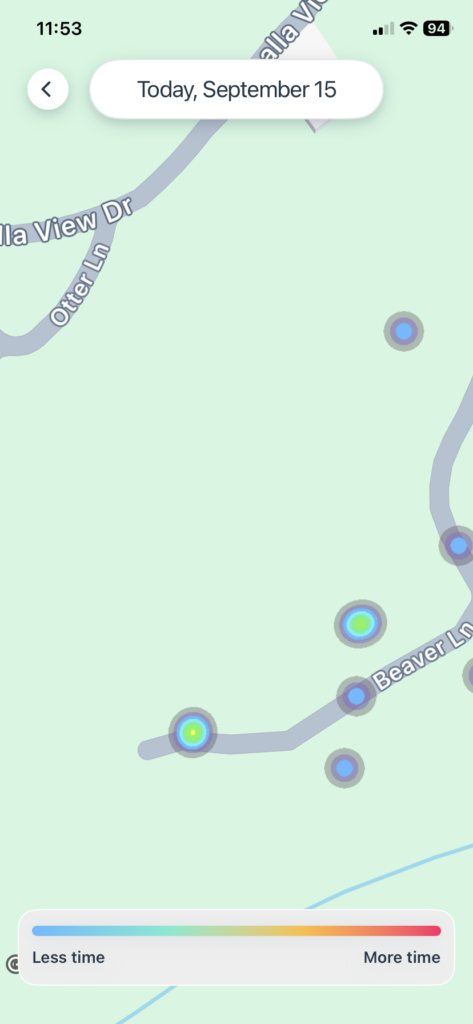
This is one of those features that I don’t necessarily need, but I keep looking at anyway. The GPS history creates a color-coded heat map showing where your dog spent more or less time during the day. Areas where Freya lingered become more prominent, while places she simply moved through show less activity.
I’ve found it especially fun to check after our walks. You can essentially see where she stopped and investigated something versus where she just kept moving. I can’t claim I’ve discovered some groundbreaking practical application for knowing which patch of roadside vegetation Freya considered especially compelling that morning. But I absolutely want to know.
The maps are also interesting around home because they start revealing the places she routinely hangs out. Over time, I can see this being another subtle way to notice changes in routine.
Tech Support is AMAZING
I didn’t have any issues setting up the dog tracker. However, I’m also working on a review of their new Cat GPS tracker and I did hit a little snag. I was able to connect the base fine, but it did a firmware update, and I must have accidentally disconnected the charger midway through (or more likely, one of my cats did). When I went back in, the tracker was gone. I couldn’t get the app to find the base again.
I went through PetSafe’s chat to connect to a live agent (Seth). He was able to get me connected within about ten minutes, and half of that was taken up with him reading the novel of steps I already tried first.
Just in case anyone else has issues, here’s what happened. PetSafe’s troubleshooting FAQs tell you to press and hold the reset button. You need to hold it for 10 seconds. It will turn red, and you will be tempted to let go. DON’T. It needs to cycle back around to green. Once that happens, try connecting the tracker again. It worked perfectly for me.
About That Required Subscription
Yes, the PetSafe GPS Dog Tracker requires a subscription after the included three-month trial. But subscriptions are difficult to avoid with true cellular GPS pet trackers because there’s an ongoing service behind the device. In PetSafe’s case, the subscription covers the LTE cellular service and data used to send GPS location updates and alerts to your phone. It also includes unlimited safe zones, app features, 30 days of activity data, and U.S.-based customer support.
That makes the cost easier for me to justify than if the subscription existed solely to unlock the GPS. Even if Freya never gets lost (please, universe, let’s keep that streak going), I’m still using the activity monitoring, bark tracking, location history, heat maps, and safe zones.
I’m getting something from the service every day rather than paying exclusively for an emergency I hope never happens.
Oh, and one SUPER fabulous thing about that free 3-month subscription is that you can use it whether you pay monthly or annually. I went with monthly and there’s no charge until after the three months. So it’s not one of those things where they make you pay for a year upfront and just reduce the price by three months’ worth.
The Charging Setup Deserves Its Own Mention
I did not expect to have strong feelings about a charging cable. Yet here we are. PetSafe includes a USB-C charging cable and an adapter for regular USB-A ports. I freaking love this.
I have exactly one USB-C port on my computer and another on the power strip beside it. The computer port is already spoken for, and something else frequently occupies the other one. Meanwhile, I have several perfectly good regular USB ports sitting there doing nothing.
Tiny adapter. Problem solved. It’s just one more little way that PetSafe tries to make a product that everyone can use without jumping through hoops to make it work in their house.
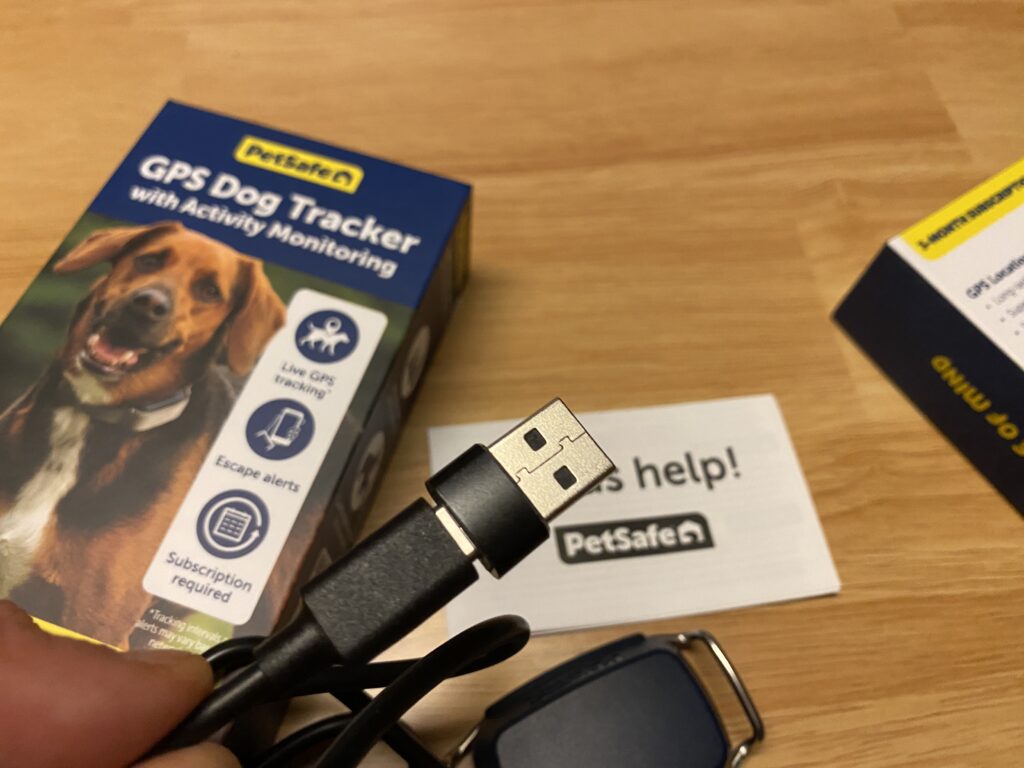
The charging base itself is equally unobtrusive. It’s small enough to occupy roughly two inches of space on my already questionable workspace without demanding that I rearrange everything.
PetSafe rates the tracker for up to 30 days of battery life. The base also does something clever when your dog is home: when the tracker is within range, GPS location tracking pauses to conserve power while activity monitoring continues.
So, it isn’t wasting battery repeatedly confirming that yes, Freya is still in the house.
Waterproofing Is Another Thing I Don’t Have to Think About
The tracker carries an IP67 rating, meaning it’s designed to withstand dust and temporary water immersion. For an everyday dog tracker, that’s pretty important. Freya doesn’t really like to go IN the water, but she spends enough time NEAR it.
I’m not going to remove Freya’s tracker because the grass is wet, she’s wandering through leaves, or she’s decided today’s investigation requires sticking her head somewhere questionable.
A device meant to live on a dog needs to tolerate normal dog behavior. Dogs, historically, have not been known for carefully protecting consumer electronics.
So Far, This Is More Than a “Lost Dog” Tracker for Me
I originally looked at the PetSafe GPS Dog Tracker primarily as another layer of security for Freya. That’s still its most important job. If she ever gets loose, I want a way to locate her that doesn’t depend on her being near my phone or somebody else happening to pass by. But that’s also the feature I hope never to use.
The activity monitoring is what makes the tracker useful on all the completely uneventful days in between.
I can see how far Freya walked, how many steps she took, when she rested, when she barked, where she spent her time, and how those patterns compare from one day to another. With her heart condition, having that baseline is especially valuable to me now.
There are things I’d change. I’d love support for wider sighthound collars, and naturally I’d rather not pay another subscription. Neither has been a dealbreaker for me, though.
What I like most is probably how little the tracker asks from either of us. Freya wears the same comfortable everyday collar she was already wearing. The tracker is small enough that she doesn’t seem to notice it. I charge it occasionally, glance at the app whenever I want to check something, and otherwise it quietly does its job.
Which is pretty much exactly what I want from a dog tracker.
The PetSafe GPS Dog Tracker combines real-time GPS tracking with activity monitoring for steps, distance, rest, and barking. It also features unlimited customizable safe zones, escape alerts, up to 30-day battery life, and a lightweight design that attaches to your dog's existing collar or harness. Includes a free 3-month subscription to get you started.





Leave a Comment