



Most dog owners know that dog heart rate matters. If your dog’s heart is racing for no reason, or suddenly seems unusually slow, it’s obviously worth paying attention to. But heart rate variability (HRV) is where things get really interesting.
Two dogs can have the exact same heart rate and be experiencing completely different things physically and emotionally. That’s the part a lot of people miss.
And it’s also why newer health-monitoring tools like PetPace are starting to focus on HRV alongside standard heart rate readings. Looking at both together gives you a much clearer picture of what’s actually happening inside your dog’s body, instead of just one number floating around without context.
(Think of heart rate as a snapshot. HRV is more like the behind-the-scenes commentary track.)
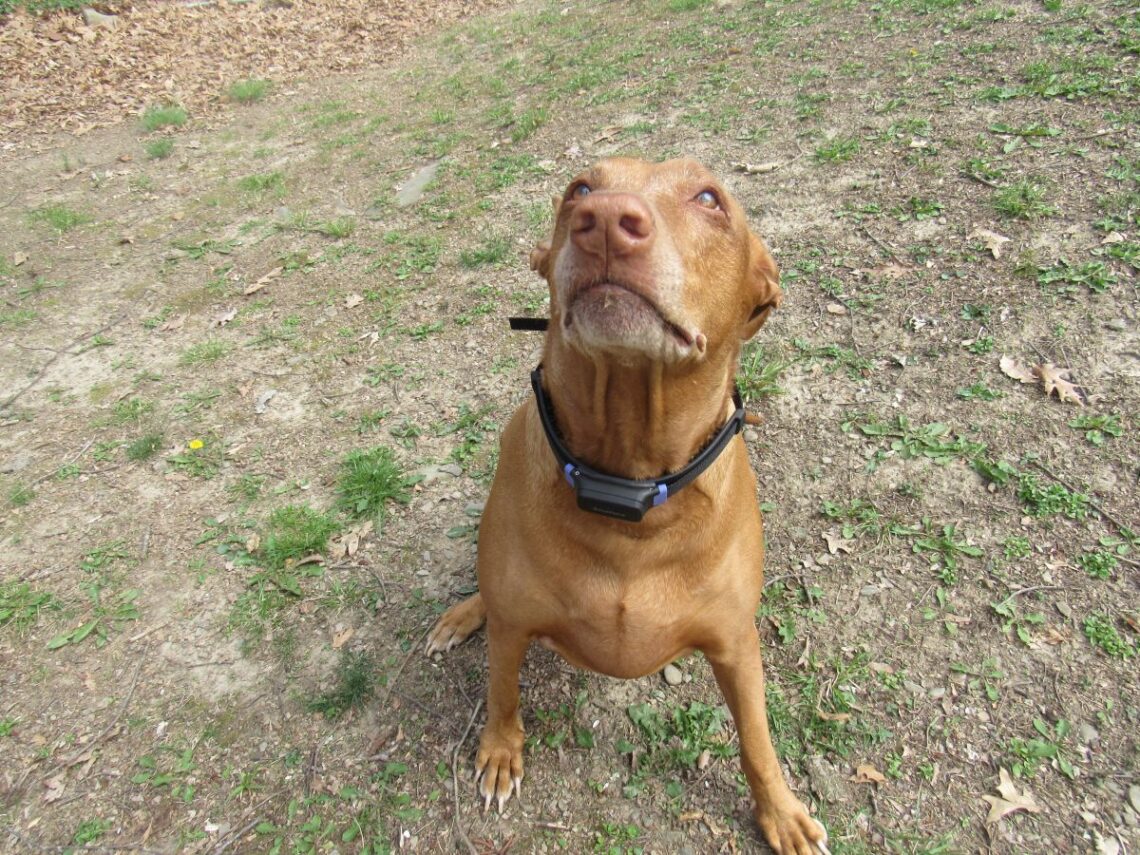
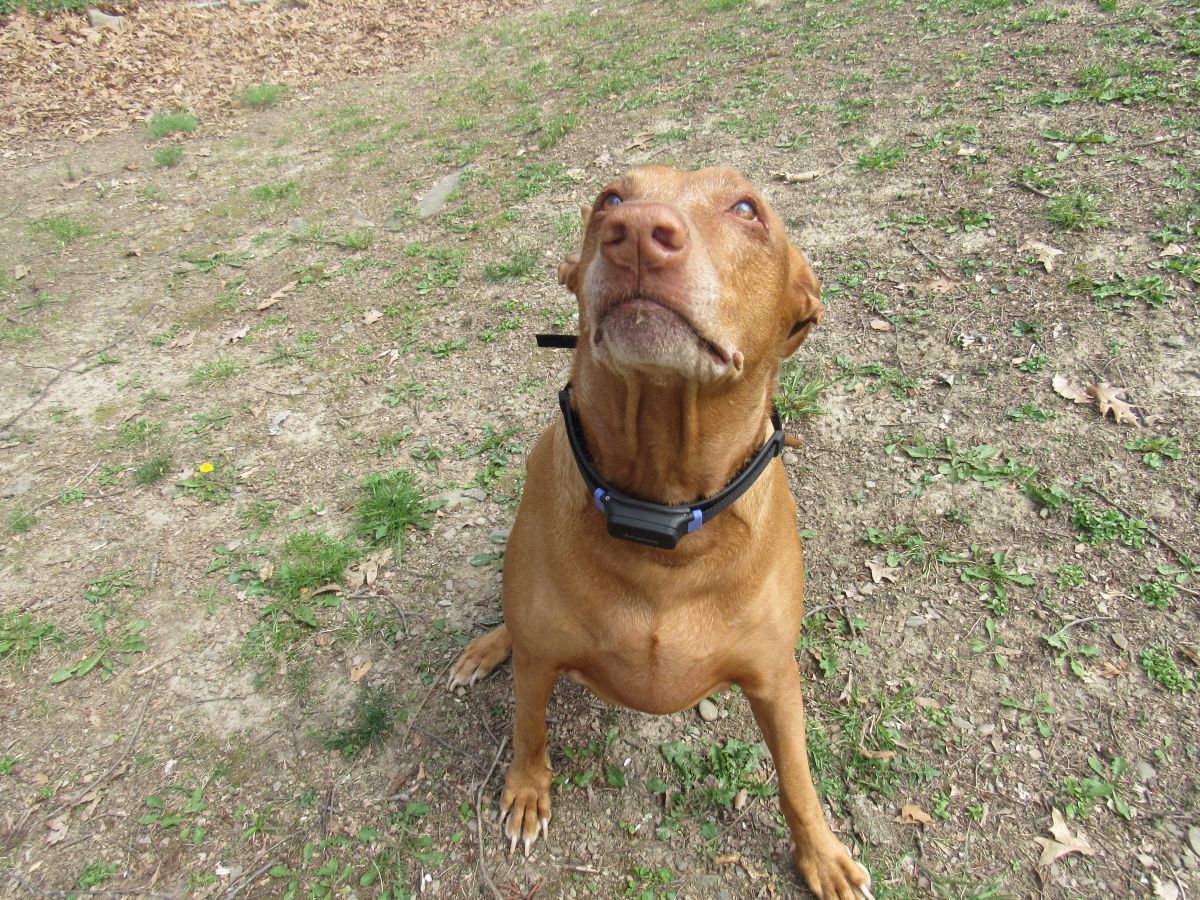
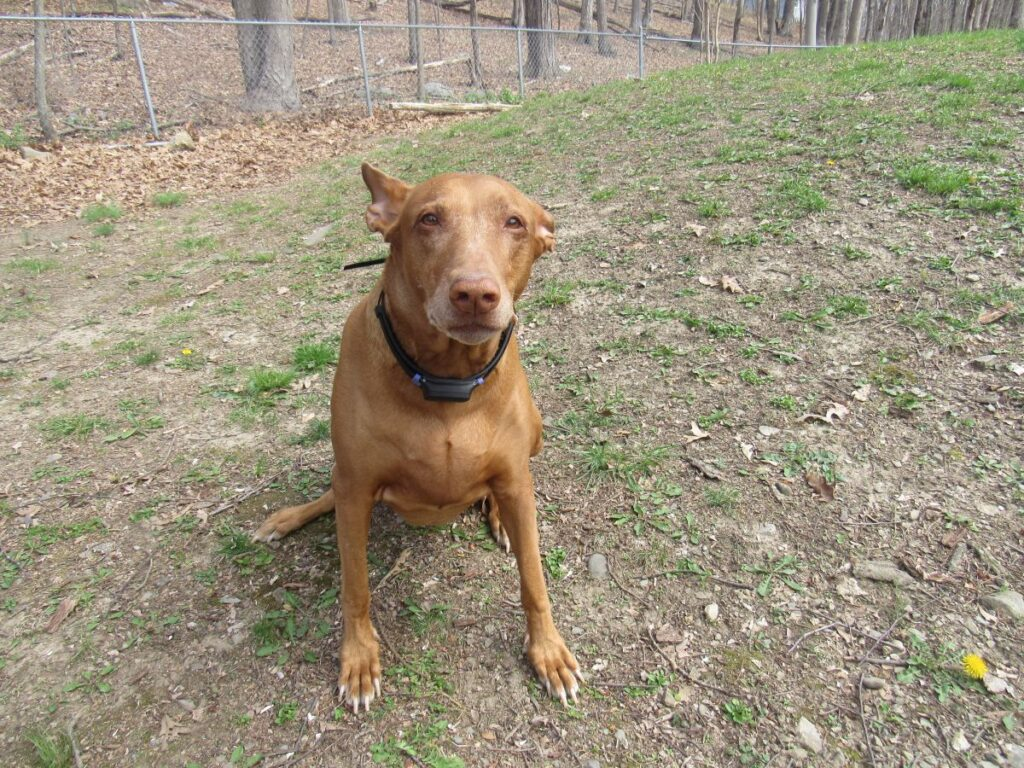
The PetPace Smart Collar is a high-tech health tracker for dogs that monitors vital signs, activity, stress, and sleep—all in real time. Designed for comfort and built with vet-grade technology, it syncs with an easy-to-use app to give pet parents peace of mind and early alerts for potential health issues. Ideal for senior dogs or pets with medical conditions, it’s a powerful tool for proactive care in a sleek, wearable design.
⭐ GUARANTEED BEST PRICE ⭐
USE COUPON CODE TECHNO10 AT CHECKOUT TO SAVE 10%
What Is a Normal Heart Rate for Dogs?
A dog’s normal resting heart rate depends on their size, age, fitness level, and even personality.
In general:
- Small dogs: around 100–140 beats per minute
- Medium dogs: around 80–120 bpm
- Large dogs: around 60–100 bpm
Athletic dogs sometimes run lower at rest. Nervous dogs sometimes run higher. Freya’s heart rate at the vet versus Freya’s heart rate sleeping upside down on the couch are probably two entirely different creatures.
Heart rate also naturally changes throughout the day depending on:
- Activity
- Temperature
- Stress
- Sleep
- Excitement
- Pain
- Illness
So, heart rate alone doesn’t always tell the full story.
A slightly elevated heart rate could mean:
- Your dog is excited
- Your dog is anxious
- Your dog is overheated
- Your dog is in pain
- Your dog just chased a squirrel like it personally insulted their ancestors
Same number. Very different situations.
That’s where HRV comes in.
What Is Heart Rate Variability (HRV)?
Heart rate variability measures the tiny differences in time between heartbeats. And yes, this sounds odd at first.
People assume a “healthy” heart beats like a perfect metronome:
Beat. Beat. Beat. Beat.
But healthy hearts actually vary slightly between beats.
So instead of:
1 second… 1 second… 1 second…
It might look more like:
0.9 seconds… 1.1 seconds… 0.95 seconds…
That natural variation is controlled by the autonomic nervous system, specifically the balance between:
- The sympathetic nervous system (“fight or flight”)
- The parasympathetic nervous system (“rest and recover”)
Higher HRV is generally associated with:
- Better recovery
- Lower stress
- Better adaptability
- Stronger overall resilience
Lower HRV can sometimes indicate:
- Stress
- Anxiety
- Pain
- Fatigue
- Illness
- Overheating
- Poor recovery after exercise
The important thing is that HRV often changes before obvious symptoms appear.
That’s why it’s becoming such a useful wellness metric in both human and veterinary monitoring.
Why Dog HRV Matters More Than Heart Rate Alone
Here’s a simple example.
Imagine two dogs both have a resting heart rate of 90 bpm.
On paper, that sounds normal for both.
But:
- Dog A has a strong, healthy HRV
- Dog B has very low HRV
Dog A’s nervous system is adapting well. Recovery is good. Stress levels are likely normal.
Dog B, meanwhile, may be dealing with:
- Chronic stress
- Early illness
- Pain
- Fatigue
- Heat strain
- Anxiety
The heart rate itself doesn’t tell you that.
HRV helps add context.
That’s why athletes, trainers, and increasingly veterinarians use HRV as an early-warning metric instead of waiting for something more obvious to go wrong.
A Simple Way to Think About It
This is obviously simplified, but it helps:
Heart Rate vs HRV
Two dogs can share the same heart rate while showing very different recovery and stress patterns.
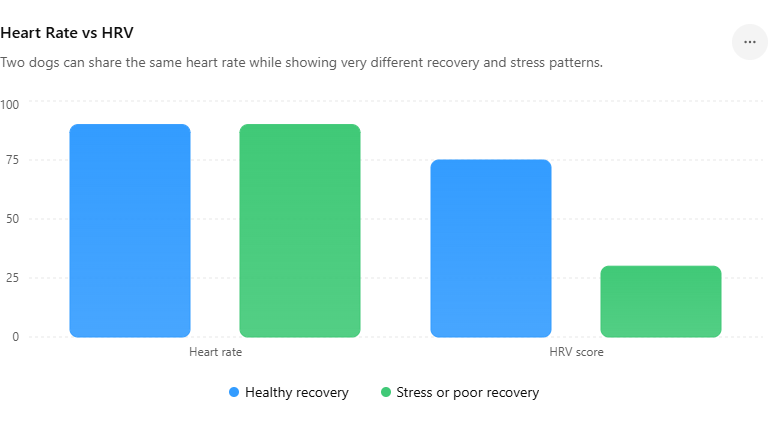
The heart rate number alone looks identical.
The HRV tells the deeper story.
What Can Affect a Dog’s HRV?
A lot of things, actually.
Some are completely normal and temporary:
- Exercise
- Excitement
- Weather changes
- Travel
- Vet visits
- Visitors in the house
- Fireworks
- Lack of sleep
Others can signal a bigger issue:
- Chronic pain
- Anxiety disorders
- Illness
- Infection
- Heat stress
- Recovery problems
- Cardiovascular strain
Age can also influence HRV. Senior dogs sometimes show lower variability as their bodies become less adaptable overall.
That doesn’t automatically mean something is wrong. It just means trends matter more than isolated readings.
And honestly, that’s one of the biggest advantages of wearable monitoring tech in general: you stop relying entirely on one-off moments.
Dogs are experts at acting perfectly fine right up until they are very much not fine.
How PetPace Helps Monitor Both
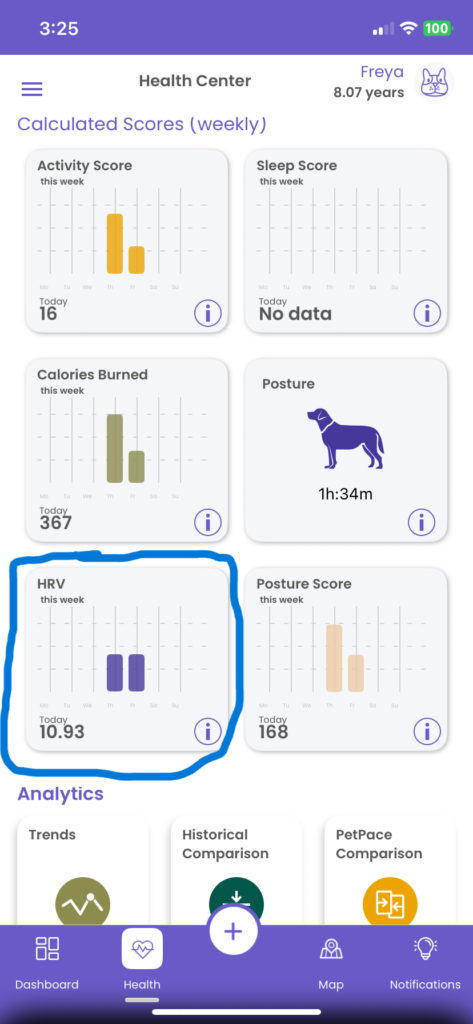
This is where PetPace stands out a bit from simpler pet trackers.
A lot of pet wearables focus mostly on GPS or activity levels. PetPace leans much harder into health analytics and biometrics.
The collar tracks things like:
- Heart rate
- Heart rate variability
- Respiratory rate
- Activity
- Posture
- Sleep patterns
- Temperature trends
- Calorie expenditure
And the important part is that it looks at patterns over time.
Because a single elevated heart rate reading doesn’t necessarily mean much.
But:
- declining HRV,
- worsening sleep,
- reduced activity,
- and rising respiration together?
That starts painting a much clearer picture that something may be off.
It’s less about obsessing over numbers and more about spotting changes early.
Why HRV Is Especially Helpful for Senior Dogs
Senior dogs are masters of subtle decline. They adapt quietly.
They slow down gradually enough that sometimes you don’t notice until you look back at old videos and realize your dog used to launch onto the couch like a tiny athlete instead of thoughtfully negotiating it like an exhausted middle manager.
HRV monitoring can sometimes help detect:
- recovery issues,
- increased physical stress,
- pain patterns,
- or worsening health trends earlier than behavior alone.
That doesn’t replace veterinary care, obviously. But it can help owners recognize when “just getting older” might actually deserve a closer look.
HRV and Stress in Dogs
This is another area where HRV gets really useful.
Dogs experience chronic stress more often than people realize.
Not dramatic movie stress. Just ongoing nervous-system strain from things like:
- separation anxiety,
- poor sleep,
- noise sensitivity,
- chronic pain,
- overstimulation,
- inconsistent routines,
- or even multi-dog household tension.
(Any home with cats already knows silent emotional warfare is absolutely real.)
Low HRV can sometimes reflect that ongoing stress load even when a dog still seems outwardly functional.
That’s valuable because dogs often normalize discomfort surprisingly well.
The Bigger Picture
Heart rate is still important. Absolutely.
But HRV gives that number context.
Instead of simply asking:
“How fast is the heart beating?”
HRV helps answer:
“How well is the body coping overall?”
And honestly, that’s usually the more useful question.
Especially for:
- active dogs,
- senior dogs,
- dogs with medical conditions,
- anxious dogs,
- or owners who just want a better understanding of their pet’s health trends before problems become obvious.
That’s why tools like PetPace are becoming more interesting in the pet health space. The combination of heart rate, HRV, respiration, sleep, posture, and activity data paints a much fuller picture than any single metric ever could on its own.
Because your dog’s body is constantly communicating.
Sometimes the subtle signals are the ones worth paying attention to first.
The PetPace Smart Collar is a high-tech health tracker for dogs that monitors vital signs, activity, stress, and sleep—all in real time. Designed for comfort and built with vet-grade technology, it syncs with an easy-to-use app to give pet parents peace of mind and early alerts for potential health issues. Ideal for senior dogs or pets with medical conditions, it’s a powerful tool for proactive care in a sleek, wearable design.
⭐ GUARANTEED BEST PRICE ⭐
USE COUPON CODE TECHNO10 AT CHECKOUT TO SAVE 10%







Leave a Comment