


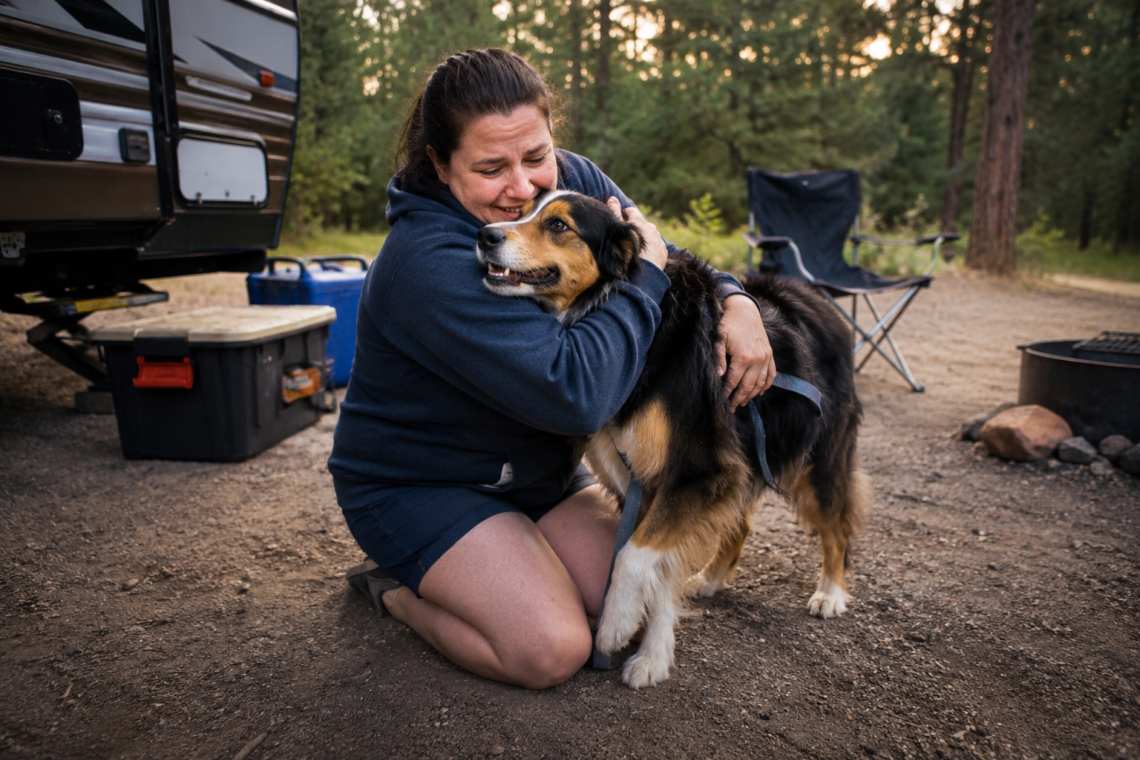

Losing your dog at home is terrifying. Losing your dog in an unfamiliar place while traveling somehow manages to crank that fear up another ten levels.
Your dog doesn’t know where “home” is. You may not know the area well yourself. Everything smells unfamiliar, sounds unfamiliar, and feels overwhelming for both of you. And unfortunately, travel creates the exact kind of chaos that makes even normally reliable dogs panic and bolt.
One loud motorcycle at a rest stop. A hotel door that doesn’t latch all the way. A dropped leash during a gas station break. That’s all it takes sometimes.
The good news is that acting quickly, and staying calm enough to think clearly, can make a massive difference in getting your dog back safely.
Here’s what to do if your dog gets lost while traveling, plus a few ways to make the whole situation less likely in the first place.
First: Don’t Chase Your Dog
This sounds counterintuitive because your entire nervous system is screaming “GO AFTER THE DOG.” But chasing a frightened dog often makes things worse.
Even dogs who adore you can go into full panic mode when they’re scared in an unfamiliar place. The second you start running toward them, they may think it’s a game, or think they’re being pursued, and keep running.
Instead:
- Stop moving toward them
- Crouch down if possible
- Use a calm, upbeat voice
- Turn slightly sideways rather than facing them head-on
- Toss treats if you have them
- Avoid yelling, even if you’re panicking internally
A lot of lost dogs are recovered simply because their owner stopped escalating the situation long enough for the dog to slow down and think.
(Easier said than done, obviously.)
Use Technology Immediately
This is where GPS dog collars genuinely shine.
A lot of pet tech gets marketed like it’s going to revolutionize your life and solve all your problems. Most of it just… exists. But GPS tracking is one area where the technology can genuinely be incredibly useful.
Especially during travel.
If your dog wears a real-time GPS collar or tracker (we recommend the Halo Collar 5), open the app immediately and start tracking movement before the battery drains or the signal weakens.
Some trackers even allow:
- Live location updates
- Virtual safe zones
- Escape alerts
- Location history
- Activity tracking that shows movement patterns
And honestly, travel is one of the best arguments for using one in the first place.
At home, dogs usually know the territory. On vacation? Everything is unfamiliar. Even well-trained dogs can panic in a strange environment.
If your dog doesn’t wear a GPS collar full-time, travel is still a good time to use one temporarily.
Even attaching a lightweight tracker to their regular harness can add an extra layer of security.
Marketed as the most accurate GPS dog fence available, the Halo Collar 5 lets you create, edit, and store unlimited fences (starting at 30 x 30 feet). It fits dogs with neck sizes from 8–30.5 inches. Beyond containment, it offers near pin-point GPS tracking to help locate lost dogs quickly, along with built-in training tools and activity monitoring—all in one collar.
Top Features:
- 48-hour battery life
- AlwaysOn™ GPS
- Real-time tracking
- All-carrier cellular coverage worldwide.
LIMITED TIME OFFER
SAVE $154 ON HALO COLLAR 5
Discount applied at checkout. Hurry! Ends soon!

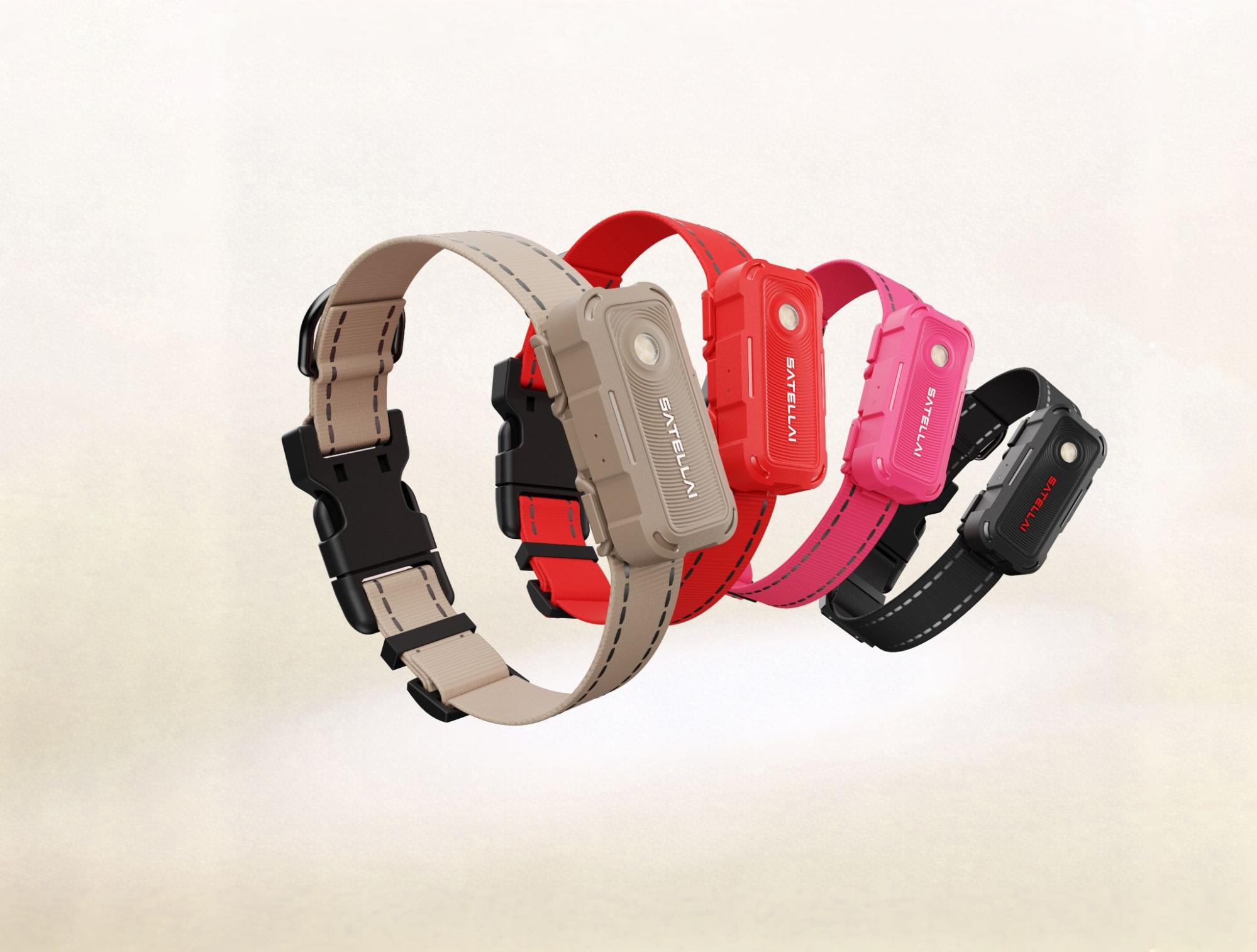
If you’re traveling internationally, you’ll want to go with a GPS collar that works in just about every country. In that case, I recommend SATELLAI Collar Go. It’s more lightweight than the full-size invisible fence collar and works in over 200 countries.
SATELLAI Collar Go is a feature-packed GPS dog collar designed for real-world safety and total peace of mind. It offers live GPS tracking with worldwide coverage, customizable virtual boundaries, activity and health monitoring, and smart extras like LED visibility and AI-powered insights. Built for travel, adventure, and everyday life, it goes well beyond basic tracking.
GUARANTEED BEST PRICE
SAVE AN EXTRA 20% WITH TECHCOGO AT CHECKOUT
Secure the Area if You Can
If your dog slips away at a campground, hotel, rest stop, or vacation rental, try to quickly reduce escape routes before they get farther away.
Ask people nearby for help calmly and specifically.
Not:
“MY DOG IS GONE!”
More like:
“Can you please block that side of the parking lot?”
“Can you watch near the road?”
“Please don’t chase her if you see her.”
People generally want to help. They just need direction.
If you’re traveling with family or friends, assign jobs immediately:
- One person stays where the dog disappeared
- One searches nearby slowly
- One starts calling local shelters and animal control
- One pulls up maps and nearby Facebook groups
The first hour matters a lot.
Leave Familiar Scents Behind
If your dog runs off near your hotel, campsite, Airbnb, or parked car, leave familiar-smelling items in the area.
That can include:
- Their bed
- Your sweatshirt
- Their crate blanket
- Recently worn socks (not glamorous, but surprisingly effective)
- Open food or treats
- Their favorite toy
Dogs navigate heavily by scent, especially when stressed.
Some lost dogs circle back hours later once the adrenaline wears off.
This is also why staying in one central location helps. If you keep moving around searching randomly, your dog may return to the original spot and miss you entirely.
Check Hiding Spots First
Not all lost dogs run far. Many scared dogs hide. Especially shy dogs, senior dogs, or dogs who just get overwhelmed easily.
Check:
- Under decks
- Behind dumpsters
- Around bushes
- Beneath parked cars
- Near wooded edges
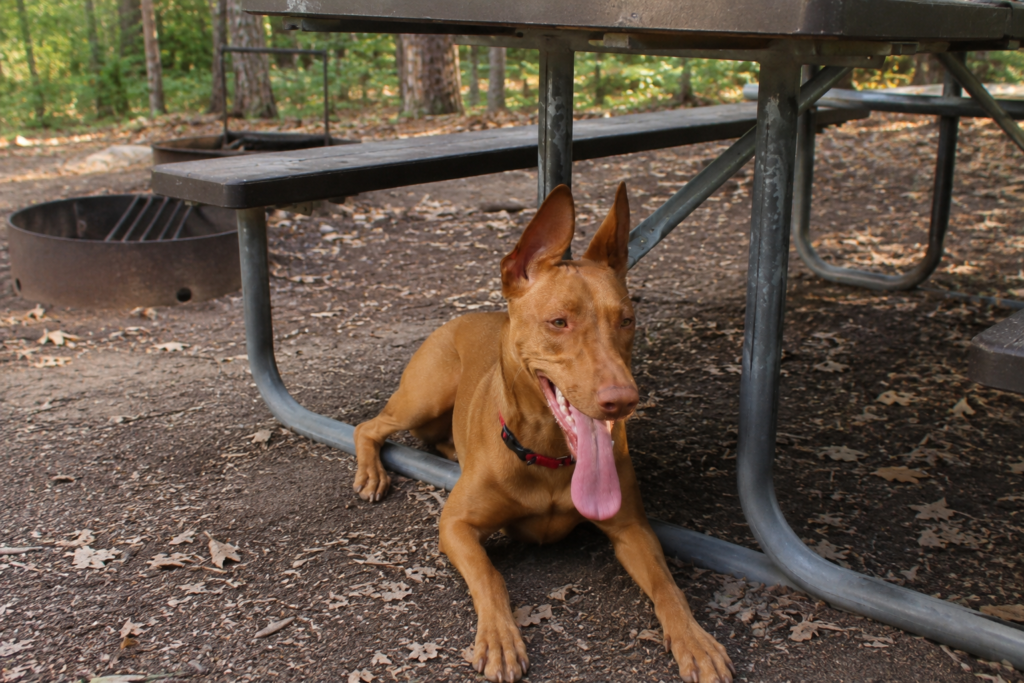
- Under picnic tables
- Inside open garages or sheds
Freya’s not really the “hide quietly” type. She’d probably announce her location to the entire county with her barking. But plenty of dogs go completely silent when scared. Also, just because Freya barks doesn’t mean she’s easy to catch. She has sighthound speed whereas I have 5’2″ “only runs when wasps are nearby” speed.
Plus, whether they’re loud or quiet, scared dogs often ignore their names, even if they normally have perfect recall (which again, Freya does not).
Contact Local Shelters and Animal Control Fast
Don’t wait until “later tonight.” Call immediately.
A good rule of thumb is to contact:
- Local animal shelters
- Animal control
- Nearby veterinary offices
- Local rescue groups
- Campground offices or hotel management
- State park offices if applicable
Send clear photos.
Include:
- Your dog’s name
- Breed and size
- Collar description
- Whether they’re microchipped
- Whether they’re shy or approachable
- Your current phone number
And keep checking back.
Sometimes intake paperwork lags behind reality a bit, especially on weekends or holidays.
Post Online Strategically
Local Facebook groups are honestly one of the biggest reasons many lost dogs get found quickly now.
Search for:
- Lost pets groups
- Community groups
- Local town groups
- Camping or travel groups for the area
Use a recent, clear photo. Don’t write five paragraphs. People scrolling quickly need:
- Photo
- Location
- Time last seen
- Contact number
- Whether to approach or not
Also include cross streets, landmarks, trail names, or campground loops if possible.
“Lost near Lakeview Campground Loop C” is far more useful than “lost near the lake.”
Don’t Forget the Microchip
A microchip only works if:
- Your dog has one
- The registration information is current
Travel is actually a great reminder to double-check your contact info before leaving home.
If your dog goes missing, contact the microchip company immediately and report them lost.
Some services send alerts to shelters and veterinary clinics automatically once the dog is flagged.
Search During Quiet Hours
Late evening and early morning are often the best times to search for a lost dog.
There’s less traffic, fewer people, fewer distractions, and scared dogs are more likely to emerge from hiding.
Bring:
- A flashlight
- Smelly treats
- A leash
- A squeaky toy if your dog responds to one
- Calm energy (or your best imitation of it)
Avoid turning the search into a loud chaotic event.
A frightened dog may avoid large groups of people calling their name nonstop.
Prevention Matters More Than People Realize
Most travel-related dog escapes happen during transitions. Not during hikes or adventures.
It’s:
- Opening the car door
- Unloading luggage
- Rest stop bathroom breaks
- Hotel check-ins
- Campsite setup
- Moving between locations
That’s where routines help.
A few things that help reduce risk:
- Use a secure harness, not just a collar
- Keep leashes attached before opening doors
- Practice car exit manners at home
- Use backup leash clips for escape artists
- Keep updated ID tags on at all times
- Travel with recent photos of your dog
- Consider GPS tracking for trips
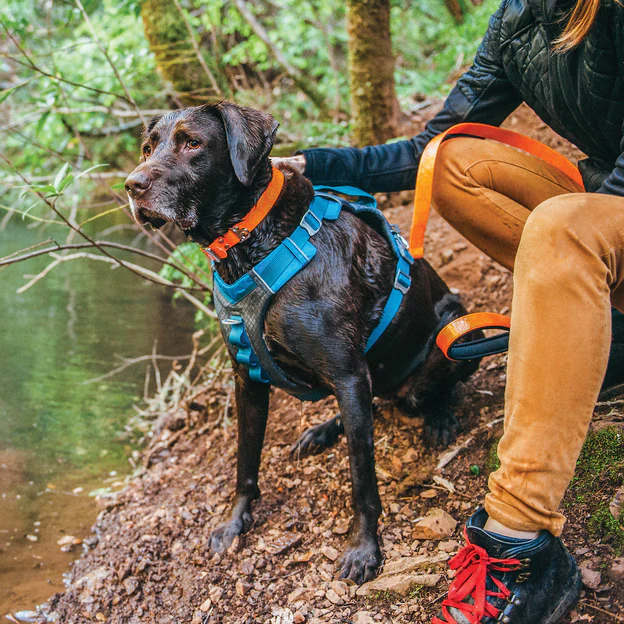
The Journey Air is a breathable harness featuring a deep V-neck that keeps the shoulders free, plus features a wide, padded chest plate that helps cut down on strain to the neck. Made with rust-free all-aluminum hardware, it comes in at a featherweight 8 oz.
Also, don’t assume your dog “would never run.”
A dog who has perfect recall at home may react very differently in a crowded tourist town, a noisy campground, or a strange hotel hallway at midnight while someone wheels an ice machine past your room like they’re auditioning for a horror movie.
Travel changes the equation.
After You Find Your Dog
Once your dog is safe again:
- Check paws for injuries
- Watch for overheating or dehydration
- Offer water slowly
- Schedule a vet visit if they were missing for more than a short time
- Replace damaged gear immediately if equipment failed
And honestly? Give yourself a minute too. That kind of adrenaline crash hits hard afterward.
Most people replay every decision for days after a scare like this. But dogs slip away from experienced owners too. Travel introduces unpredictability, and sometimes even one tiny mistake creates the perfect storm.
The important thing is being prepared enough to respond quickly if it happens.
Because while nobody wants to think about losing their dog on vacation, having a plan in place ahead of time can make all the difference if your trip suddenly takes a very stressful detour.

Leave a Comment