


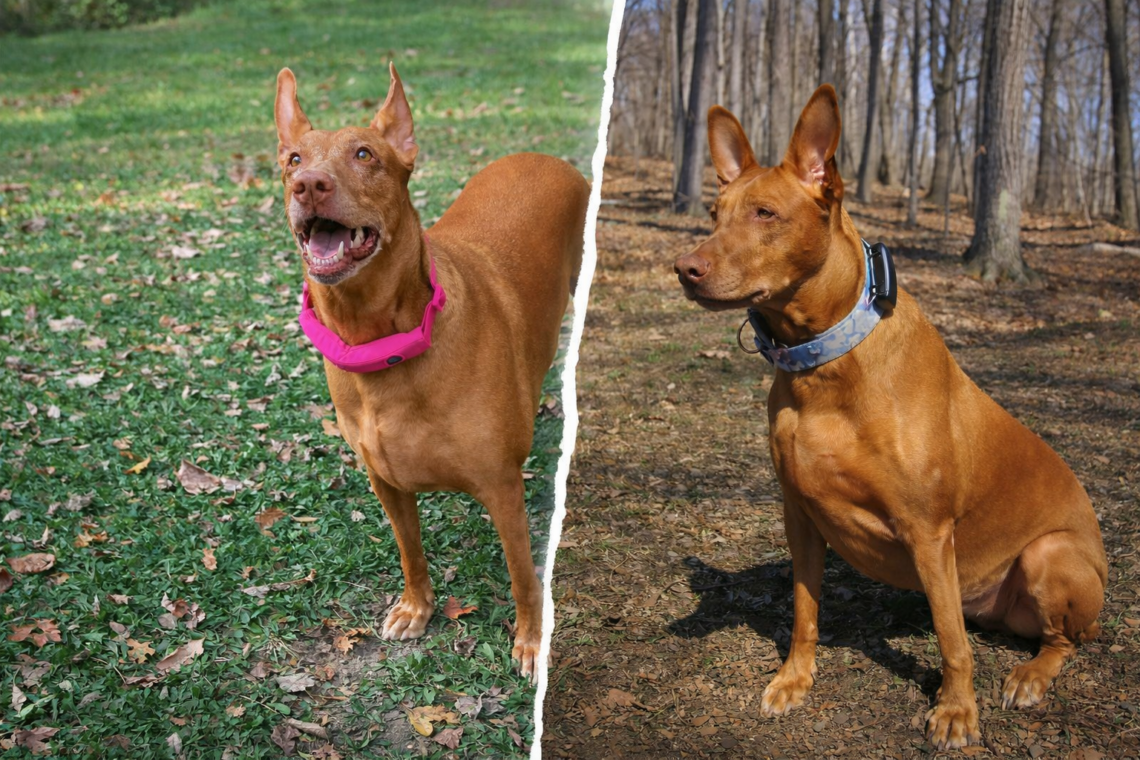

A GPS dog collar and a dog tracker are not the same thing, even though they’re often grouped together.
GPS dog collars provide real-time location tracking, often paired with safety features like virtual fences, instant alerts, and activity monitoring, while most dog trackers offer limited or delayed location data, often relying on Bluetooth range or passive tracking. The difference matters most when speed, distance, and prevention are critical.
What Is a GPS Dog Collar ?
A
Many GPS collars (like Halo Collar, Guardian GPS 2.0, and SATELLAI) go beyond basic location tracking by adding built-in safety tools. Features like virtual boundaries, instant escape alerts, location history, and activity tracking work together to help you catch problems before they turn into full-blown “lost dog” situations.
Instead of just showing where your dog was, these collars are designed to help keep your dog where they’re supposed to be in the first place.

What Is a Dog Tracker?
A dog tracker typically provides location information using Bluetooth proximity, shared network signals, or delayed updates rather than continuous GPS tracking. Many of these devices were originally designed for tracking everyday items, not fast-moving dogs, which means they often rely on nearby phones or users to update a dog’s location.
In real-world situations, this can translate to lagging updates or limited range—especially if your dog is moving quickly, slips out of a neighborhood, or runs into an area where few people (and phones) are around.

Key Differences Between GPS Dog Collars and Dog Trackers
The biggest differences come down to speed, range, and purpose. GPS collars are designed to prevent dogs from getting lost in the first place, while trackers are mainly useful after a dog has already wandered off — and only within a limited range.
Which One Is Better for Dog Safety?
GPS dog collars are the better choice for dog safety, especially for dogs that roam, escape, hike, travel, or live near traffic or open spaces. They provide real-time location updates and proactive alerts, while dog trackers are best suited for low-risk situations and do not offer the same level of prevention or rapid response.
When to Choose a GPS Dog Collar vs a Dog Tracker (Real-World Use Cases)
On paper, GPS dog collars and dog trackers can sound pretty similar. In real life, though, they behave very differently when a dog actually gets loose. The biggest deciding factor comes down to risk, range, and response time.
Choose a GPS Dog Collar When:
- Your dog has escaped before: Real-time tracking and instant alerts help locate dogs quickly.
- Your dog spends time outdoors or off-leash: GPS collars provide wide-area tracking beyond Bluetooth range.
- You live near busy roads or open spaces: Fast alerts and continuous updates improve safety in high-risk areas.
- Your dog runs fast or travels far: GPS tracking keeps up with high-speed, long-distance movement.
- You want prevention, not just recovery: Virtual fences and escape alerts warn you before a dog gets too far.
- You travel with your dog: Real-time location data is crucial in unfamiliar environments.
- Your dog has poor recall: GPS collars enable faster response when recall fails.
- You want location history and insights: GPS collars track routes, activity, and behavior patterns over time.
A Dog Tracker May Be Enough When:
- Your dog is always indoors or closely supervised: Low-risk dogs in controlled environments may not need real-time tracking.
- You want a lightweight backup, not a safety system: Dog trackers can serve as a supplemental tool rather than primary protection.
- Your dog stays close to you: Short-range tracking works best when a dog is rarely out of sight.
- Your dog has never shown escape behavior: Low-risk dogs may not require advanced tracking features.
- You want a no-subscription option: Some dog trackers work without monthly fees, which can be appealing for minimal use.
- You’re testing tracking before upgrading: Dog trackers can be a starting point before moving to a GPS collar if needs change.






Leave a Comment