



If you’ve spent any time browsing the world of smart pet tech lately, you’ve probably noticed how many collars, wearables, and trackers are out there promising to help you “better understand your dog.” Some focus on fitness, others on health, and others on location — but many brands blur the lines. So, what’s the actual difference between a pet fitness tracker and a GPS collar? And how do “health trackers” fit into the mix?
Let’s break it all down. Below, we’ll go over how these devices work, what they actually do, and how to choose the right one for your pup.
Pet Fitness Tracker vs GPS Collar: The Short Answer
At their core:
- Pet fitness trackers monitor your dog’s activity, rest, and sometimes calories burned — think of them as your dog’s Fitbit.
- GPS collars track your dog’s location, showing you where they are (and keeping them safe if they wander off).
Some devices combine both features, but many are designed for one primary purpose. The key is understanding what you actually need before investing.
TL; DR Quick Comparison
How Pet Fitness Trackers Work
Pet fitness trackers are built around activity and movement data. Using built-in sensors like accelerometers and sometimes heart rate monitors, they analyze how active your pet is throughout the day.
Think of them as a little window into your dog’s daily routine — how much they move, sleep, scratch, and play. They help answer questions like:
- Is my dog getting enough exercise for their breed and age?
- Are they resting well at night?
- Has there been a sudden drop in activity that might indicate illness or pain?
Common Features:
✅ Activity tracking (steps, movement, playtime)
✅ Rest and sleep monitoring
✅ Calorie estimates (based on breed, age, and size)
✅ Goal setting and performance summaries
✅ App dashboards for trends over time
What are the Best Fitness Trackers for Dogs?
Here’s where things get a bit tricky. Check out our post on the best fitness trackers for dogs and you’ll see that the top three are actually GPS collars with fitness tracking. Let me explain why.
Once upon a time (like 5 years ago or so) there were plenty of options for those who JUST wanted to track their dogs’ activity and basic overall fitness levels. Some required a subscription for advanced features like cloud storage, but those were fairly inexpensive (like a few bucks a month).
Today, most devices have evolved to include GPS tracking as well. And whenever you start integrating GPS, you’re looking at subscription plans on top of the regular fee. There’s just no getting around that, and you’re not likely to find one that offers a subscription for under $10 a month.
If you’re already paying for a GPS plan, then you might as well go a step further and just get a good GPS collar with activity tracking features, versus an activity tracker with GPS features.
Fitness Tracker vs Health Tracker: What’s the Difference?
They may sound very similar, but there is a WORLD of difference between the two.
A fitness tracker looks at your dog’s activity level and movement.
A health tracker, on the other hand, goes MUCH deeper — often analyzing things like:
- Heart rate and respiratory rate
- Sleep quality and patterns
- Scratching, licking, and shaking frequency
- Hydration or temperature levels
- Behavioral changes that may indicate pain or anxiety
Basically, a fitness tracker tells you how much your dog moves, while a health tracker tells you how they’re doing.
Why It Matters:
If your dog is older, has a chronic condition, or you just want early alerts for potential issues, a health tracker is a smart investment.
But if you’re mostly trying to keep your energetic pup active or help your couch potato lose a few pounds, a fitness tracker is often enough.
Health Tracker vs GPS Collar: Different Goals Entirely
Now let’s compare health trackers and GPS collars — because even though they sometimes share a few features, their primary purpose couldn’t be more different.
| Feature | Health Tracker | GPS Collar |
|---|---|---|
| Main Goal | Monitor wellness & activity | Track location & boundaries |
| Sensors Used | Accelerometer, heart rate, temperature | GPS, GLONASS, cellular or satellite |
| Connectivity | Bluetooth or Wi-Fi | GPS + LTE (or GPS + satellite) |
| Data Focus | Health trends and behavior | Real-time location tracking |
| Typical Alerts | Changes in activity, sleep, or vitals | Escape alerts, boundary breaches |
| Best For | Preventive care & insight | Safety & recovery if lost |
A GPS collar isn’t meant to tell you whether your dog got enough REM sleep — it’s meant to tell you whether they escaped the yard or wandered too far during an off-leash hike.
Sure, it may incorporate some activity data, but it’s not designed to be a full overview of your dog’s health.
On the other hand, a good health tracker MAY tell you when your dog escaped the yard (not all of them do, though), but the GPS capabilities are secondary to the primary cause and typically aren’t as robust as a solid tracking collar.
Choosing the Right Tracker for Your Dog
So, should you go with a fitness tracker, a health tracker, or a GPS collar?
Here’s how to decide:
Pick a GPS Collar if:
- You have an escape artist or hiking buddy.
- You live in a rural or unfenced area.
- You want peace of mind knowing you can locate your dog anytime.
📍 Best For: Outdoor explorers, off-leash adventurers, or anxious owners who’ve dealt with runaways.
- My top pick: Halo Collar 5.
- Rationale: Not only is the Halo Collar 5 one of the best GPS tracking collars (and wireless fences), but it also incorporates activity tracking into it, giving you the best of all worlds.
Marketed as the most accurate GPS dog fence available, the Halo Collar 5 lets you create, edit, and store unlimited fences (starting at 30 x 30 feet). It fits dogs with neck sizes from 8–30.5 inches. Beyond containment, it offers near pin-point GPS tracking to help locate lost dogs quickly, along with built-in training tools and activity monitoring—all in one collar.
Top Features:
- 48-hour battery life
- AlwaysOn™ GPS
- Real-time tracking
- All-carrier cellular coverage worldwide.
LIMITED TIME OFFER
SAVE $154 ON HALO COLLAR 5
Discount applied at checkout. Hurry! Ends soon!

Go with a Pet Fitness Tracker if:
- You want to make sure your dog is getting enough exercise.
- You love tracking trends and daily goals.
- Your dog stays indoors or in fenced areas most of the time.
🦴 Best For: Active pups, weight management, or just curious pet parents.
- My Top Pick: Tractive
- Rationale: Even though it’s a tracker, it has outstanding activity monitoring. Plus, it costs roughly the same (including the monthly fee) as “dedicated” activity monitors that toss in GPS features.
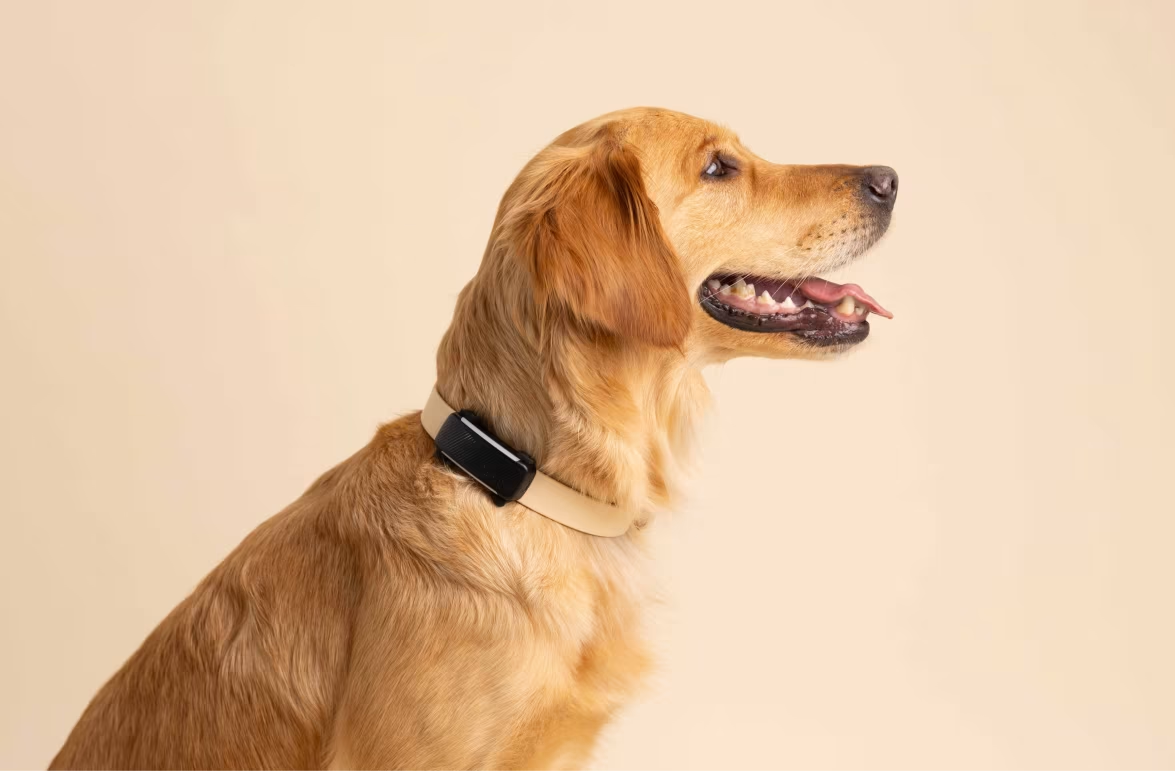
The Tractive GPS Dog Tracker is a lightweight collar attachment that lets you track your dog’s location in real time, set virtual safe zones, and monitor activity levels. It’s a solid pick for escape artists, hikers, or anyone who just wants extra peace of mind if their dog decides to follow their nose a little too far.
Choose a Pet Health Tracker if:
- You want real health insights (heart rate, respiratory patterns, etc.).
- Your dog is aging or has medical issues.
- You want early detection of potential health concerns.
🩹 Best For: Senior dogs, breeds prone to certain conditions, or high-anxiety pups.
- My top pick: PetPace 3.0
- Rationale: If you want to know every detail of your dog’s health down to every breath and heartbeat, PetPace is 1000% the way to go. It’s one of the most detailed and robust dog health monitors ever created.
Read my very long and gushing PetPace review to find out why I’m so obsessed with this collar.
The PetPace Smart Collar is a high-tech health tracker for dogs that monitors vital signs, activity, stress, and sleep—all in real time. Designed for comfort and built with vet-grade technology, it syncs with an easy-to-use app to give pet parents peace of mind and early alerts for potential health issues. Ideal for senior dogs or pets with medical conditions, it’s a powerful tool for proactive care in a sleek, wearable design.
⭐ GUARANTEED BEST PRICE ⭐
USE COUPON CODE TECHNO10 AT CHECKOUT TO SAVE 10%
Can You Get All Three in One?
Honestly? Not really. While you can find options (like Halo Collar 5 or
On the other hand, while PetPace does include GPS capabilities (Maven doesn’t, though), it’s not quite as advanced as Halo, PetSafe, SpotOn, or any of the other collars designed for tracking.
The Bottom Line
Choosing between a pet fitness tracker vs GPS collar comes down to one big question:
👉 Do you want to monitor your dog’s health or their location?
- Fitness trackers = great for daily activity goals.
- Health trackers = deep insights into well-being.
- GPS collars = real-time tracking and freedom with safety.
If you want one that does multiple things, look for a hybrid that covers your dog’s specific needs (and fits your lifestyle). The good news? Smart collar tech is evolving fast, so it’s easier than ever to find the perfect match for your pup.
If GPS tracking is the piece the Best GPS Dog Fence Tracker 30-second Match Quiz actually need, our match quiz can help you land on the right collar or fence for your dog.






Leave a Comment