


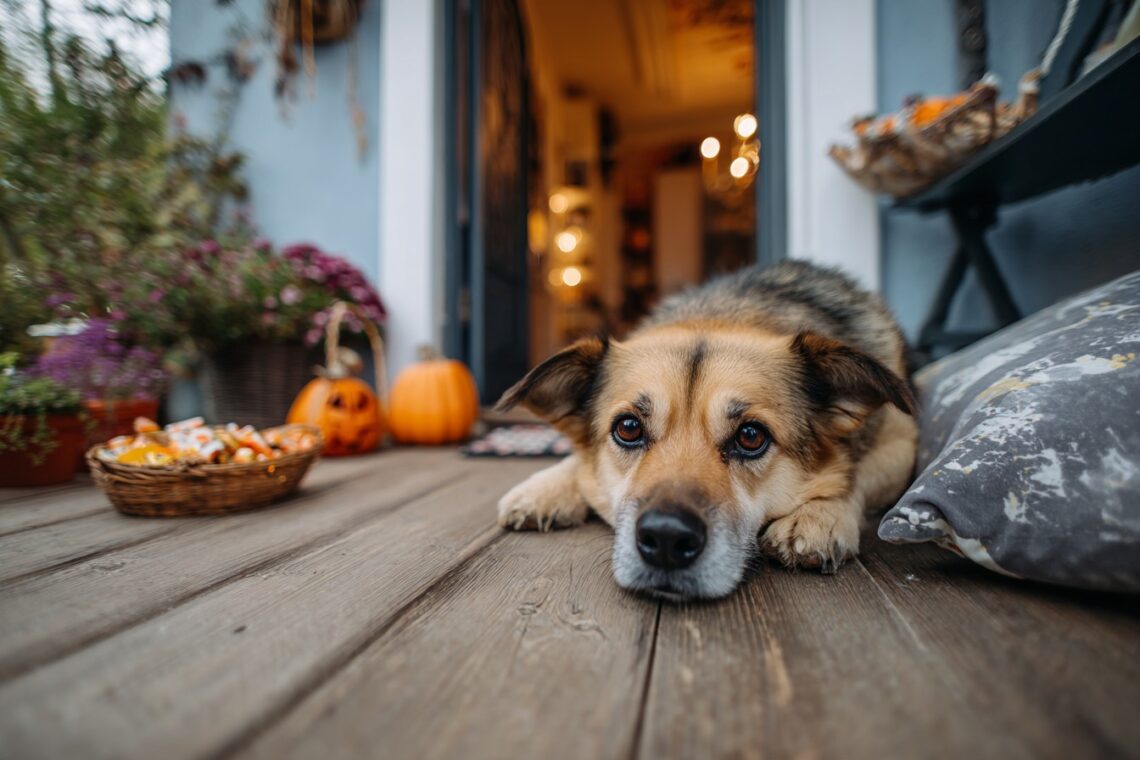

Halloween is one of those holidays that seems perfectly harmless until you look at it from your dog’s perspective. Strange people keep showing up at the door, the neighborhood is full of unfamiliar noises and there’s suddenly candy everywhere. Plus, for some reason, their humans have decided to decorate the house with things that move, flash and occasionally scream.
Even the most laid-back dog might find the whole experience a little overwhelming. Fortunately, there are plenty of ways to make Halloween safer and less stressful for your dog. Some involve common sense, like keeping chocolate out of reach. Others involve technology that can help you manage everything from backyard boundaries to unexpected escapes.
And since this is TechnoBark, we’re going to focus a little more on those smart solutions. Not because every Halloween problem needs an app (it definitely doesn’t), but because some pet gadgets really can make the holiday easier.
Here are my favorite Halloween safety tips for dogs, including a few smart ways to keep your pup out of trouble.
1. Use GPS Fencing to Keep Your Dog Away From Halloween Activity
If your dog spends time in the yard, Halloween is a good reason to take another look at their boundaries.
Even dogs who normally stay close to home can become distracted by people walking past, unusual noises or the occasional inflatable monster flapping around in a neighbor’s yard.
A GPS dog fence can help reinforce established boundaries without requiring a physical fence around your entire property.
Our Top Pick for GPS Fencing: Halo Collar
The Halo Collar is our top recommendation for GPS dog fencing, particularly for pet parents who want customizable boundaries and a structured training program.
With Halo, you can create virtual fences directly in the app and adjust them as needed. The collar uses GPS technology to recognize when your dog approaches a boundary and provides customizable feedback to help reinforce their training.
One feature I particularly like for Halloween is the ability to modify an existing fence.
For example, if your normal boundary extends close to the sidewalk, you could temporarily move it farther into your yard to create some extra distance between your dog and passing trick-or-treaters.
Or, if you typically let your dog explore the entire backyard, you might create a smaller Halloween-safe area away from the front of the house.
Halo also provides GPS tracking and alerts if your dog crosses their boundary, giving you another way to keep tabs on their location.
Marketed as the most accurate GPS dog fence available, the Halo Collar 5 lets you create, edit, and store unlimited fences (starting at 30 x 30 feet). It fits dogs with neck sizes from 8–30.5 inches. Beyond containment, it offers near pin-point GPS tracking to help locate lost dogs quickly, along with built-in training tools and activity monitoring—all in one collar.
Top Features:
- 48-hour battery life
- AlwaysOn™ GPS
- Real-time tracking
- All-carrier cellular coverage worldwide.
BEST PRICE GUARANTEED
Save $125 on Halo Collar 5
*Based on new low price + our $50 exclusive discount. Extra discount applied at checkout.

One very important thing, though: GPS fencing requires training.
You can’t buy a collar on October 30, put it on your dog the next morning and expect them to magically understand where they’re allowed to go.
Dogs need time to learn what the feedback means and how to respond appropriately. Even dogs who already use GPS fencing should be introduced to significant boundary changes before you rely on them.
And if your dog is likely to become extremely excited or frightened by Halloween activity, I’d still recommend keeping them inside or supervising them on a leash.
A GPS fence is an extra layer of protection, not an invisible force field that physically prevents a determined dog from crossing it.
2. Consider a GPS Tracker Even if You Don’t Need a Fence
Not every dog needs a GPS fence. Maybe you already have a secure physical fence, or perhaps your dog only goes outside on a leash. You might simply want some extra protection in case someone accidentally leaves a door or gate open.
That’s where a dedicated GPS dog tracker makes sense.
SATELLAI Collar Go: GPS Tracking Without the Full Fence System
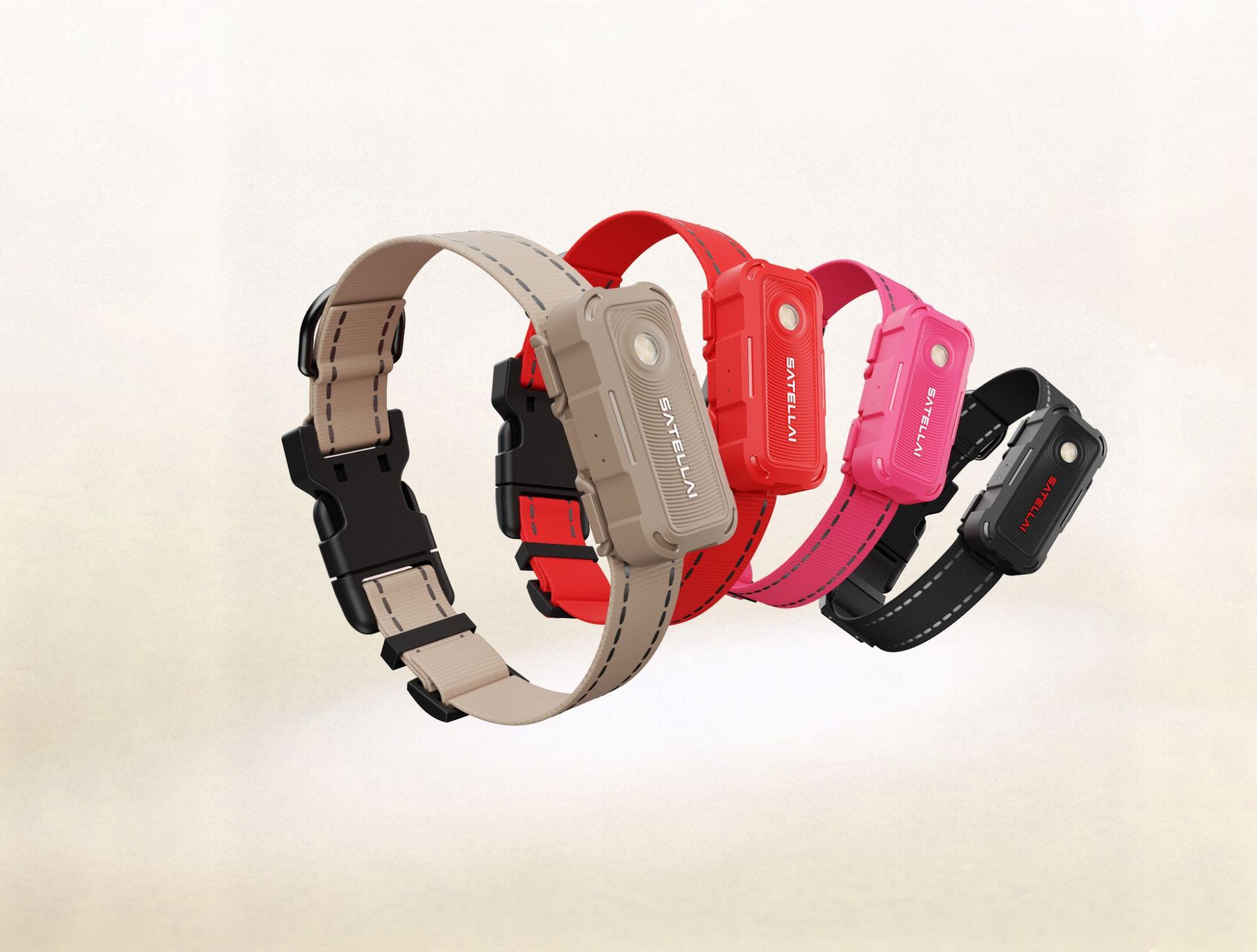
The SATELLAI Collar Go is worth considering if you want location tracking without investing in a full GPS fencing system.
Unlike the original SATELLAI Collar, which includes active virtual fencing and training feedback, Collar Go focuses on tracking your dog’s whereabouts.
It offers real-time GPS tracking, escape alerts, virtual safe zones and activity monitoring, along with AI-powered health insights.
Those virtual boundaries are important to understand, though. With Collar Go, they’re used for location monitoring and alerts, not for delivering the boundary-training feedback you’d get with a dedicated GPS fence collar.
SATELLAI Collar Go is a feature-packed GPS dog collar designed for real-world safety and total peace of mind. It offers live GPS tracking with worldwide coverage, customizable virtual boundaries, activity and health monitoring, and smart extras like LED visibility and AI-powered insights. Built for travel, adventure, and everyday life, it goes well beyond basic tracking.
GUARANTEED BEST PRICE
SAVE AN EXTRA 20% WITH TECHCOGO AT CHECKOUT
For Halloween, I particularly like the idea of having a tracker on dogs who are normally very reliable about staying close to home.
Because even a dog who has never shown any interest in escaping might react differently when a group of kids dressed as inflatable dinosaurs comes charging down the sidewalk.
And while GPS tracking can’t prevent an escape, it can make finding your dog much easier if something does happen.
A quick reminder: Make sure your dog’s tracker is charged, properly fitted and connected before Halloween festivities begin. Check that notifications are enabled and that your subscription is active, if required.
Also, don’t forget the basics. Your dog should still have a microchip with current contact information and a readable ID tag.
3. Use Smart Doorbells to Manage Trick-or-Treaters Without Constant Ringing
For some dogs, the worst part of Halloween isn’t the costumes or decorations. It’s the doorbell. If your dog considers the doorbell a personal invitation to announce the arrival of an intruder, Halloween can turn into several hours of nonstop barking.
A smart video doorbell can make things a little easier. Depending on your system, you may be able to disable the indoor chime temporarily while still receiving notifications when someone approaches your door.
Some smart doorbells also let you use prerecorded responses, which can be helpful if you’re trying to avoid opening the door while managing an excited dog.
You could even put a small sign outside asking trick-or-treaters not to ring the bell. Of course, motion notifications aren’t completely silent if your phone is constantly announcing them, so remember to adjust those settings too.
If you use a smart speaker or home automation system, you might also be able to temporarily change your usual doorbell announcements.
The goal is simple: Fewer unexpected noises, fewer opportunities for your dog to become overstimulated and a slightly more peaceful evening for everyone.
The Blink Wired Doorbell is a budget-friendly option that sends notifications to your phone instead of blasting throughout the whole house when someone pushes the button, making it perfect for dogs who are reactive towards doorbells.

4. Create a Quiet Space and Use a Pet Camera to Check In
Not every dog wants to participate in Halloween. Some are perfectly happy greeting visitors, while others would much rather spend the evening somewhere quiet.
If your dog falls into the second category, consider setting up a comfortable room away from the front door.
Include their favorite bed, fresh water and a few familiar toys. You can also use a white noise machine or soft music to help cover up some of the activity outside.
A pet camera can be particularly useful if you’re hosting guests or answering the door frequently.
Instead of repeatedly opening the room to check on your dog (and potentially disturbing them every time), you can glance at the camera to make sure they’re comfortable. Some cameras also offer sound or motion alerts, which may help you notice unusual activity.
Just don’t assume that every noise or movement requires intervention. If your dog is peacefully sleeping through the festivities, there’s no reason to interrupt a perfectly good nap.
And if your dog has serious noise anxiety, talk to your veterinarian before Halloween about ways to help them cope. A camera is useful for monitoring, but it doesn’t treat anxiety.
The NEW Furbo 360° Dog Camera gives you best-in-class HD video quality with 360-degree rotating view for full room coverage, day & night. Stunning 1080p liveview and high quality 4x zoom let you easily check on your home, speak to family, and toss treats to pets. Know what’s going on in your home from anywhere - no more missed moments or blind spots.

5. Choose Halloween Costumes That Won’t Stress Your Dog Out
I love a cute dog Halloween costume as much as anyone, but not every dog appreciates being dressed up.
Some dogs are perfectly comfortable wearing costumes. Others act like you’ve committed an unforgivable offense the moment you put a hat on their heads.
If your dog doesn’t enjoy costumes, don’t force the issue. A cute photo isn’t worth making them miserable.
If you do dress your dog up, make sure the costume doesn’t restrict their movement, vision, breathing or ability to communicate through normal body language.
Avoid dangling decorations, small pieces that could be chewed off and anything that might become tangled around their legs.
And never leave your dog unattended while they’re wearing a costume.
A Cute Alternative: SATELLAI’s Halloween Collar Accessories
If your dog already wears a GPS collar, there’s an easier way to give them a little Halloween style without making them wear an entire costume.
SATELLAI has introduced a limited-edition Spooky Season Collar Cover for its original GPS fence collar.
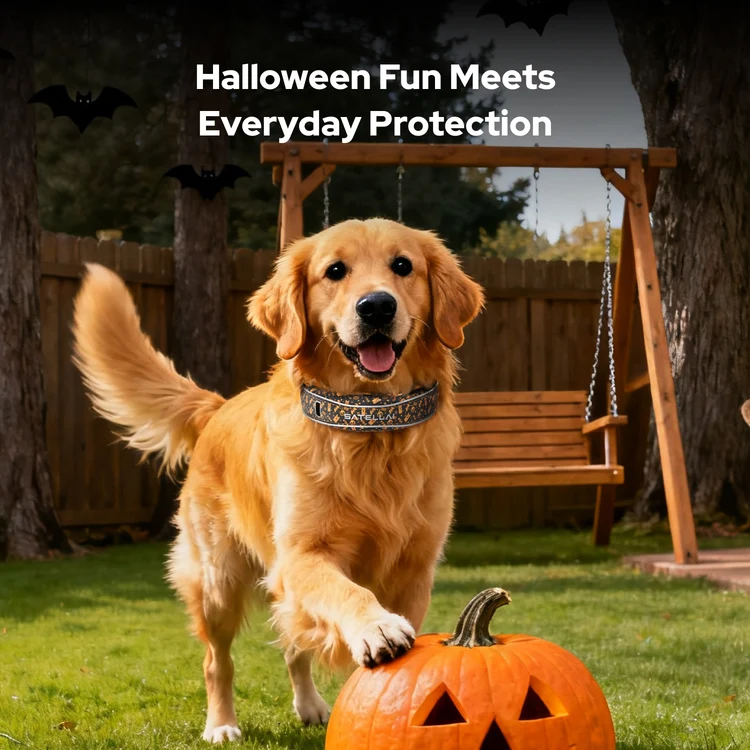
The black cover features orange Halloween designs, including ghosts, bats, candy and jack-o’-lanterns. It’s a fun way to dress up something your dog is already accustomed to wearing.
SATELLAI also has a matching Haunted Trails Leash and Collar with orange braided rope, reflective ghost details and black hardware.
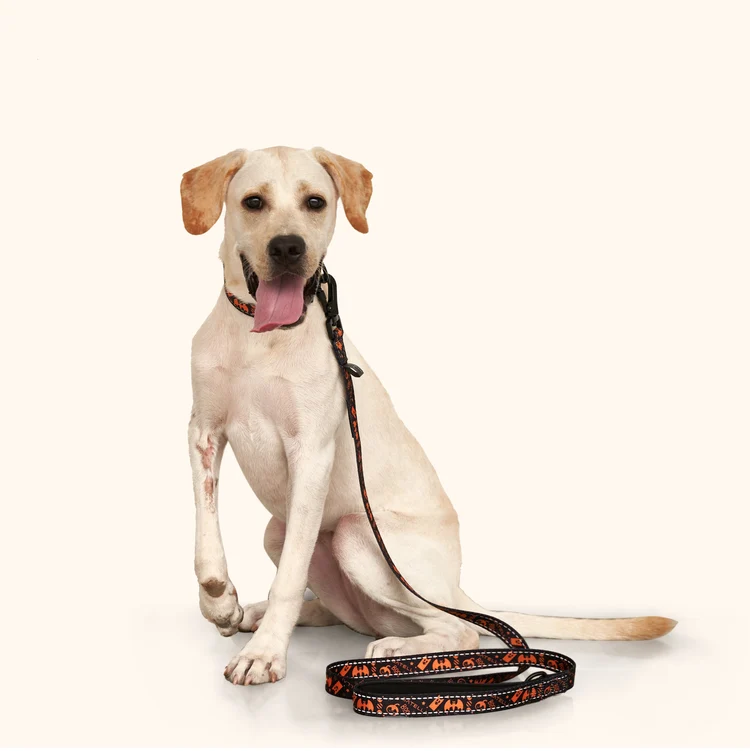
The reflective accents are a particularly practical touch for evening walks, especially when visibility becomes more important.
You can check out the Halloween accessories on SATELLAI’s Halloween collection page. Just make sure you’re choosing accessories compatible with your particular SATELLAI device, since the original GPS fence collar and the Collar Go aren’t the same product.
And remember, even a simple collar accessory should fit comfortably and shouldn’t interfere with the device’s normal operation.
Personally, I think this is a much better option for dogs who hate costumes. They get to look festive without having to spend the evening wondering why their humans have dressed them as a taco.
6. Make Your Dog More Visible During Evening Walks
Halloween evening walks require a little extra attention. There are more pedestrians than usual, drivers may be distracted and children in costumes aren’t always paying attention to where they’re going.
If you need to walk your dog after dark, visibility is especially important. Reflective leashes, collars and harnesses can help drivers and other pedestrians notice you.
As mentioned above, the SATELLAI Haunted Trails Leash and Collar are reflective. That said, you can also consider a rechargeable LED collar light or a clip-on safety light attached to your dog’s harness.
These are simple accessories, but they’re among the most practical pieces of pet technology you can use on Halloween.
A few other precautions are worth taking:
- Keep your dog on a standard, secure leash rather than giving them lots of freedom on a retractable one.
- Avoid especially crowded trick-or-treating areas.
- Watch for discarded candy and wrappers on sidewalks.
- Give unfamiliar dogs and excited children plenty of space.
- Consider walking your dog before trick-or-treating begins if your neighborhood gets particularly busy.
Even if your dog is normally wonderful around children, Halloween isn’t necessarily the best time to test their patience.
A child wearing a giant dinosaur head doesn’t look or move quite like the people your dog is accustomed to meeting.
7. Keep Candy and Halloween Treats Out of Reach
Technology can help with a lot of Halloween safety concerns, but it can’t replace the simple act of putting candy somewhere your dog can’t get it.
Chocolate is toxic to dogs, and darker varieties generally contain higher concentrations of theobromine and caffeine.
Sugar-free candy containing xylitol is another major concern. Xylitol can cause a dangerous drop in blood sugar and potentially serious liver damage in dogs.
Raisins and grapes are also toxic, and candy wrappers can create choking or intestinal obstruction risks.
Keep candy in closed cabinets or other secure locations rather than leaving bowls unattended on low tables.
If you have a dog who’s particularly talented at getting into things, a cabinet lock might be one of the most useful safety gadgets you own.
Not especially exciting technology, I’ll admit, but effective. You can also use a pet camera to monitor a room if your dog has a history of counter-surfing, although prevention is still much better than watching them steal an entire bag of chocolate in real time.
If your dog eats something potentially toxic, contact your veterinarian or an animal poison control service immediately. Don’t wait for symptoms.
8. Be Careful With Electronic Halloween Decorations
Halloween decorations have become increasingly elaborate, and some are practically small animatronic robots.
They move, make noise, have flashing lights and occasionally jump out at unsuspecting visitors. Which is great for Halloween enthusiasts, but not necessarily wonderful for dogs.
Motion-activated decorations can startle even confident pets, especially when they suddenly begin moving or making noise.
Electrical cords are another concern, particularly for dogs who like chewing unfamiliar objects.
Battery-operated decorations eliminate some cord-related risks, but accessible batteries, especially button batteries, can be extremely dangerous if swallowed.
When decorating, I’d recommend:
- Keeping electrical cords secured and out of reach.
- Avoiding motion-activated decorations in areas your dog regularly uses.
- Choosing LED lights instead of candles with open flames.
- Making sure battery compartments are securely closed.
- Keeping small decorative pieces where your dog can’t chew or swallow them.
- Testing noisy decorations before Halloween to see how your dog reacts.
If you use smart plugs to control Halloween lights, you can also create a schedule that automatically turns them off at a reasonable hour.
That’s useful for preventing decorations from running all night, although smart plugs don’t make unsafe decorations safe.
And if your dog is frightened by a particular decoration, don’t force them to approach it. There’s no reason they need to become friends with the animatronic skeleton.
9. Use Smart Home Routines to Make Halloween Less Chaotic
One of the nice things about smart home technology is that you can automate several little tasks that would otherwise require your attention.
And Halloween is a pretty good example of when that comes in handy.
If you already use smart lights, speakers or plugs, consider creating a simple Halloween routine.
For example, you could have your indoor lights turn on before sunset, start soft background music in your dog’s quiet room and disable unnecessary smart speaker announcements.
You could also schedule outdoor decorations to turn off after trick-or-treating ends. The key is to keep the routine simple and predictable.
I wouldn’t introduce a bunch of new gadgets or unfamiliar sounds on Halloween itself. If your dog is already nervous about the holiday, the last thing they need is Alexa suddenly announcing something they’ve never heard before.
Set everything up in advance and test it while your dog is relaxed.
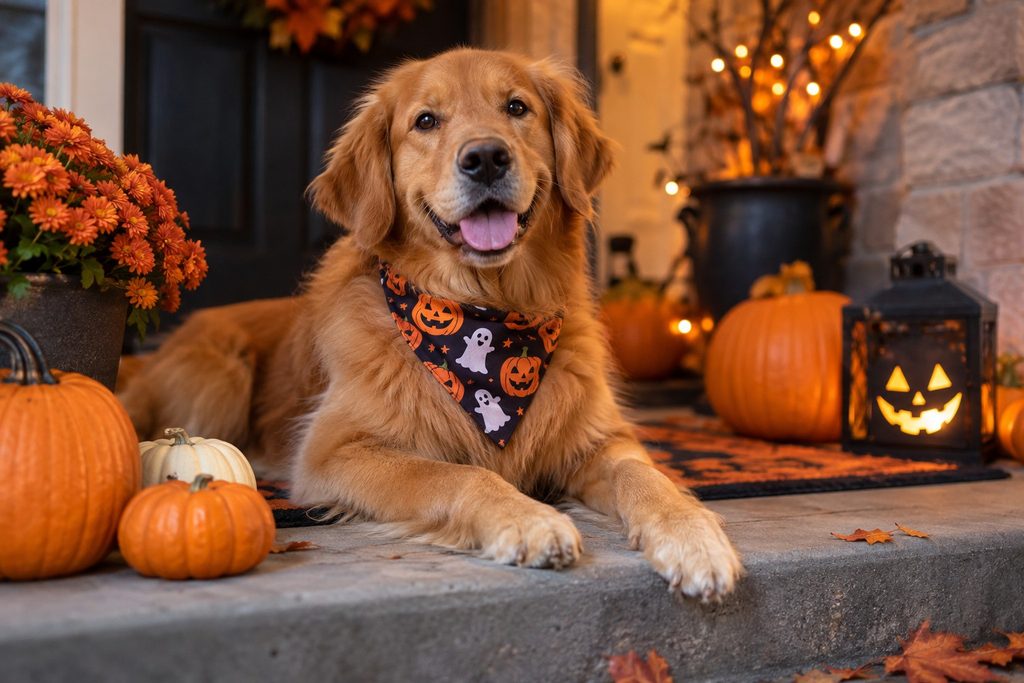
10. Keep Your Dog Indoors During the Busiest Halloween Hours
Even with GPS fencing, trackers and all the other technology available, sometimes the safest solution is also the simplest.
Keep your dog inside when Halloween activity is at its busiest. This is especially important for dogs who are reactive, easily frightened or prone to chasing people and animals.
If you’re expecting lots of trick-or-treaters, consider keeping your dog away from the front door entirely. Baby gates or closed interior doors can create an extra barrier between your dog and the outside world.
Just make sure any barriers you use are appropriate for your dog’s size and abilities. Some dogs can clear a baby gate without much effort, particularly when they’re excited.
If your dog needs to go outside, supervise them closely and use a leash when appropriate.
GPS fencing and tracking are useful backups, but they don’t eliminate the risks associated with an unsupervised dog around crowds, traffic or unfamiliar visitors.
11. Have an Emergency Plan Before You Need One
Nobody wants to think about an emergency happening on Halloween, but a little preparation can make a stressful situation easier to handle.
Start by saving your veterinarian’s number and the contact information for the nearest emergency animal hospital.
It’s also worth saving these two numbers:
- ASPCA Animal Poison Control Center: 888-426-4435
- Pet Poison Helpline: 855-764-7661
Both are available 24/7, and consultation fees may apply.
Make sure your dog’s microchip registration is current and that their ID tag has a working phone number.
If you use a GPS tracker, check the battery, app connection and notification settings ahead of time.
I’d also recommend keeping a recent, clear photo of your dog on your phone. If your dog ever goes missing, you’ll have an up-to-date picture ready to share.
And if your dog swallows something dangerous, don’t try to induce vomiting or give home remedies unless a veterinarian specifically instructs you to do so. The faster you get appropriate guidance, the better.
Final Thoughts: Smart Halloween Safety Doesn’t Have to Be Complicated
There are some pretty impressive pet gadgets available these days, and Halloween is one of those occasions when a few of them can be especially useful.
A GPS fence like Halo can help reinforce boundaries your dog already understands. A tracker like SATELLAI Collar Go provides another way to locate your dog if they get loose. Smart doorbells and pet cameras can make managing the evening easier, especially if your dog isn’t particularly fond of unexpected visitors.
But none of those things replaces supervision, training or common sense.
Sometimes the best Halloween safety measure is simply keeping your dog inside, putting the candy away and giving them somewhere comfortable to sleep through the festivities.
After all, your dog probably doesn’t care whether your Halloween decorations are impressive or whether their costume matches yours.
They just want to feel safe, comfortable and preferably receive a few treats of their own. And really, that’s not a bad way to spend Halloween.



Leave a Comment