



Have you ever wondered what the average IQ of a dog is? Sure, they look at us with those “I totally understand taxes” eyes, but what’s really going on upstairs? Dogs aren’t just adorable companions—they’re surprisingly clever creatures with intelligence that varies wildly from breed to breed.
Below, we’ll break down what dog IQ actually means, how experts measure it (sort of), what updated studies say, and how you can help your pup get even smarter. Grab a treat and let’s dive in!
What’s the Average Dog’s IQ?
Here’s the quick truth bomb:
There’s no official, universal “dog IQ score.” At least not in the same way humans have IQ tests.
Why? Because:
- There are no standardized IQ tests for dogs
- Intelligence varies wildly based on breed, motivation, environment, and training
- Even human IQ tests have major flaws—so imagine trying to fit a Pomeranian into that framework
However, experts often compare canine intelligence to that of a 2–3-year-old human child. And very loosely, some researchers like Dr. Stanley Coren suggest an “average score” equivalent to about 100—but again, that’s metaphorical, not scientific.
What dogs do excel at is not human-style reasoning—it’s dog-style intelligence. And they often outperform toddlers (and some adults) in memory tasks, social reasoning, and reading body language.
What Latest Research Says About Dog IQs
Recent studies add even more nuance:
- 2024 canine cognition research (Duke University) found that dogs outperform wolves (and many primates) in cooperative communication tasks.
- MRI studies show dogs activate brain regions similar to ours when recognizing familiar voices and scents.
- Some dogs have been shown to learn over 1,000 words (e.g., Chaser the Border Collie).
So instead of asking “What’s the average dog IQ?” a better question is…
What kind of intelligence does my dog have—and how can I nurture it?
The Three Types of Canine Intelligence
Dog intelligence isn’t one big bucket—it’s three distinct categories identified by Dr. Stanley Coren:
- Instinctive Intelligence
- Adaptive Intelligence
- Working & Obedience Intelligence
Let’s break each one down with clearer examples, fresh research, and how you can boost each type.
1. Instinctive Intelligence: The “Hardwired Talent” Zone
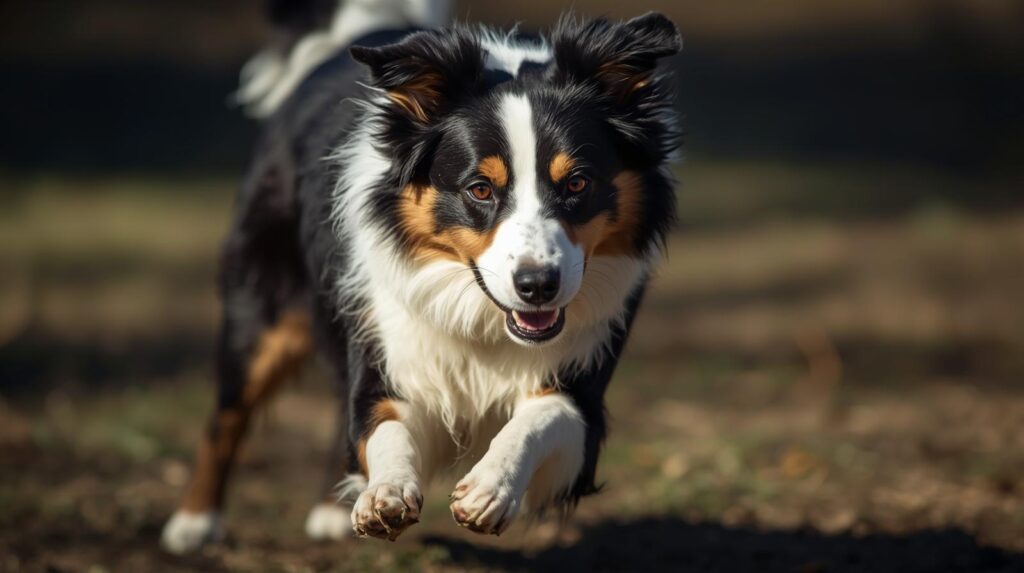
This is the type of intelligence your dog is born with—skills bred into their DNA.
Examples by Breed Category
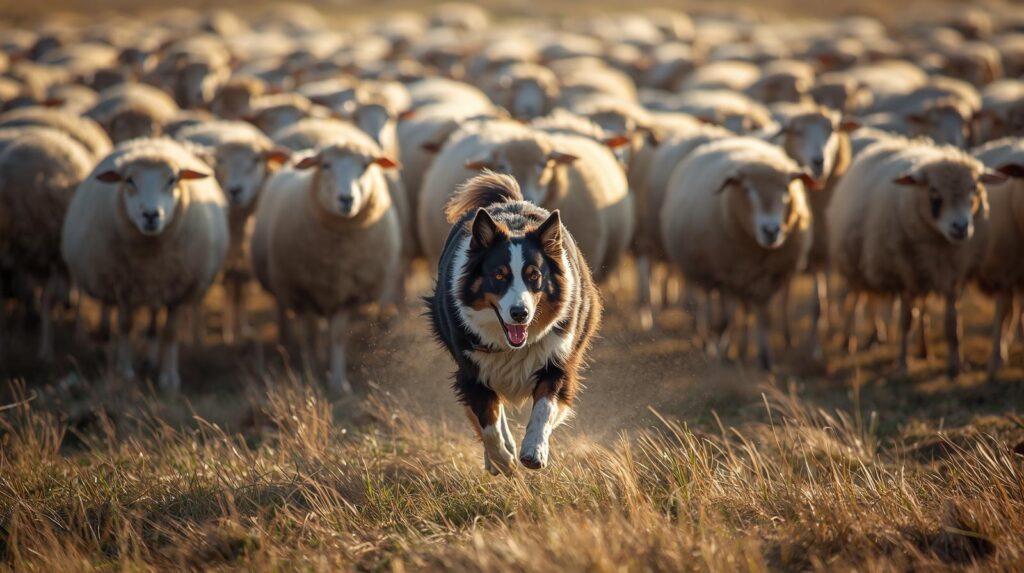
- Herding Breeds (Border Collie, Aussie Shepherd)
- Naturally coordinate sheep like tiny fuzzy CEOs
- Easily read micro-movements in livestock
- Retrievers (Golden, Lab)
- Fetching + returning items is instinctive
- Can remember multiple object names
- Guardian Breeds (GSD, Doberman)
- Quick threat detection
- Strong protective instincts
- Scent Hounds (Bloodhound, Beagle)
- Olympic-level noses
- Can follow old, faint scent trails for miles
- Pointers (English Pointer)
- Freeze on instinct when detecting prey scent
- This “pointing” behavior appears even without training
How to Nurture Instinctive Intelligence
- Give breed-specific activities, such as:
- Agility for herding breeds
- Fetch games for retrievers
- Nose-work games for hounds
- Use interactive toys that mimic natural instincts
- Let them explore varied environments (woods, fields, safe open spaces)
- Incorporate instincts into training, like adding fetch to obedience work
2. Adaptive Intelligence: Your Dog As a Problem-Solver
Adaptive intelligence is what a dog learns on their own—through experience, observation, trial, and error.
What It Includes
- Problem-solving skills
- Learning from past experiences
- Observational learning
- Generalizing commands to new environments
- Flexibility in new situations
Real-World Examples
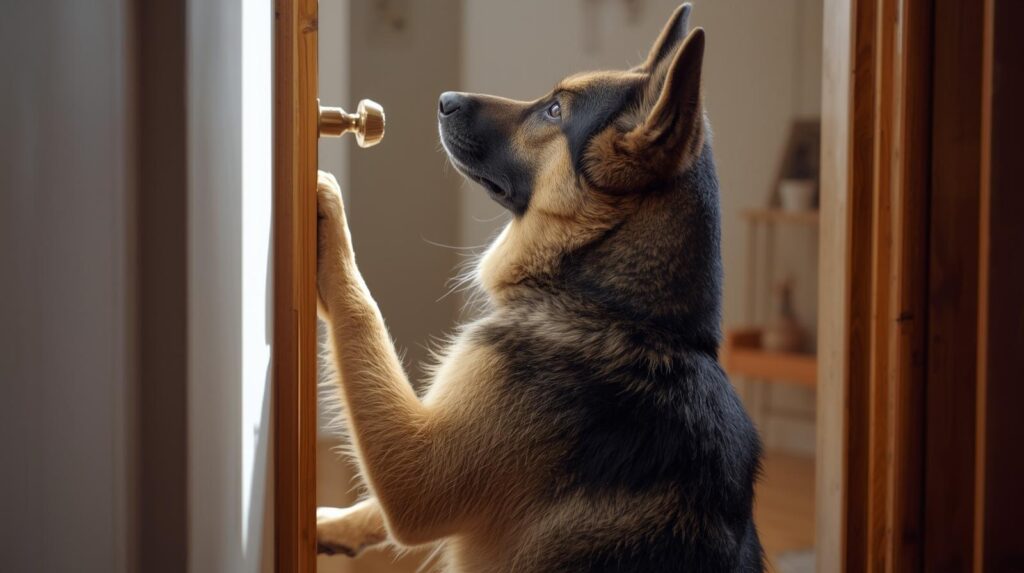
- Figuring out how to open a door
- Learning “sit” at home and doing it at the vet
- Mimicking another dog’s behavior (both good and… creatively chaotic)
How to Boost Adaptive Intelligence
- Use puzzle toys and treat feeders
- Rotate toys weekly to prevent boredom
- Take your dog to new environments—new smells = new learning
- Introduce simple problem-solving games, like:
- Hide-and-seek
- “Find the treat” scent games
- Training with obstacles
- Reward creative thinking, not just perfect obedience
Adaptive intelligence is strongly linked to longevity and cognitive health, so boosting it also supports healthy aging.
3. Working & Obedience Intelligence: The Trainability Factor
This is the type of intelligence most people think of when they imagine “smart dogs.” It’s all about learning commands and performing tasks.
What It Includes
- Ability to learn commands quickly
- Staying focused in distracting environments
- Understanding task patterns
- Performing specialized roles (service dog, therapy dog, detection work)
Breeds That Typically Excel
- Border Collie
- German Shepherd
- Poodle
- Belgian Malinois
- Doberman Pinscher
- Golden & Labrador Retrievers
But don’t worry—any dog can improve in this category.
How to Boost Working & Obedience Intelligence
- Use consistent, short training sessions (5–10 minutes)
- Communicate clearly using the same cues each time
- Use positive reinforcement (treats, praise, or play)
- Train in different locations to improve reliability
- Introduce new tasks gradually to build confidence
- Make training fun—bored dogs don’t learn
Ways to Improve Your Dog’s Overall IQ
(Yes—You Can Absolutely Make Your Dog Smarter)
Whether your dog is a natural genius or a sweet little potato with legs, these methods boost cognitive skills across all intelligence types:
Mental Enrichment
- Daily training sessions (even 5 minutes helps)
- Puzzle toys & interactive feeders
- Snuffle mats
- DIY “find it” scent games
- Hide-and-seek
Customize your dog's box for their individual needs—from allergy-safe treats to toys and more. Every box is a whole new adventure for your canine pal! Pick the right plan for you. They offer 6- or 12-month subscriptions.
LIMITED TIME OFFER
GET FREE EXTRA TOYS FOR A YEAR!

Physical Exercise
A tired dog is a learning dog.
- Walks with varied terrain
- Fetch
- Tug
- Agility or obstacle play
- Flirt poles
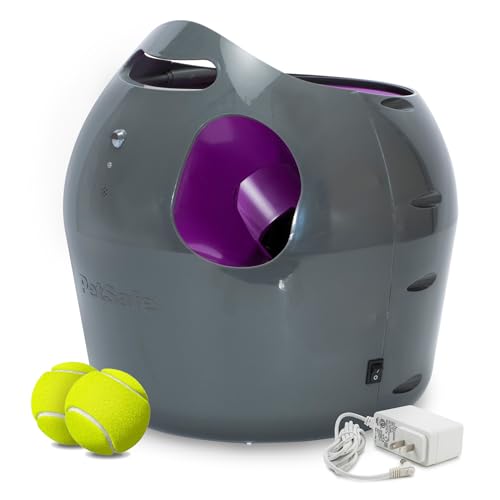
For the dog who loves fetch, gift him the toy that he’s sure to have a ball playing with — literally. The Automatic Ball Launcher is an automatic, interactive game of fetch that will keep your best friend engaged and give your arm a little break.
Social Enrichment
- Supervised dog-dog interaction
- Regular new experiences
- Exposure to new sounds, surfaces, and environments
Food & Nutrition (Research-Updated)
- DHA (found in fish oil) may improve memory
- Antioxidants may slow cognitive decline
- Healthy weight supports better learning
- Some fresh food diets support sharper cognition
Brain-Training Activities
- Teach object names (research shows dogs can learn >100!)
- Teach your dog to clean up toys
- Learn directional cues (“left,” “right,” “up,” “back”)
Senior Dog Cognitive Support
For older pups, studies suggest:
- Omega-3s (DHA/EPA)
- MCT oil
- Brain puzzles
- Consistent routines
can slow cognitive decline and improve problem-solving.
The popular Hemp & Hips dog treat from Veterinary Naturals now comes in a CBD version! Hemp & Hips Plus CBD combines everything customers love about the original variety but now with C10 CBD.

Conclusion: Every Dog Is Smart—Just in Their Own Way
Your dog doesn’t need a number on a chart to prove they’re intelligent. Whether they’re solving puzzles, herding imaginary sheep, or outsmarting you for the last slice of pizza, their intelligence shows up in unique—and often hilarious—ways.
Understanding the three core types of canine intelligence helps you appreciate your dog’s strengths. And by adding enrichment, training, and mentally challenging activities into their routine, you can help any dog reach their full cognitive potential.
So, here’s to raising geniuses—one wagging tail, treat puzzle, and zoomie-filled training session at a time.







It’s a lie that dog IQs are 100. Do you expect anyone to believe that or are you a grifter?
You need get a glasses, this research saying that the dogs iQ is 100 as 2-3 years old human
If dog’s IQ is 100 that means they can learn and speak to humans. They are more like 50 at best. Fake research
U are more dumber than dogs cause this research saying that the dogs iQ is 100 as 2-3 years old human.
My oh my ? Anger displayed by humans ! Because dogs are smart ? We are so fortunate to be aided by the skill patients love and loyalty they give .List of a dogs capability’s unimaginable – giving humans independence security safety life and companionship ..
I have a BPS acredited BSc in Psychology and im confidently telling you, the average IQ for humans is 100-110. The test was standardised for humans which is why the average value was set at 100.Its been more than 50years since IQ test standardisation, hence adding a range of 100-110. If you said the IQ of a dog was more like 10 i would believe you. I have no idea why youve published such wrong information .
I don´t know how you passed the classes, then.
IQ tests are normed so that the average is 100 but they are also _age-adjusted_. If you perform an IQ test in children, their average is also 100. So, simply put, the average of an IQ test is _always_ 100, also for dogs, because it is normed that way, as the idea is to be able to compare subjects on a relative scale. As the article clearly states, their absolute intelligence is similar to 2 year old humans.