


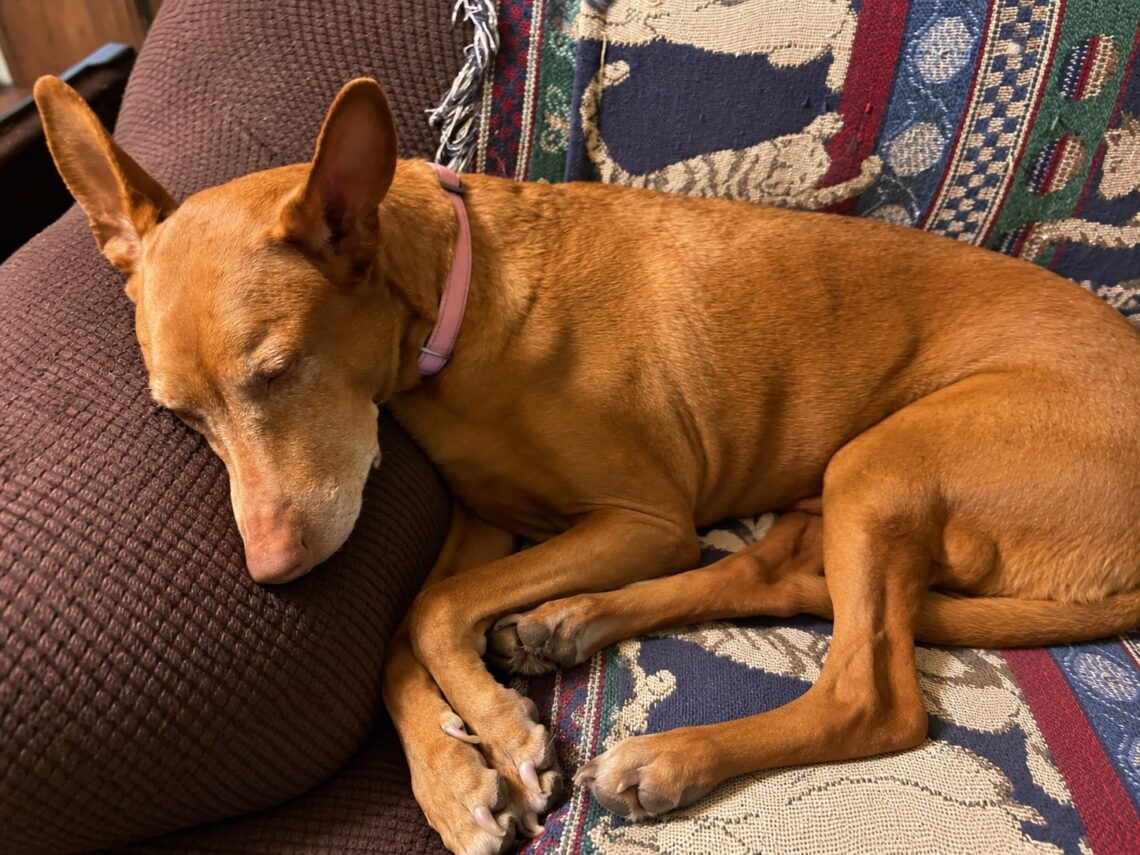

Until my dog Freya was diagnosed with heart disease, I couldn’t have told you her resting respiratory rate if you paid me. I knew how she normally breathed, obviously. I’ve lived with her for ten years. But there’s a big difference between knowing what your sleeping dog looks like and knowing exactly how many breaths she takes per minute.
Then Freya started coughing and having episodes where she would collapse after getting overly excited. Suddenly, I needed to know a whole lot more about canine respiratory rates than I ever planned to learn. I basically took a crash course in making sure my dog wasn’t crashing.
One of the most important things I learned was how to check her resting respiratory rate (RRR). It’s a surprisingly simple measurement that can give you useful information about changes in your dog’s health, particularly if your dog has heart or respiratory disease.
These days, I also use the Maven Pet Health Tracker, which automatically monitors Freya’s resting respiratory rate and lets me see her patterns and trends over time. That’s incredibly useful for ongoing monitoring (and, frankly, for my sanity). But I still think every dog owner should know how to check RRR manually.
Turn any collar into a smart health monitor. Maven tracks your dog’s heart rate, respiratory rate, activity, rest, hydration, and more—helping you catch early signs of illness before they become serious. Lightweight (just 14g), waterproof, and packed with vet-level insights, it’s like having a personal health assistant for your pup.
BEST DEAL ON THE WEB
SAVE $88 TODAY!

Batteries need charging. Phones die. Apps occasionally refuse to cooperate because technology likes to remind us who’s really in charge. And if your dog suddenly doesn’t seem right, you should be able to count her breaths yourself without depending on anything more complicated than a clock.
So, let’s start there.
What Is a Dog’s Resting Respiratory Rate?
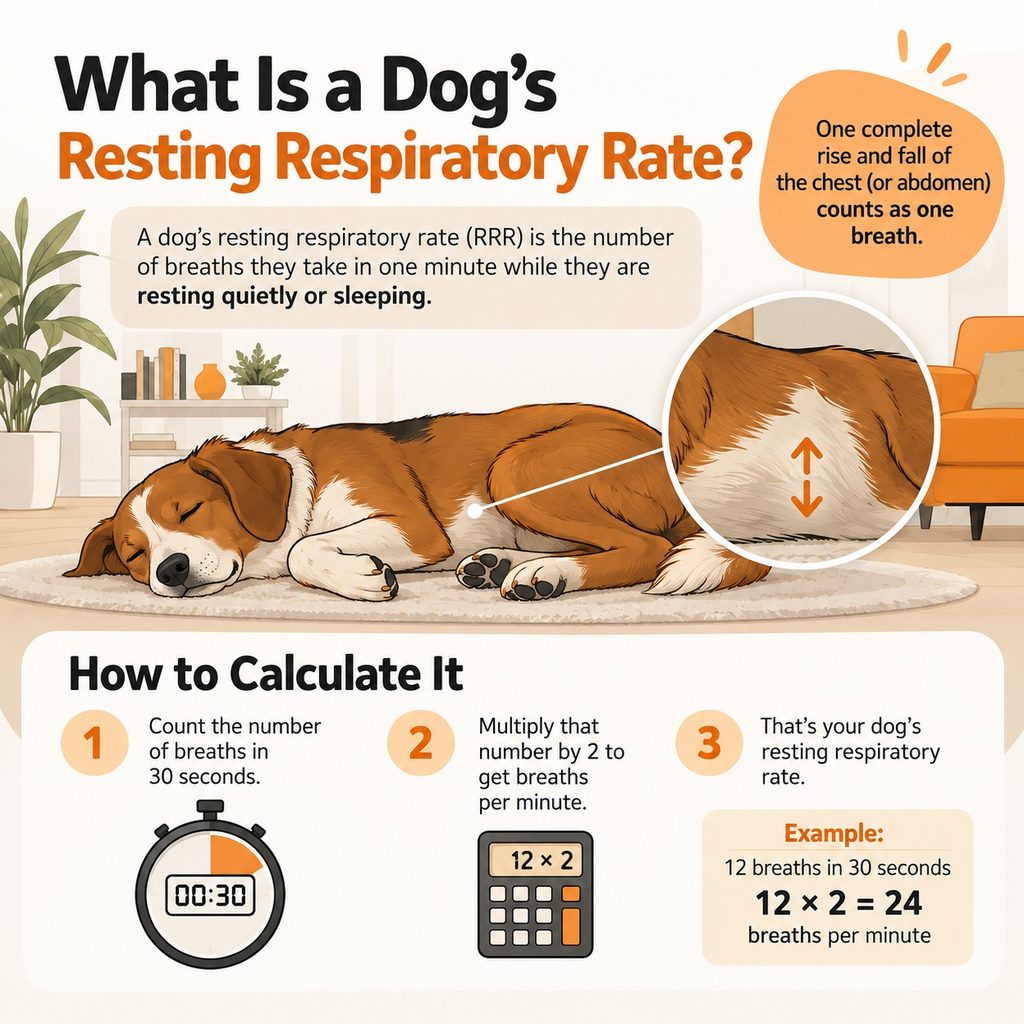
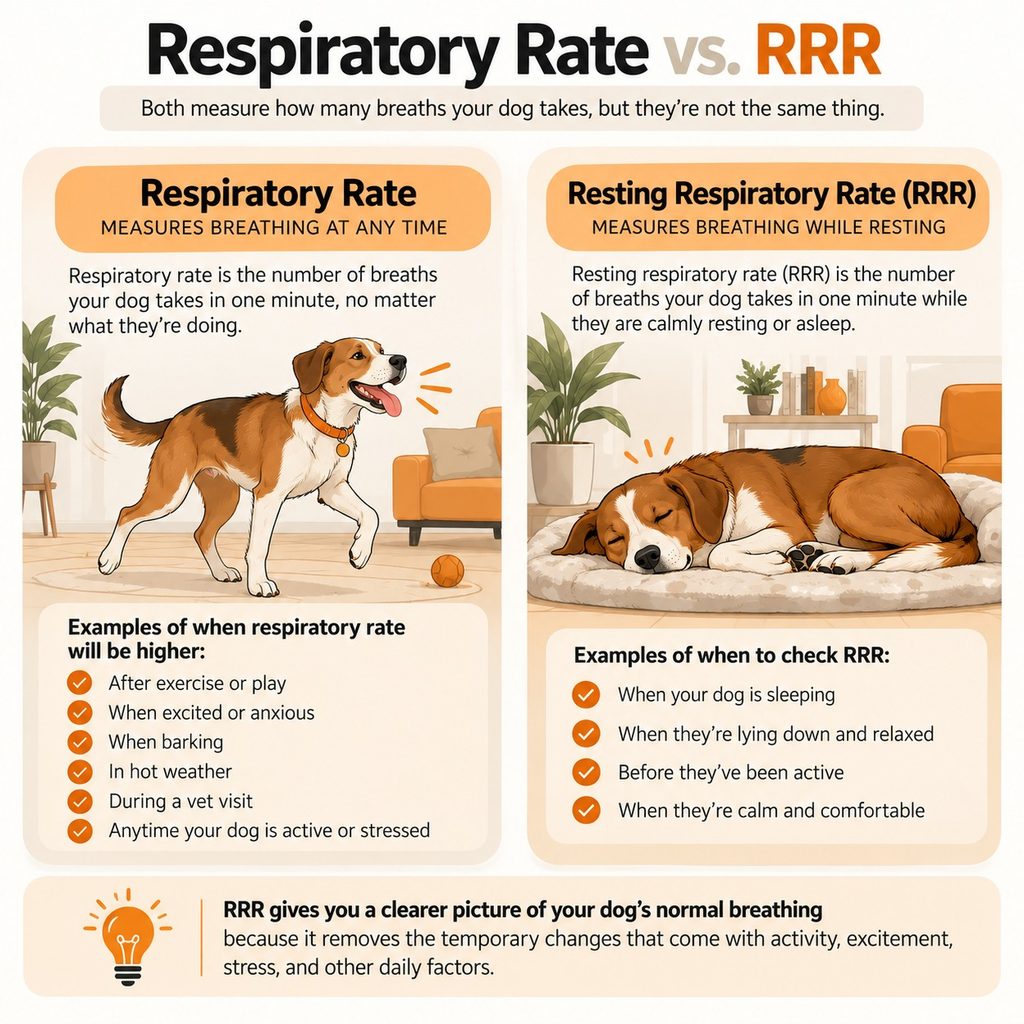
Your dog’s resting respiratory rate is simply the number of breaths she takes in one minute while she’s resting quietly or sleeping.
One complete rise and fall of the chest counts as one breath. For example, if your dog’s chest rises and falls 12 times during 30 seconds: 12 × 2 = 24 breaths per minute.
That’s her resting respiratory rate. Simple enough, right? The harder part is making sure you’re measuring it under the right circumstances and understanding what that number means for your dog.
What Is a Normal Resting Respiratory Rate for Dogs?
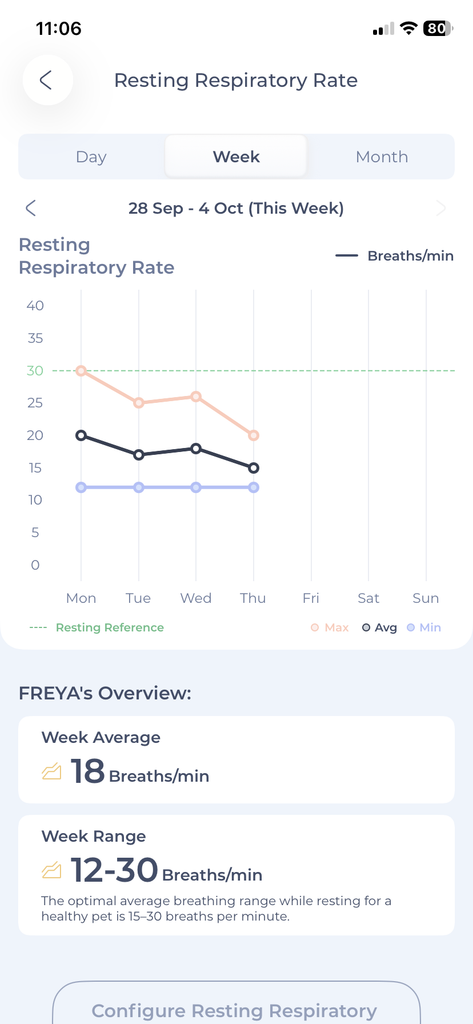
Generally, a healthy dog’s resting respiratory rate is under about 30 breaths per minute, although you’ll see slightly different reference ranges depending on the veterinary source.
Maven, for example, lists approximately 15 to 30 breaths per minute as a typical resting range for healthy dogs (FYI, this is also what my own vet told me). Tufts University’s Cummings School of Veterinary Medicine notes that normal dogs and cats are usually below about 32 to 35 breaths per minute and that some healthy animals may be as low as 12.
That’s one reason I wouldn’t get hung up on a single universal “perfect” number. Your dog’s baseline and trends matter, too. A dog who routinely sleeps at 14 to 16 breaths per minute and suddenly starts consistently measuring 27 or 28 may be experiencing a meaningful change even though she’s technically still under 30.
Likewise, one random higher reading doesn’t necessarily mean something terrible is happening. You’re looking at the bigger picture. And if your dog already has lung or heart disease, follow the guidelines your veterinarian or cardiologist gives you. Their individual threshold for your dog matters more than a number you find online.
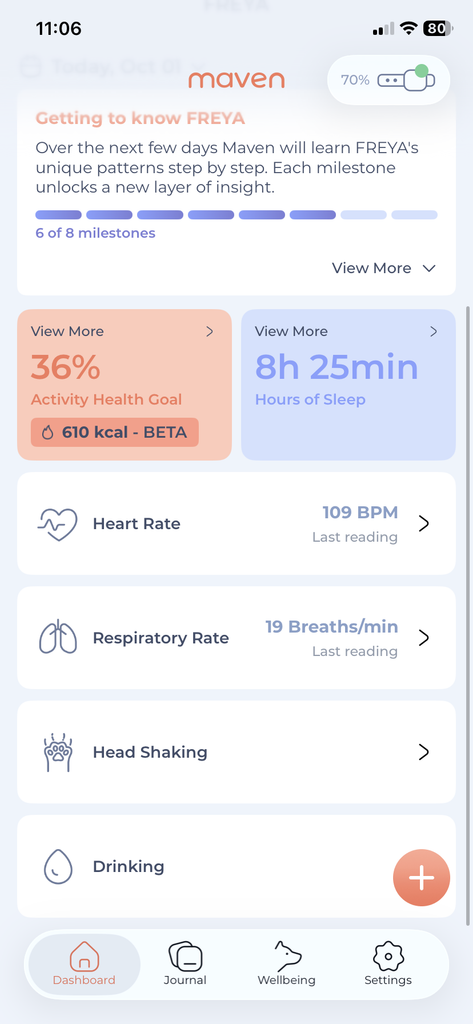
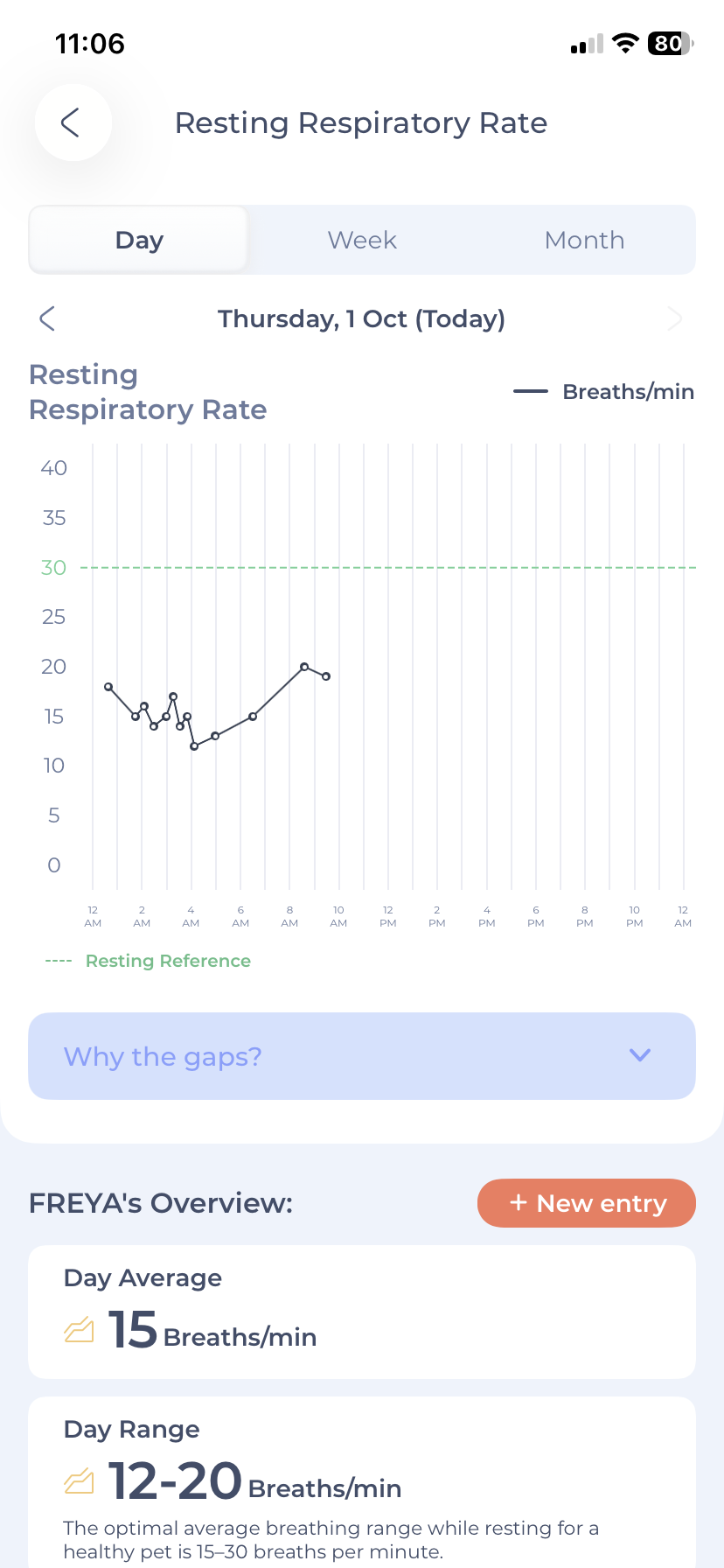
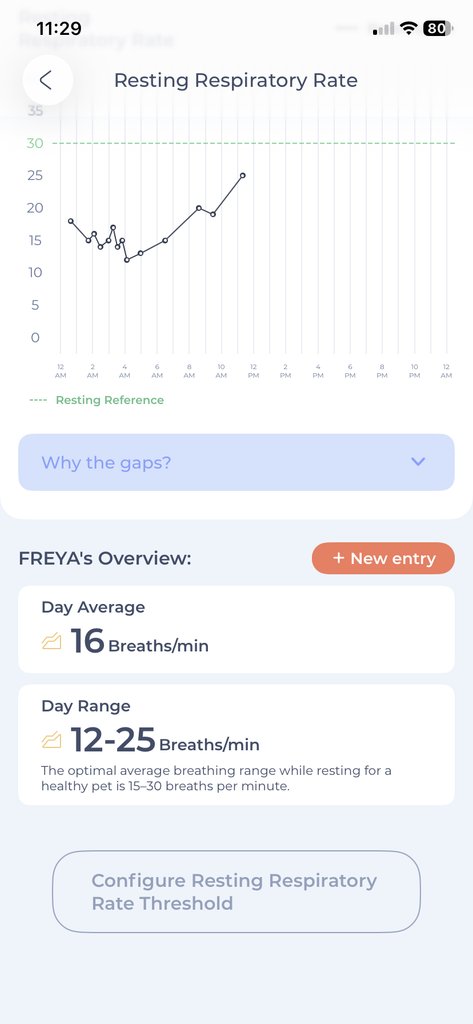
With Maven, I love that it gives me both the big picture and the individual readings. I also love that there are so many ways to dig into this data. I can look at the main dashboard and see her most recent reading. I can look at the RRR data specifically and see charts over a single day, week, or month. I can even download all of her data with every reading in a PDF and see it all laid out that way.
How to Check Your Dog’s Resting Respiratory Rate Manually
You don’t need any special equipment to check RRR. You really just need your dog, a timer, and the ability to watch her breathe without waking her up.
That last part is sometimes easier said than done.
1. Wait Until Your Dog Is Truly Resting
Ideally, check your dog when she’s asleep or very deeply relaxed.
Don’t check immediately after she:
- Exercises
- Plays
- Gets excited
- Barks at something
- Comes inside from the heat
- Pants
- Gets stressed or anxious
All of those things can temporarily increase respiratory rate.
I usually check Freya when she’s stretched out and completely relaxed. If she’s just spent ten minutes yelling about a chipmunk for having the audacity to exist within her line of sight, that’s obviously not the time.
2. Watch the Chest or Abdomen
Position yourself where you can clearly see your dog’s chest or side. Watch for the chest to rise and fall.
One rise and one fall = one breath.
Depending on your dog’s position, you may find it easier to watch the chest, ribs, or abdomen. With Freya, I can usually see the movement pretty easily from across the room.
And yes, I recommend staying across the room if possible. Nothing ruins a good resting respiratory rate check quite like leaning six inches over your sleeping dog’s face until she wakes up wondering why you’re being weird.
3. Count for 30 Seconds
Set a timer for 30 seconds and count each complete breath. When the timer ends, multiply the number by two.
For example: 9 breaths in 30 seconds × 2 = 18 breaths per minute
You can also count for 15 seconds and multiply by four, but I prefer 30 seconds because there’s less room for a small counting error to dramatically change the result. If I’m concerned about a reading, I’ll count for a full 60 seconds.
4. Repeat the Measurement if Something Seems Off
If you get a number that’s unusually high for your dog, don’t panic over one reading. First, make sure your dog is actually resting.
Was she dreaming? Did she just reposition herself? Is she warm? Did something wake her up? Is she quietly watching you watch her?
Give her a few minutes to settle completely and check again. If the rate remains elevated, particularly if it’s significantly different from her normal baseline, that’s useful information to give your veterinarian.
Sleeping Respiratory Rate vs. Resting Respiratory Rate
You’ll sometimes see sleeping respiratory rate (SRR) and resting respiratory rate (RRR) used somewhat interchangeably.
They’re closely related, but sleeping measurements can be particularly useful because sleep removes a lot of the variables that can temporarily increase breathing.
A dog lying on the floor staring intensely at a squirrel through the window may technically be lying down, but I wouldn’t exactly call that a relaxed physiological state.
When possible, I prefer checking Freya while she’s asleep. Just avoid counting while your dog is obviously dreaming. Twitching, little running movements, vocalizing, and REM sleep can temporarily change the breathing pattern. Wait until things settle down again.
Why Resting Respiratory Rate Matters So Much With Heart Disease
This is where RRR went from “interesting dog health fact” to something I actually needed to understand. When Freya started having coughing and collapse episodes, we eventually learned that she had heart disease.
With certain types of heart disease, veterinarians pay particularly close attention to resting respiratory rate because an increasing rate can be associated with fluid accumulating in or around the lungs and the development or worsening of congestive heart failure.
That doesn’t mean every elevated respiratory rate equals heart failure. Dogs can breathe faster because of pain, heat, stress, fever, respiratory illness, and plenty of other things. But when you have a dog with known heart disease, RRR becomes an especially valuable piece of information.
And suddenly, you notice breathing in a way you never did before.
I Spent a Ridiculous Amount of Time Watching My Dog Breathe
After Freya’s heart problems started, I watched her breathe constantly. And I do mean constantly.
I’d watch her chest while she slept. I’d count breaths. I’d count them again because I wasn’t sure whether I’d counted correctly the first time. I’d check later because maybe the number had changed. Then I’d wonder whether I was seeing more abdominal movement than usual.
Once you’ve watched your dog collapse, it’s very difficult to go back to casually glancing at her while she sleeps. That’s one of the reasons I’ve found automatic monitoring so helpful.
It’s not just about collecting health data. It’s about not feeling like I personally have to collect every piece of health data every minute of every day.
There’s a pretty big mental difference between wondering, “Has she been breathing faster lately?” and being able to look at actual data showing what her resting respiratory rate has been doing.
How Maven Monitors Resting Respiratory Rate Automatically
We touched on this above already, but let’s get into more detail. The Maven Pet Health Tracker attaches to your dog’s existing collar and automatically collects resting respiratory rate measurements when your dog is actually at rest.
Instead of giving you one isolated number, Maven learns your dog’s normal baseline and lets you see respiratory trends over days, weeks, and months. That’s the part I find especially valuable.
If I manually check Freya’s breathing tonight and get 18 breaths per minute, I know what her breathing is doing right now.
With ongoing tracking, I can see whether 18 is typical for her, whether her average has been gradually increasing, or whether there have been unusual readings I didn’t happen to catch myself.
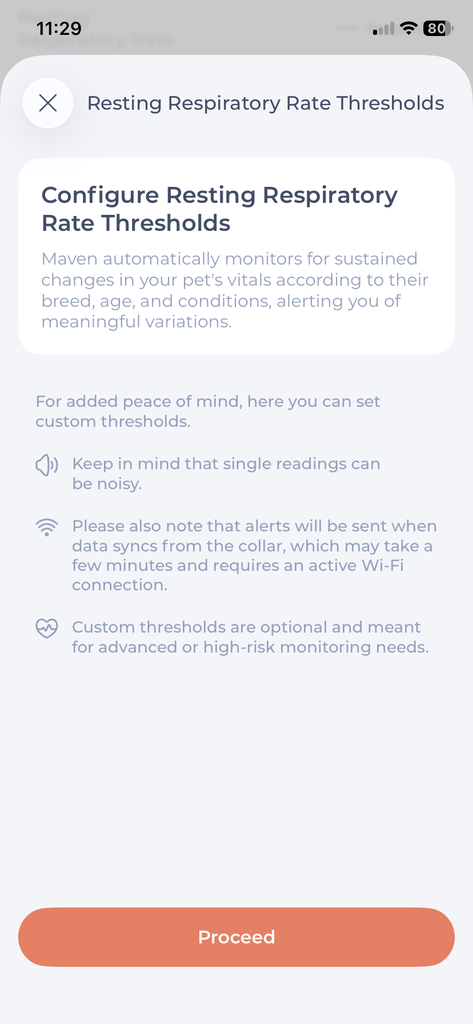
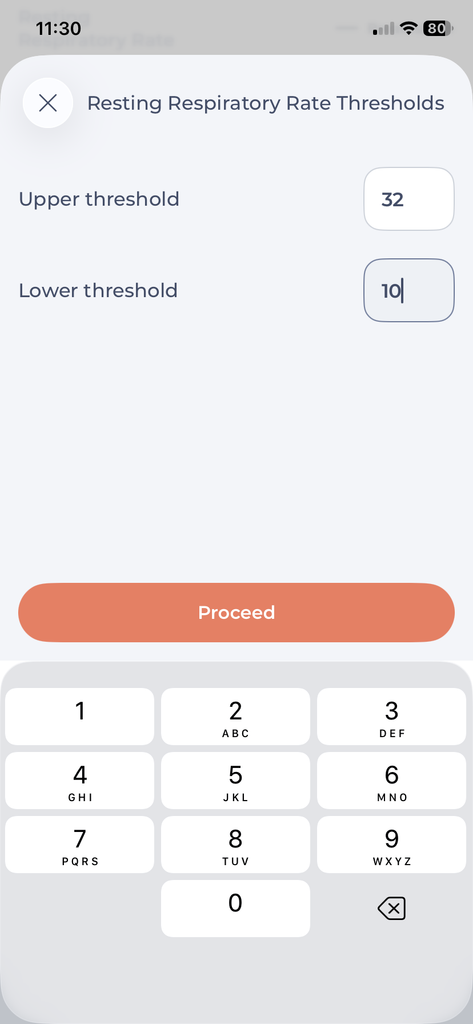
Maven can also alert you to meaningful changes and gives you data that you can share with your veterinarian. You can set up the threshold for notifications, too. For example, if you want to be notified if your dog’s RRR goes above, say 32, you can do that. Same with lower thresholds.
There’s some actual research behind Maven’s respiratory monitoring, too. In a 2026 study published in the American Journal of Veterinary Research, researchers compared Maven sensor measurements with respiratory rates counted manually by veterinary professionals. Across 120 paired measurements involving 19 dogs, the average difference was less than one breath per minute.
For someone with a heart dog, that’s exactly the kind of technology I want working quietly in the background.
Why I Still Check Freya’s RRR Manually
Having Maven hasn’t made knowing how to manually check respiratory rate obsolete. If anything, I think the two approaches work best together. Maven is ideal for ongoing monitoring and spotting trends. Manual counting is ideal when I want information immediately.
Maybe Maven is charging. Maybe I don’t have my phone nearby. Maybe the internet is down. Or maybe Freya just looks different and I want to know what her breathing is doing right this second.
If your dog appears to be having trouble breathing, that’s not the time to go hunting for a charger or troubleshooting your Wi-Fi.
Watch your dog. Count the breaths. Look at how she’s breathing, not just how fast. And seek veterinary help if she’s showing signs of respiratory distress. Technology should give us more information. It shouldn’t replace basic observation.
Keep Track of Trends, Not Just Individual Numbers
Before I had automatic tracking, I kept mental notes and manually checked Freya’s respiratory rate when I was worried about her. In retrospect, an actual written log would have been much more useful.
If you’re manually monitoring RRR, keep a simple record that includes:
- Date
- Time
- Respiratory rate
- Whether your dog was sleeping or awake
- Anything unusual that day
- Symptoms such as coughing, restlessness, weakness, or reduced activity
Over time, you’ll start seeing what normal looks like for your dog.
This is also much more useful to your veterinarian than trying to remember whether you counted 22 breaths on Tuesday or maybe it was Thursday and possibly 24.
Maven essentially automates much of that process by creating a history of respiratory measurements and trends that you can refer back to and share with your vet.
Don’t Look Only at the Number
This part is important. Respiratory rate and respiratory effort are not the same thing. RRR tells you how frequently your dog is breathing. Respiratory effort tells you how hard she’s working to breathe.
A dog struggling to breathe needs veterinary attention even if you haven’t managed to calculate a perfect breaths-per-minute number.
Watch for things such as:
- Noticeably increased abdominal effort
- The chest or belly working unusually hard with each breath
- An extended head or neck while breathing
- Elbows held away from the body
- Open-mouth breathing when your dog isn’t hot or exercising
- Blue, gray, or unusually pale gums
- Inability to comfortably lie down or settle
- Weakness or collapse
If your dog appears to be in respiratory distress, don’t spend five minutes repeatedly counting breaths because you want a better data point.
The dog matters more than the number. Contact your veterinarian or an emergency veterinary hospital.
When Should You Call Your Vet About an Elevated RRR?
There’s no single number that applies perfectly to every dog, particularly dogs with existing medical conditions.
Generally, however, a consistent resting respiratory rate above 30 breaths per minute deserves a conversation with your veterinarian, especially if that’s higher than your dog’s normal baseline.
Maven recommends contacting your veterinarian when RRR is consistently above 30 across multiple resting measurements and seeking same-day veterinary attention when resting rates remain above 40.
But context matters. A sudden increase from your dog’s established baseline may be important even if the number hasn’t crossed one of those thresholds.
If your veterinarian has given you specific instructions for your dog’s condition, always follow those instead.
And again, visible breathing difficulty, collapse, blue or gray gums, or other signs of respiratory distress warrant urgent veterinary attention regardless of the number on your stopwatch or health tracker.
Start Learning Your Dog’s Normal Before You Need It
One thing I wish I’d done before Freya developed heart problems was learning her normal resting respiratory rate. It’s much easier to recognize a change when you have something to compare it to.
You don’t need to obsessively count your healthy dog’s breaths every night. Check occasionally when she’s deeply asleep and write down the number. After several readings, you’ll have a general idea of where she normally falls.
If your dog has heart disease or another condition that makes respiratory monitoring particularly important, your veterinarian may recommend checking much more frequently. That’s also where automatic monitoring can become incredibly useful.
Because there’s a fine line between being appropriately vigilant and becoming the household weirdo who spends every evening staring at a sleeping dog’s rib cage.
I’ve crossed that line. Maven lets me cross back. Well, mostly. I mean, I still have my obsessive moments of watching her breathe. She’s my girl, and I am terrified of losing her. That doesn’t always make me rational.
The Bottom Line
Checking your dog’s resting respiratory rate is one of the easiest health measurements you can learn to do at home.
Wait until your dog is sleeping or deeply relaxed, count the number of breaths she takes for 30 seconds, multiply by two, and keep track of the results.
More importantly, learn what’s normal for your dog.
For Freya, RRR monitoring became part of life after her heart disease diagnosis. I still know how to count it manually and will absolutely do that anytime something doesn’t look right.
But having Maven continuously track her resting respiratory rate gives me something that manual spot-checks can’t: a bigger picture.
I can see trends instead of relying on my memory. I have information to share with her vet. And I don’t have to spend quite so much time staring at my sleeping dog and wondering whether that breath looked different from the previous 847 breaths.
For a dog with heart disease, that information matters.
For the human attached to that dog, sometimes the reassurance of having actual data matters quite a bit, too.
Turn any collar into a smart health monitor. Maven tracks your dog’s heart rate, respiratory rate, activity, rest, hydration, and more—helping you catch early signs of illness before they become serious. Lightweight (just 14g), waterproof, and packed with vet-level insights, it’s like having a personal health assistant for your pup.
BEST DEAL ON THE WEB
SAVE $88 TODAY!





Leave a Comment