


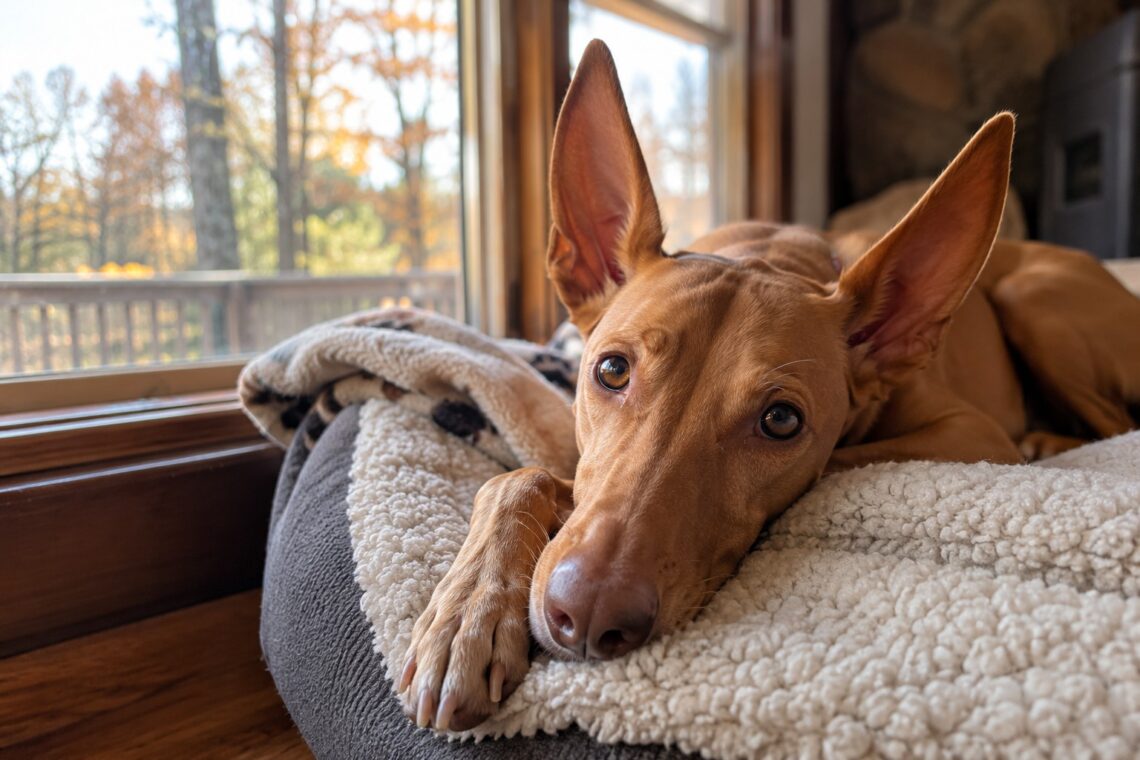

Your dog doesn’t know what daylight saving time is. They don’t know that we’re turning the clocks back an hour, and they certainly don’t understand why you’ve suddenly decided that breakfast should be served later than usual.
As far as they’re concerned, you’re the one who changed the rules. While most dogs handle the time change without much trouble, others may need a little help adjusting. That’s especially true for puppies, senior dogs, dogs with medical conditions, and those who take their daily routines very seriously.
With the fall time change coming up, let’s look at how daylight saving time can affect dogs, why some have a harder time adjusting than others, and what you can do to make the transition easier.
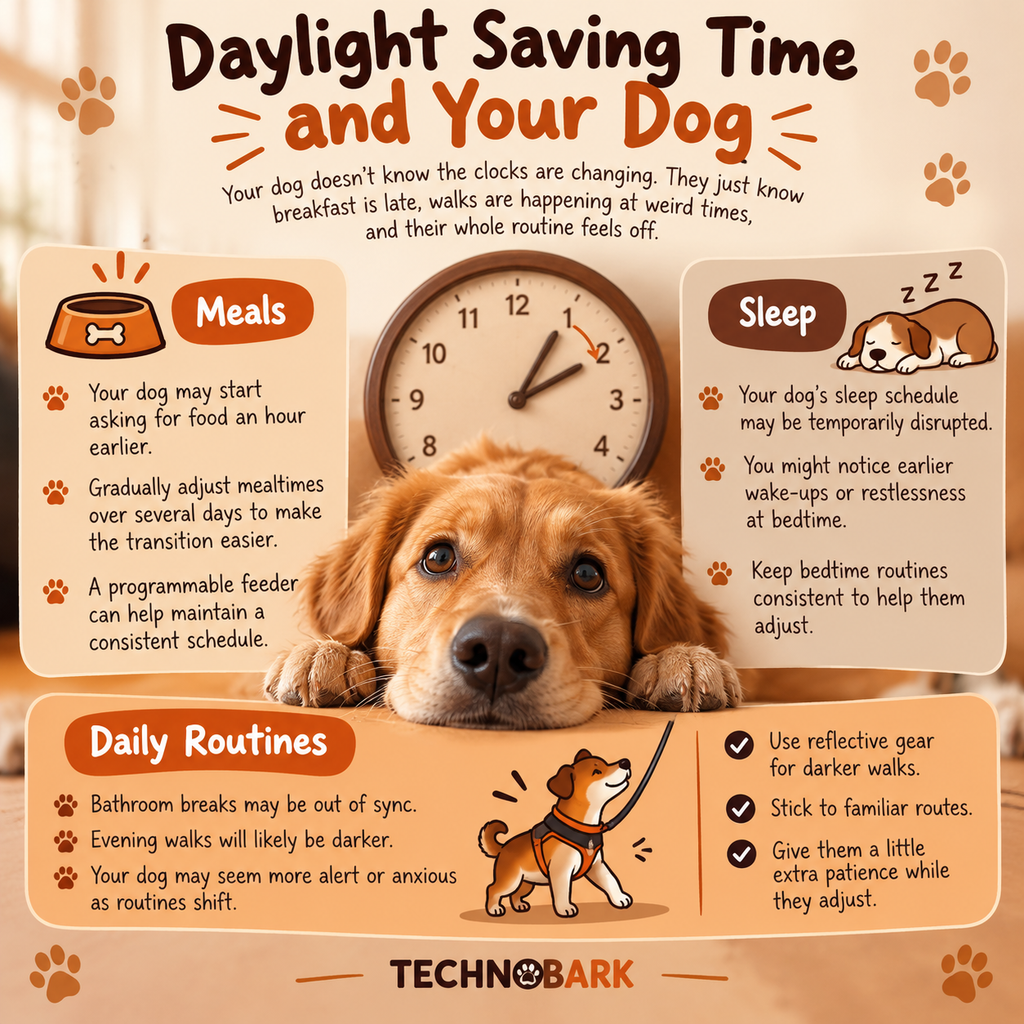
Do Dogs Actually Notice Daylight Saving Time?
Yes, although not in quite the same way we do. Dogs don’t understand clocks, but they do have internal biological rhythms that help regulate sleep, activity, hunger, and other bodily functions. These rhythms are influenced by things like natural light, regular feeding times, and daily activities.
They also learn to anticipate events based on familiar routines. For example, your dog might know that breakfast comes shortly after you wake up, that afternoon walks happen around a certain time, or that dinner follows a particular sequence of household activities.
When we change the clocks, we suddenly shift those routines relative to their internal expectations.
During the fall time change, when we turn the clocks back an hour, a dog accustomed to eating dinner at 5 p.m. may start asking for food at 4 p.m. according to the new clock. And really, can you blame them? From their perspective, dinner is already late.
Dogs Have an Internal Clock, Too
Like humans, dogs have circadian rhythms that help regulate their sleep-wake cycles and other physiological processes.
Light is an important environmental cue, but it isn’t the only one. Regular feeding times, exercise, social interactions, and household activities can all help dogs anticipate what’s coming next.
This is why some dogs seem to know exactly when it’s time for dinner, even if you’ve spent the entire afternoon sitting in the same spot.
They’re not necessarily reading the clock on your microwave (although I wouldn’t put it past Freya). They’re responding to a combination of internal signals and learned patterns.
Researchers have also found that dogs can distinguish between different lengths of time, although that doesn’t mean they understand hours and minutes the way we do.
The important distinction is that dogs can anticipate familiar events without understanding the human concept of time.
5 Ways the Fall Time Change Can Affect Your Dog
Not every dog will react to the clocks changing. Some will barely notice, while others may spend several days wondering why their household has apparently lost its collective mind.
Here are five areas where you might notice a difference.
1. Your Dog May Start Asking for Food Earlier
This is probably one of the most obvious effects of turning the clocks back. If your dog normally eats breakfast at 7 a.m., their internal expectations may still tell them it’s breakfast time when the new clock says 6 a.m. The same thing can happen at dinner.
Some dogs are perfectly content to wait. Others will make their dissatisfaction known through pacing, whining, staring, or repeatedly checking their food bowls.
Dogs that are particularly food-motivated may have the hardest time accepting the new arrangement.
2. Bathroom Breaks May Be Out of Sync
Dogs that follow a predictable bathroom schedule may initially need to go outside earlier than usual. This can be especially noticeable in puppies, senior dogs, and dogs with medical conditions that affect bladder control.
If your dog usually goes outside immediately after waking up, for example, they may still need that bathroom break at the same biological time, regardless of what the clock says.
Trying to make them wait an extra hour isn’t necessarily a good idea (especially for your carpet!). It’s usually better to accommodate their needs while gradually adjusting the rest of their routine.
3. Sleep Schedules Can Get a Little Weird
Dogs generally sleep in multiple periods throughout the day and night, rather than following the same consolidated sleep schedule as most humans.
Still, many dogs develop predictable sleeping habits based on their household routines. When you suddenly start getting up or going to bed at a different time, your dog may initially continue following the old schedule.
You might notice earlier morning wake-ups, restlessness around bedtime, or changes in when your dog settles down for naps.
Most healthy dogs adapt fairly easily, but dogs that are particularly sensitive to routine changes may need a little more time.

4. Evening Walks Suddenly Happen in the Dark
This is one of the biggest practical differences between the spring and fall time changes. When we turn the clocks back, sunset happens an hour earlier according to our clocks.
That means your usual after-work walk might suddenly take place in fading daylight or complete darkness.
For dogs, this can change the entire experience. Some dogs are perfectly comfortable walking at night. Others may become more alert or hesitant when familiar surroundings look different.
There are also some practical safety concerns to consider. Reduced visibility makes it harder for drivers to see pedestrians and dogs, particularly in neighborhoods without sidewalks or adequate street lighting.
Wildlife activity may also overlap more with your evening walking schedule.
A few simple precautions can help:
- Use reflective collars, harnesses, or leashes.
- Consider an LED safety light for your dog’s collar.
- Stick to familiar, well-lit routes when possible.
- Keep your dog leashed, especially in areas with wildlife.
- Pay closer attention at intersections and driveways.
If your dog is particularly nervous in the dark, consider moving their main walk earlier in the day and keeping evening outings shorter.
These vibrant orange vests are designed with safety in mind, ensuring that your furry companion remains visible and easily identifiable even in dimly lit surroundings. Equipped with strategically placed reflective strips, the vest brilliantly reflects light, creating an unmistakable glow that draws attention to your dog.
GUARANTEED BEST PRICE
SAVE 10% WITH PAWZ10

5. Some Dogs May Seem More Restless or Anxious
Dogs that rely heavily on predictable routines may become temporarily unsettled when those routines change.
You might notice increased attention-seeking, pacing, whining, or difficulty settling at their usual times.
That doesn’t necessarily mean the time change itself is causing anxiety. Your dog may simply be responding to unfamiliar timing and changes in household activity.
Most dogs adjust without intervention. However, dogs with existing anxiety, cognitive dysfunction, or other medical conditions may have a harder time adapting to disruptions.
If your dog experiences persistent behavioral changes, significant sleep disturbances, or unusual restlessness, it’s worth discussing those symptoms with your veterinarian rather than assuming daylight saving time is responsible.
How to Help Your Dog Adjust to Daylight Saving Time
The easiest approach is to make small adjustments before the clocks change instead of suddenly shifting your dog’s entire routine by an hour.
You don’t need an elaborate plan. A few minutes here and there can make the transition much smoother.
1. Gradually Shift Feeding Times
If your dog eats at consistent times every day, start adjusting their meals several days before the time change.
For the fall transition, gradually serve meals later according to the current clock.
For example, if your dog normally eats dinner at 5 p.m., you could try:
| Day | Dinner Time |
|---|---|
| Wednesday | 5:15 p.m. |
| Thursday | 5:30 p.m. |
| Friday | 5:45 p.m. |
| Saturday | 6:00 p.m. |
| Sunday (after clocks change) | 5:00 p.m. |
By Sunday, your dog will already be eating at approximately the same biological time, even though the clock says something different.
You can use smaller increments if your dog is particularly sensitive to changes.
And if you’re reading this after the clocks have already changed, don’t worry. You can gradually adjust their schedule afterward instead.
Important: Dogs with diabetes, certain digestive conditions, or medications that need to be coordinated with meals may require a more consistent schedule. Ask your veterinarian before changing feeding or medication times.
2. Adjust Walks and Bathroom Breaks Separately
Your dog’s bladder doesn’t care that we gained an hour of sleep. If your dog needs to go outside at their usual biological time, let them.
You can gradually adjust recreational walks and other activities without forcing them to wait longer than they’re comfortable with for bathroom breaks.
This is particularly important for puppies and senior dogs. For older dogs with mobility problems, urinary issues, or other health conditions, maintaining their comfort should take priority over getting them onto the new schedule immediately.
3. Keep Bedtime Routines Consistent
Dogs often rely on familiar sequences of activities to know when it’s time to settle down. Maybe your dog gets a final bathroom break, a small treat, and then heads to their favorite sleeping spot. Try to maintain that sequence even if the timing changes slightly.
You can also gradually adjust your own bedtime and morning routines to help your dog transition. If your dog wakes you up earlier than usual after the fall time change, avoid immediately rewarding the behavior with breakfast unless they genuinely need food or a bathroom break.
Otherwise, you may accidentally establish a new, earlier breakfast schedule. And once a dog discovers that waking you up at 5 a.m. results in food, good luck convincing them otherwise.
Can Pet Tech Help Dogs Adjust to the Time Change?
It can, although you don’t need to buy anything special just because the clocks are changing. The most useful pet tech is the kind that helps you maintain a consistent routine or notice changes that might otherwise go unnoticed.
Automatic Feeders Can Help Maintain Meal Schedules
If your dog eats dry food, a programmable automatic feeder can make it easier to gradually adjust meal times.
Instead of remembering to shift breakfast or dinner manually, you can change the feeding schedule in small increments.
Some smart feeders offer app-controlled feeding schedules.
Just remember that automatic feeders follow programmed schedules, not your dog’s internal clock. Check whether your feeder automatically adjusts for daylight saving time, and verify its schedule after the clocks change.
Also, make sure the feeder is appropriate for your dog’s food and portion sizes.
With a 24-cup capacity, you won't have to refill the feeder after every meal. This pet feeder can dispense dry and semi-moist pet food thanks to the unique design of the conveyor that helps prevent food jams. This feeder also has low and empty food sensors, which will notify your smartphone when the pet feeder is running low or out of kibble. The Smart Feed Automatic Pet Feeder is compatible with Amazon Dash Replenishment to save you a trip to the store. With Amazon Dash Replenishment, the feeder will automatically reorder your pet's food when it senses it's low.
⭐ GUARANTEED BEST PRICE ⭐
USE COUPON CODE TECHNO10 AT CHECKOUT TO GET $10 OFF

Activity Trackers Can Help You Recognize Changes in Routine
Pet activity and health trackers can provide another perspective on how your dog is adjusting. For example, devices like Maven can help owners monitor aspects of their dogs’ activity and health over time, depending on the device.
This can be particularly helpful for senior dogs or those with chronic medical conditions. I use health monitoring technology with my own senior dog, Freya, who has heart disease.
One of the things I’ve learned is that individual patterns matter far more than isolated readings. If her activity, sleep, or resting respiratory rate changes, I want to know whether that’s part of her usual variation or something that deserves closer attention.
A time change can complicate comparisons if you focus only on what the clock says. For example, an activity peak that previously happened at 5 p.m. might appear at 4 p.m. after the clocks change, even though your dog’s behavior hasn’t meaningfully changed.
The takeaway: Look at overall patterns rather than assuming every change in timing represents a change in your dog’s health.
And remember that trackers supplement veterinary care. They don’t diagnose medical conditions.
Turn any collar into a smart health monitor. Maven tracks your dog’s heart rate, respiratory rate, activity, rest, hydration, and more—helping you catch early signs of illness before they become serious. Lightweight (just 14g), waterproof, and packed with vet-level insights, it’s like having a personal health assistant for your pup.
BEST DEAL ON THE WEB
SAVE $88 TODAY!

Calming Products May Help Dogs Who Struggle With Routine Changes
If your dog is particularly sensitive to disruptions, familiar calming routines may help.
That might mean providing a comfortable resting area, offering a favorite enrichment activity, or using a calming product your dog already responds well to.
There’s no reason to introduce several new products just because daylight saving time is approaching. For most dogs, consistency and patience are enough.
That said, you could go with something like Hemp & Hips Plus CBD. I love it does double duty. It helps with mobility and at the same time the CBD makes it a calming chew.
The popular Hemp & Hips dog treat from Veterinary Naturals now comes in a CBD version! Hemp & Hips Plus CBD combines everything customers love about the original variety but now with C10 CBD.

What About Senior Dogs and Dogs With Medical Conditions?
Senior dogs deserve a little extra consideration during the time change, especially if they have medical conditions that require predictable routines.
As dogs age, they may become less adaptable to changes in their environment. Some also experience cognitive dysfunction, which can affect sleep-wake patterns, awareness, and behavior.
Others have medical conditions that make consistent feeding, medication, and bathroom schedules particularly important.
Freya is a good example of why I don’t treat every routine change as a minor inconvenience. At ten years old, she’s dealing with heart disease and takes several medications throughout the day.
I’m much more concerned about maintaining her comfort and medication routine than making sure everything lines up perfectly with the new clock.
If your dog takes medication at specific intervals, don’t automatically move those doses by an hour without checking whether the timing matters.
For some medications, a small adjustment may be inconsequential. For others, especially medications coordinated with meals or given at strict intervals, your veterinarian may recommend a particular approach. The same applies to dogs with diabetes or other conditions requiring carefully timed care.
For Freya, my vet said that it’s not really a big deal if we wait until 8AM on Sunday morning for her morning meds, even though technically that will be 9AM as far as her body is concerned. But other health issues may require more exact timing with meds. It’s always better to ask than to assume.
Don’t Forget That Halloween Comes First
The fall time change creates an interesting combination of events because it happens right after Halloween. Halloween already has the potential to disrupt your dog’s routine. There may be more people outside, unfamiliar noises, doorbell ringing, costumes, decorations, and changes to evening activities.
For some dogs, that’s no big deal. For others, particularly dogs that are anxious around strangers or loud noises, Halloween can be stressful. Then, just as things settle down, the clocks change.
If your dog is sensitive to disruptions, try to keep the rest of their weekend relatively predictable. Maintain normal feeding and bathroom routines as much as possible, provide a quiet place away from Halloween activity, and avoid introducing unnecessary changes.
If you’re taking your dog trick-or-treating or walking in the evening, remember that visibility is especially important.
And, of course, keep Halloween candy safely out of reach. Chocolate and products containing xylitol can be dangerous for dogs.
The Bottom Line: Your Dog Doesn’t Need to Follow the Clock Perfectly
Daylight saving time is a human invention, and our dogs have no particular reason to cooperate with it.
They know when they’re hungry, when they need to go outside, and when they expect their favorite activities to happen.
Changing the numbers on the clock doesn’t immediately change those expectations. Fortunately, most dogs adapt without much trouble.
If your dog seems confused by the new schedule, give them a little time. Gradually adjust meals and activities, maintain familiar routines, and pay extra attention if they’re older or have medical conditions.
And if your dog starts demanding dinner an hour early on Sunday? Well, from their perspective, they’re right. Also, ending on a totally random side note, for my entire life up until literally an hour ago, I thought it was called “daylight savings time,” as in plural savings. Anyone else?





Leave a Comment