


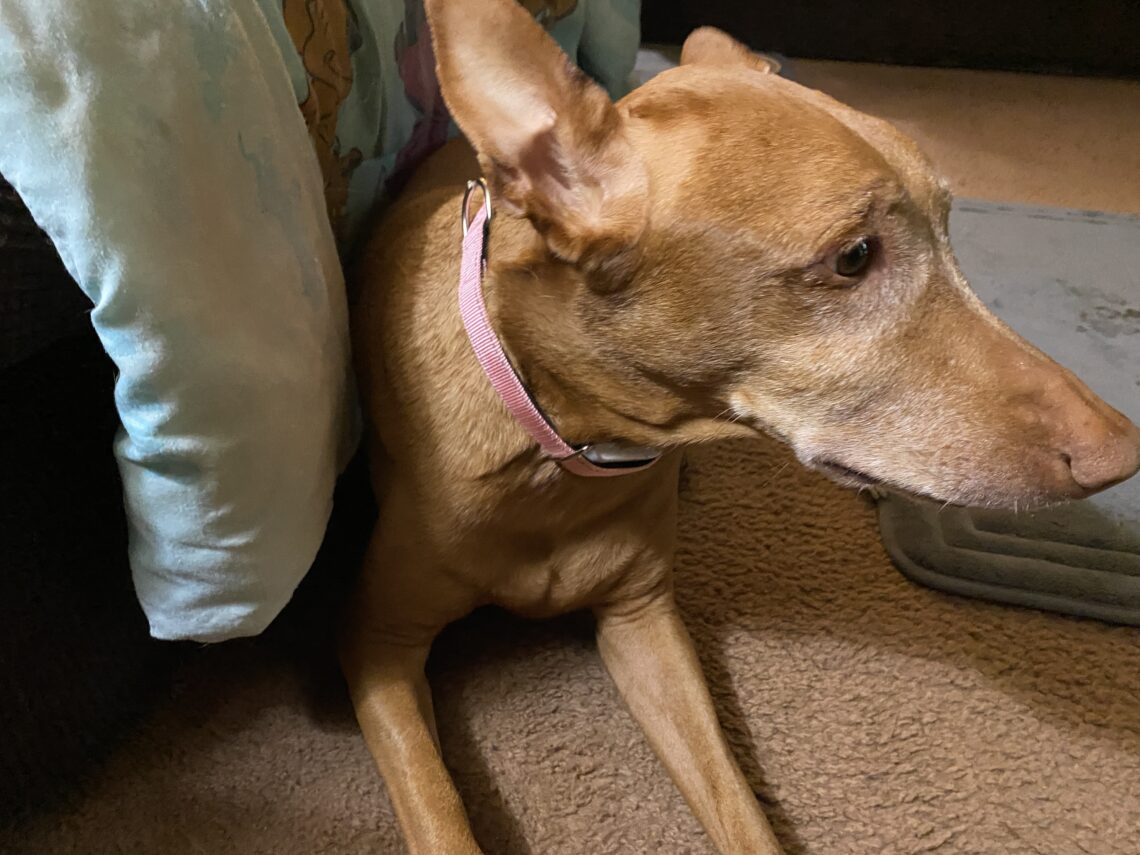

Freya turned 10 this year, which still feels slightly ridiculous to me because on a good day, nobody has informed her that she’s a senior dog. She still patrols the yard. She still hunts for chipmunks. And if something particularly interesting happens outside, she can go from sleeping peacefully to fully invested in neighborhood security remarkably fast.
But she’s also slowing down, and I’ve started paying more attention to some of the subtle signs of arthritis that are easy to brush off as normal aging. Sometimes she has a harder time getting up after she’s been lying down for a while. She doesn’t jump as much as she used to. She has days when she’s incredibly active, followed by days when she seems perfectly content to take it easy. Those are exactly the kinds of changes I’ve been watching more closely with Maven.
Arthritis usually doesn’t announce itself with a giant flashing sign that says, “HELLO, MY JOINTS HURT.” More often, it sneaks into everyday life through tiny changes that are incredibly easy to miss when you see your dog every day.
That’s where I think a health tracker like Maven can be especially useful with senior dogs. It isn’t going to diagnose arthritis (that’s your vet’s job), but it can track changes in activity, rest and sleep over time. Instead of relying entirely on whether I think Freya has been slowing down lately, I can look at her actual patterns and see whether something is changing.
And when you’re trying to catch early mobility problems, those patterns can tell you a lot more than one unusually lazy Tuesday.
Turn any collar into a smart health monitor. Maven tracks your dog’s heart rate, respiratory rate, activity, rest, hydration, and more—helping you catch early signs of illness before they become serious. Lightweight (just 14g), waterproof, and packed with vet-level insights, it’s like having a personal health assistant for your pup.
BEST DEAL ON THE WEB
SAVE $88 TODAY!

Why Arthritis Can Be So Easy to Miss
When most people picture a dog with arthritis, they probably picture an obvious limp. That certainly can happen, but osteoarthritis can cause much subtler changes first. A dog may become stiff after resting, hesitate before getting up, lose interest in jumping or climbing stairs, shorten walks, play less intensely, or have trouble getting comfortable at night.
The problem is that every one of those things has another perfectly reasonable explanation. Maybe she’s tired. Maybe yesterday was a busy day. Maybe it’s hot. Maybe she didn’t sleep well. Maybe she’s just getting older.
Sometimes those explanations are completely correct. What matters is whether “she’s having a quiet day” gradually turns into “she’s having a lot more quiet days than she used to.” That’s a difficult difference to see just from memory.
1. Her Overall Activity Starts Dropping
This may be one of the most useful things a tracker can pick up because you don’t necessarily notice a gradual decline when you’re living through it.
Imagine your dog spends slightly less time moving this week than last week. Then a little less the following week. You may not see anything dramatic happening. Your dog still gets excited for dinner. She still goes outside. She still plays. She still follows you around when you’re holding something that might conceivably be food.
Everything seems normal, but the data may show that her overall activity is trending downward.
Maven establishes an individual baseline for your dog and compares her current activity and rest patterns with what’s normal for her, rather than relying solely on generic averages for dogs her age or breed. That’s important.
Freya has always had an interesting relationship with the concept of consistent activity. She can spend a large portion of the day sleeping and then suddenly decide that a chipmunk has violated several international treaties.
A generic activity target doesn’t tell me nearly as much as knowing whether Freya is moving less than Freya normally moves.
What the tracker may show:
- Gradually declining daily active time
- More frequent or longer rest periods
- Fewer periods of high-intensity activity
- Changes in when your dog is active during the day
- A noticeable drop following especially active days
None of those things automatically means arthritis. They do, however, give you something concrete to pay attention to. Maven gives you daily, weekly, monthly, and even yearly overviews of activity. Here’s a look at one of Freya’s recent weeks:
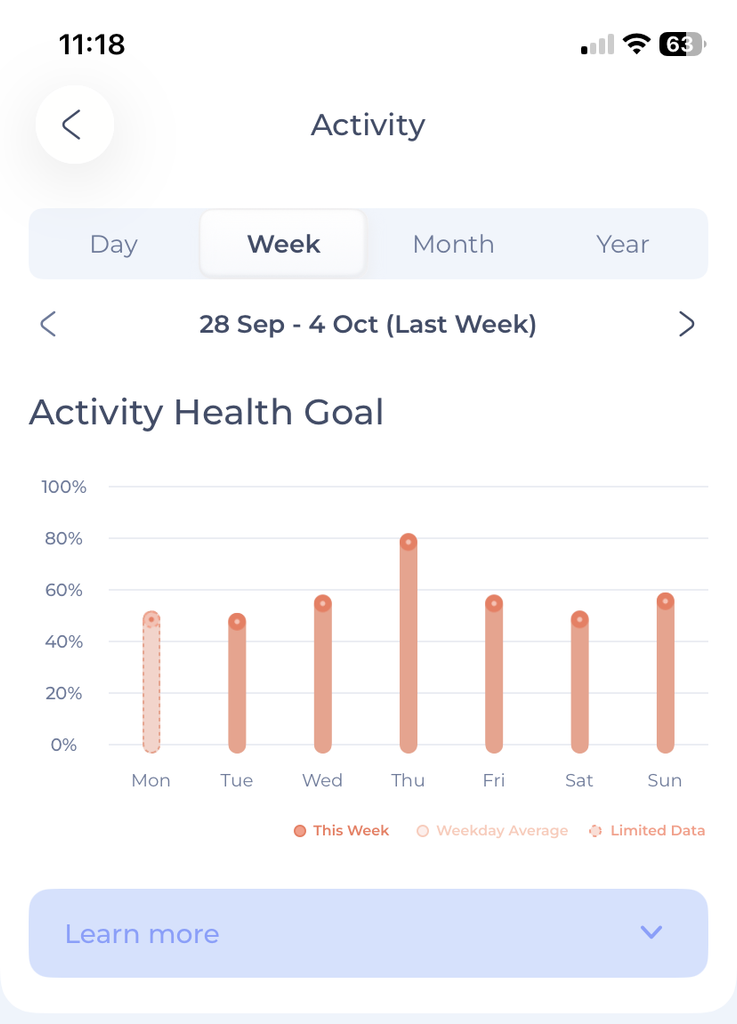
One small note: while it looks like Freya isn’t meeting her overall goal, she has heart disease, so we’re pretty happy with her hitting 60%. Maven will update her baseline as time goes on and it gets to know what’s normal for her.
2. The “Spark” Starts Showing Up Less Often
I actually think this is one of the more interesting measurements when you’re talking about senior dogs. A dog with early joint discomfort doesn’t necessarily stop doing things. She may stop doing them as enthusiastically or as often.
Maven tracks high-intensity or “fast-paced” activity in addition to overall movement. That means you may be able to see whether those bursts of activity are becoming shorter or less frequent over time.
For Freya, those bursts matter. If you looked at her sleeping for half the afternoon, you might think, “Yep, definitely a senior dog.” Then a bear appears outside and suddenly she’s 4 again.
That ability and willingness to get up and MOVE tells me something about how she’s feeling. If those moments gradually became much less frequent, I’d want to know.
Not because one quiet afternoon is alarming, but because a sustained change from her normal behavior deserves attention. One thing to keep in mind, though, is that lack of fast-paced activity doesn’t always mean arthritis. We purposely keep Freya from as much “fast-paced” as possible because of her heart condition.
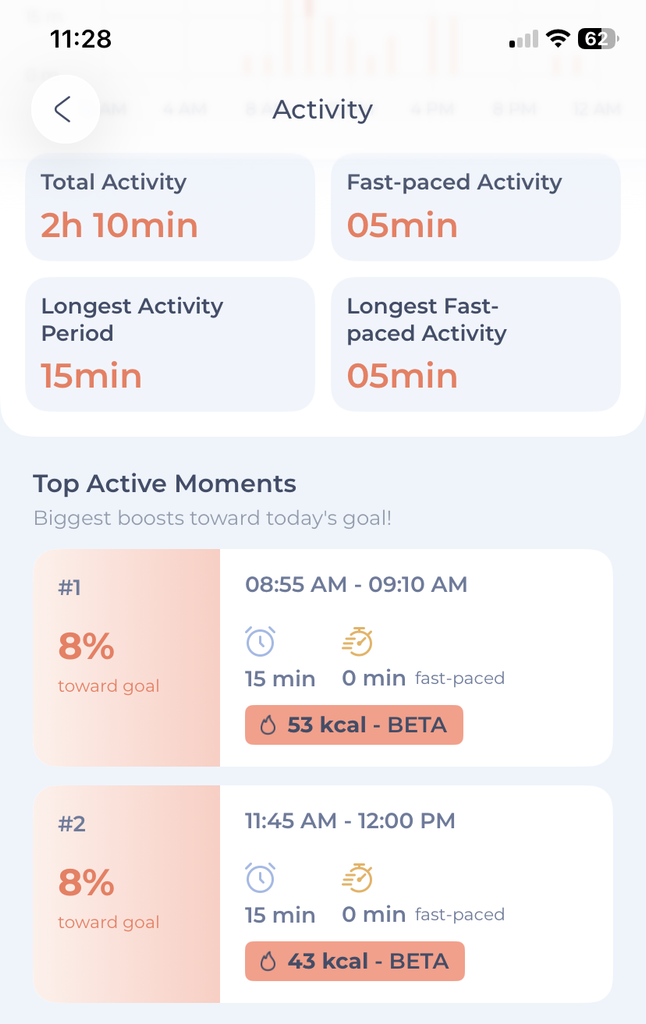
3. Busy Days Start Costing Her More
This is one that I’ve become much more conscious of with Freya. Senior dogs can still have very active days. Arthritis doesn’t necessarily mean a dog stops running, playing, hiking, exploring, or enthusiastically making questionable physical decisions. The difference may show up afterward.
Maybe your dog has a fantastic day and then spends significantly more time resting the next day. Maybe activity drops sharply after a longer walk. Maybe she seems stiffer after an afternoon spent running around the yard.
That’s recovery, and it can be useful information. Maven lets you compare activity and rest patterns over time, which can help you see whether certain types or amounts of exercise consistently result in a quieter day afterward.
For an older dog, that’s useful even if arthritis has already been diagnosed. You aren’t necessarily trying to eliminate activity. Movement is important for dogs with arthritis. You’re trying to find the amount and type of activity your dog can comfortably handle without repeatedly overdoing it.
And unfortunately, dogs are not always reliable judges of this themselves. Freya will absolutely let enthusiasm write checks that her 10-year-old body may not want to cash the following morning.
4. She’s Resting More, But Not Necessarily Sleeping Better
Here’s another difference that’s easy to miss.A dog can spend more time lying down while getting worse rest.
Joint pain can make it difficult to get comfortable. Your dog might shift positions more often, get up repeatedly during the night, wander around, or sleep in shorter stretches.
Unless your dog sleeps directly beside you (or happens to wake you every time she moves), you may have no idea how often that’s happening.
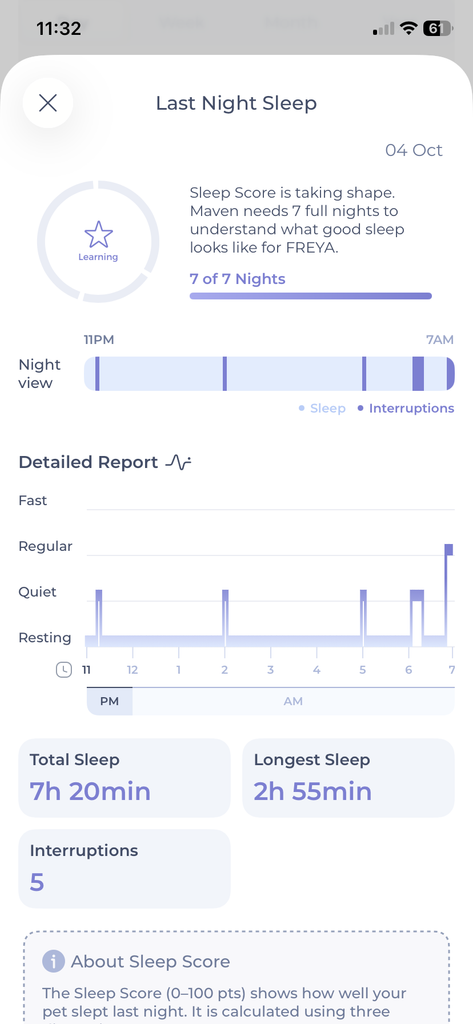
Maven monitors sleep and nighttime rest patterns, including interruptions and deviations from your dog’s usual sleep.
So instead of simply seeing that your senior dog sleeps a lot, you can start asking a better question: Is she actually resting comfortably?
A change in nighttime rest combined with declining daytime activity or increased recovery time would be much more interesting to me than any of those changes individually.
With Maven, you can see both total sleep throughout the day and a closer look at nighttime sleep.
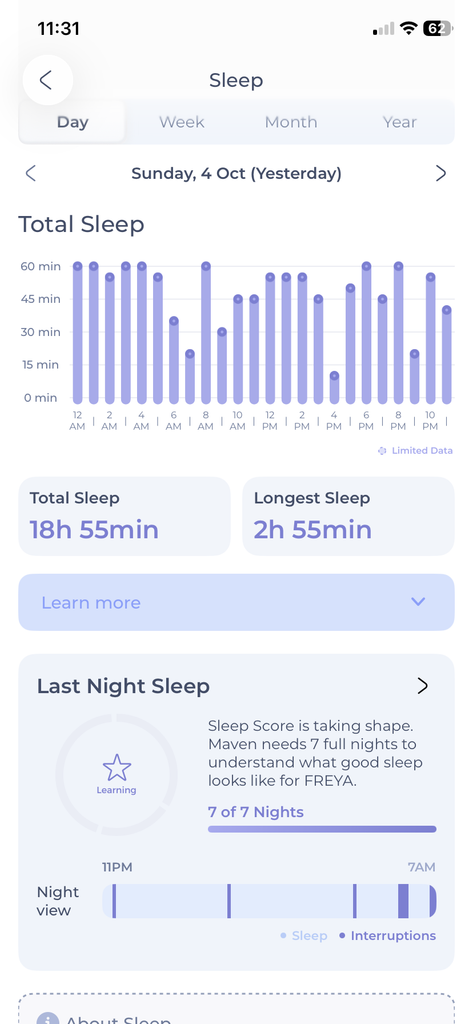
5. You Can See Whether Something Is Actually Helping
This may be even more useful than detecting the initial change. Once you know your dog has arthritis or another source of joint pain, there’s often some trial and error involved in figuring out what keeps her comfortable.
Your veterinarian might recommend medication. You might add a joint supplement, change the length of walks, put down rugs on slippery floors, add a ramp, change her bed, or make other adjustments.
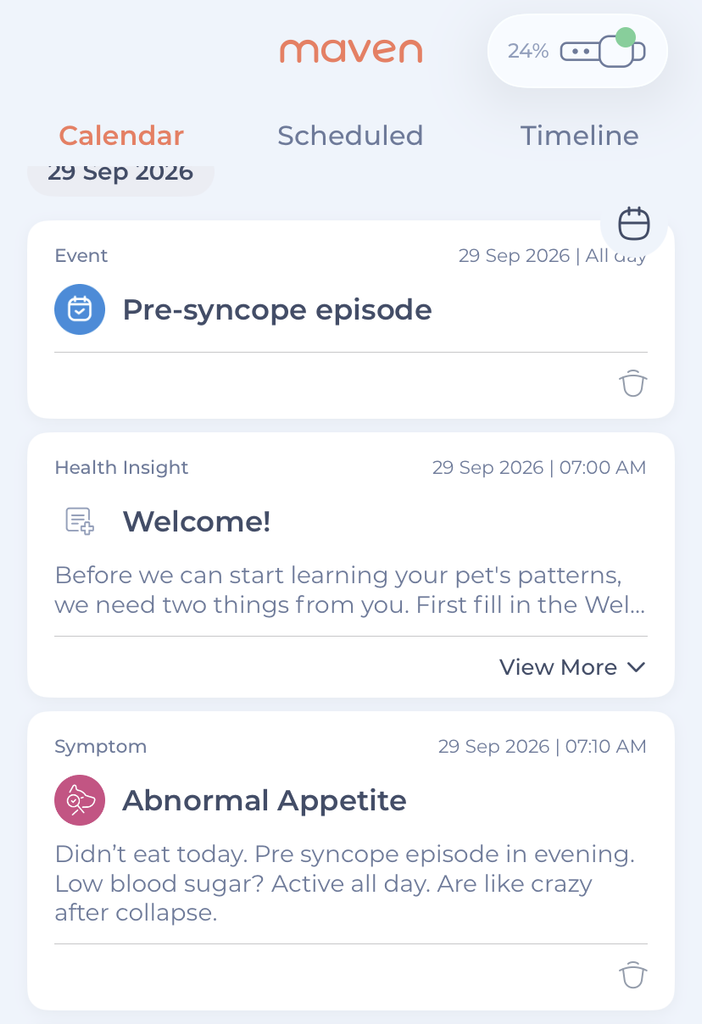
The question becomes: Is it helping? Maven includes a calendar where you can log things like medications, symptoms, vet visits, longer walks, and other changes. You can then look at those events alongside your dog’s health and activity trends.
That’s much better than trying to remember: “Didn’t she seem like she was getting up easier sometime around the middle of July?” Maybe she was. Now you have data.
This Is Especially Helpful When Your Dog Has More Than One Health Issue
Senior dogs rarely have the decency to develop one completely isolated issue at a time. Freya also has heart disease, which makes her activity patterns more complicated.
If she has a quieter day, I can’t automatically assume her joints hurt. Maybe she’s tired. Maybe the weather is affecting her. Maybe she was too active the day before. Maybe something related to her heart condition has changed.
This is where having several measurements together becomes more useful than simply counting steps.Maven also tracks resting respiratory rate and heart rate trends. For dogs with heart disease, changes in resting breathing can be particularly important to monitor.
So if Freya’s activity drops, I can look at that information in context.
- Has her resting respiratory rate changed?
- What does her heart rate trend look like?
- Is she sleeping normally?
- Is she simply resting more?
- Was she unusually active yesterday?
A tracker can’t tell me why something changed, and it certainly can’t diagnose arthritis or determine whether a change is caused by her heart, her joints, or something else. It does give me more pieces of the puzzle, though. With a senior dog who has multiple things going on, I’ll happily take all the pieces I can get.
The Biggest Advantage: Your Dog Becomes Her Own Control Group
This is probably the part I find most valuable about tracking senior dogs.There’s no universal definition of “normal activity” that works particularly well for every 10-year-old dog.
Breed matters. Size matters. Health matters. Personality matters. And individual dogs are just weird. Maven builds a personal baseline during the first week of consistent use and continues comparing your dog’s current behavior with her established patterns.
So instead of asking: “Is my 10-year-old dog active enough?”
You can ask: “Is my dog significantly less active than she normally is?”
That’s a much more useful question. Especially when you have an uncommon dog like a Pharaoh Hound that doesn’t really have much in the way of “normal for this breed” baseline to work with.
What Maven Can’t Tell You
I think this is important whenever we’re talking about health trackers. Maven can detect changes consistent with discomfort or mobility problems. It cannot look at an activity graph and announce that your dog has osteoarthritis.
A drop in activity can happen because of arthritis, but it can also happen because of an injury, illness, medication, weather, stress, heart disease, or approximately 900 other things dogs cannot explain to us.
Arthritis is ultimately something you discuss with your veterinarian, who can examine your dog and determine whether additional testing or imaging is appropriate.
Think of Maven as the thing that helps you notice the question earlier. Not the thing that supplies the diagnosis.
Signs of Arthritis You Still Need to Watch for Yourself
Technology can track movement incredibly well, but your eyes still matter. Watch for physical and behavioral changes such as:
- Stiffness when getting up after sleeping
- Hesitation before lying down or standing
- Limping or favoring a leg
- Difficulty climbing stairs
- Reluctance to jump onto furniture or into the car
- Shorter or slower walks
- Less interest in running or playing
- Frequently changing sleeping positions
- Licking or chewing around painful joints
- Irritability when certain areas are touched
- Muscle loss, particularly around affected limbs
A tracker complements those observations. It doesn’t replace them. Freya having a little trouble getting up occasionally tells me something.Her activity data gradually declining at the same time would tell me more.
Add disrupted sleep or longer recovery after active days, and now I have a pattern worth discussing with her veterinarian.
Can a Dog Health Tracker Really Catch Arthritis Before You Notice It?
There’s actually some early research suggesting it can catch changes associated with osteoarthritis flare-ups, although this is still an emerging area.
A 2025 exploratory case series followed five dogs with diagnosed osteoarthritis using Maven’s wearable sensor for up to 126 days. There were nine clinical events during the study, including seven OA-related flare-ups. Activity data corresponded with eight of the nine events, and in one case, the activity change appeared before the owner noticed something was wrong. The study was funded by Maven Pet and included Maven veterinarians among its authors, which is worth knowing when interpreting the results.
It’s a small study, so I wouldn’t take that to mean a collar sensor can magically predict arthritis.
What it does demonstrate is something much more reasonable: Changes in pain can show up in a dog’s activity data.
And computers are very good at noticing gradual numerical changes that humans tend to overlook.
Especially humans who have spent the last three months saying, “Was she always this lazy in the afternoon?”
Turn any collar into a smart health monitor. Maven tracks your dog’s heart rate, respiratory rate, activity, rest, hydration, and more—helping you catch early signs of illness before they become serious. Lightweight (just 14g), waterproof, and packed with vet-level insights, it’s like having a personal health assistant for your pup.
BEST DEAL ON THE WEB
SAVE $88 TODAY!



Leave a Comment